
Guardians of the Waterway: A Species Spotlight on the Willow Tree
With gracefully sweeping branches trailing into moving currents, Willow Trees (Salix species) are quintessential symbols of the British countryside. Belonging to the family Salicaceae, native UK willows—such as the White Willow (Salix alba), Crack Willow (Salix fragilis), Goat Willow (Salix caprea), and Osier (Salix viminalis)—are aquatic guardians that anchor riverbanks, feed spring pollinators, and define wetland landscapes.
Identification & Botanical Traits
- Bark & Growth: Ranges from shrubby bushes to massive trees growing up to 25 metres tall, featuring deeply fissured greyish-brown bark.
- Foliage: Typically long, narrow, lance-shaped leaves with finely serrated edges, bright green on top with pale, silky-haired undersides.
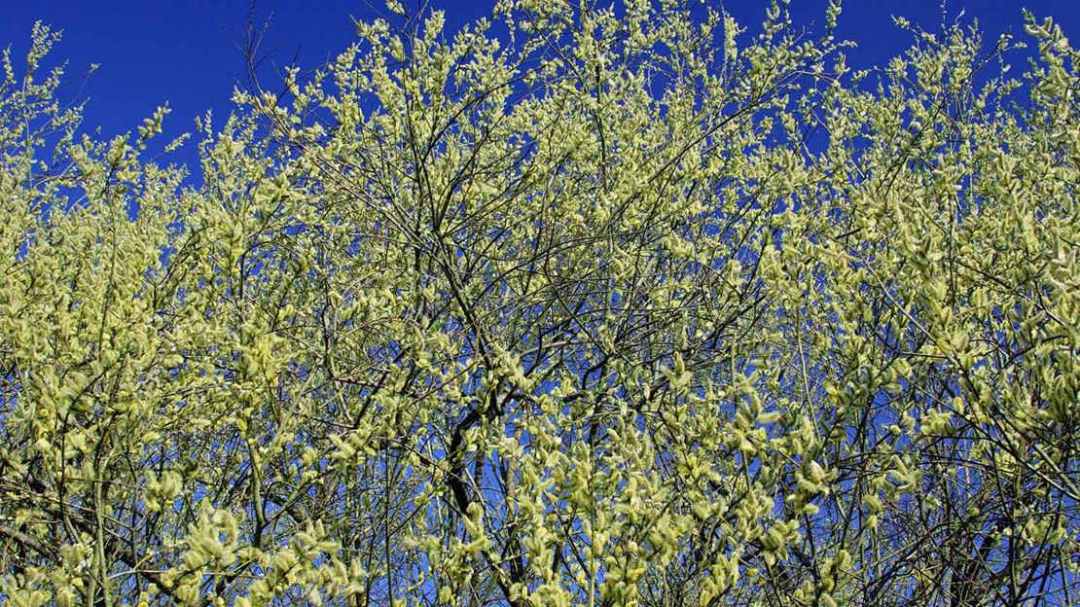
- Flowers (Catkins): Appearing in early spring before or alongside leaves.
- Dioecious Nature: Male and female flowers grow on separate trees. Male catkins are yellow and pollen-dusted; female catkins are longer and green.
UK Habitat & Ecological Importance
- Habitat: Thrives in wet, poorly drained soils along riverbanks, floodplain meadows, lake margins, and wet woodland (carrs) throughout Britain.
- Erosion Control: Massive, spreading root networks hold sandy and silty riverbanks together, preventing bank collapse during winter floods.
- Biodiversity Hotspot: Willows support over 400 species of native insects, including caterpillars of the Emperor Moth, Puss Moth, and Purple Emperor butterfly.
Life Cycle & Wetland Succession
- Early Spring Catkins: Opening as early as March, willow catkins provide one of the first major pollen and nectar sources for emerging queen bumblebees and solitary bees.
- Seed Dispersal: Female catkins produce tiny seeds encased in fluffy, cotton-like hairs that drift on the wind or float along river currents to colonise damp mudflats.
- Pollarding & Coppicing: Historically, willows were regularly cut back to the main trunk (pollarded) to produce pliable, fast-growing rods (whips) for basket weaving and hurdle fencing.
Fun Facts
- Origins of Aspirin: Willow bark contains salicin, a compound used for thousands of years in traditional medicine to relieve pain and fever. In the 19th century, salicin was synthesised to create modern aspirin (acetylsalicylic acid).
- Cricket Bat Willow: The wood of a specific White Willow cultivar (Salix alba var. caerulea) is uniquely lightweight and shock-absorbent, making it the exclusive choice for crafting professional cricket bats worldwide.
- The “Crack” Willow Sound: The Crack Willow gets its name from the audible crack sound made when its brittle twigs snap cleanly off the branch during high winds or floods.
- Rooting Power: Willow branches contain high concentrations of natural rooting hormones; a fallen willow branch stuck into damp river mud will easily take root and grow into a full new tree.
Sources


