Student Work Placement: Riley

In this blog conservation student Riley talks us through his placement with Glendale’s Nature Conservation Officer

Monday 25th March
I met one of the volunteer bird surveyors at the meeting spot in Hilly Fields and we sat down and got to know each other as we waited for the others to arrive. I immediately felt welcomed despite I have never done birdwatching before. The lady I met first at the meet up spot spent the majority of the day teaching me all kinds of bird and tree species and also taught me how to tell which birds are around by their singing.
The whole three hours went fast! The entire experience for me was relaxing and because I have always loved to learn about nature, this was an excellent experience. I even got to see two uncommon birds for Hilly Fields which were the Green woodpecker and a red kite!
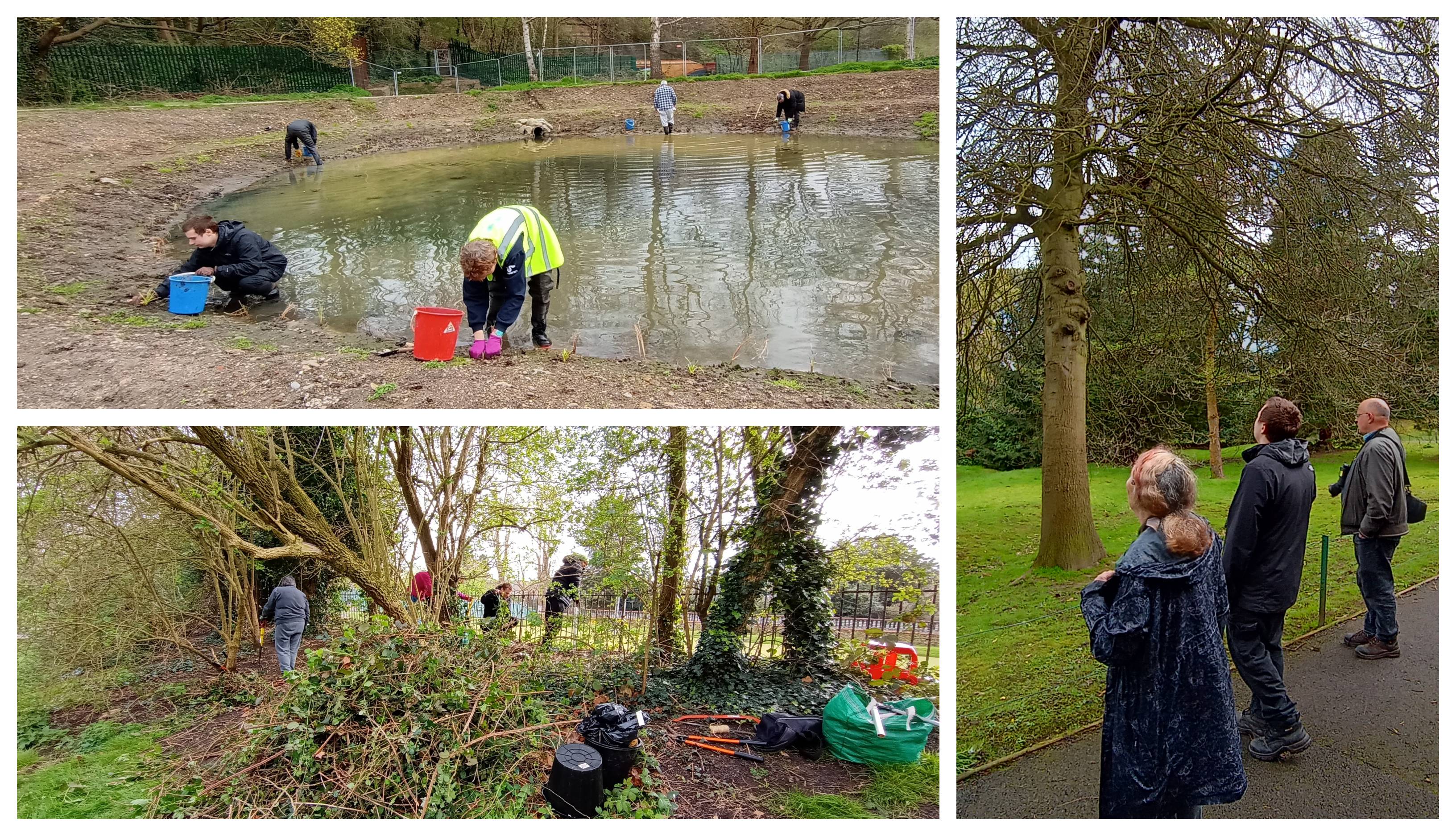
I then did another task at Mayow Park, elsewhere in the borough, with different volunteers where I learnt how to plant tree whips and put guards on which I have never done before and it was an awesome feeling after I was able to do it all by myself. I know this is considered as a job to do these things but I genuinely felt joy and it did not whatsoever feel like a chore to me.
Another positive thing I’ve found doing this volunteering was communication. It was easy to talk to people I have never spoken too because every volunteer was welcoming and approachable. This was especially beneficial for me because of my autism I have found it hard to talk to people I don’t know, so this was really good practice for me to develop communication skills.

Tuesday 26th March
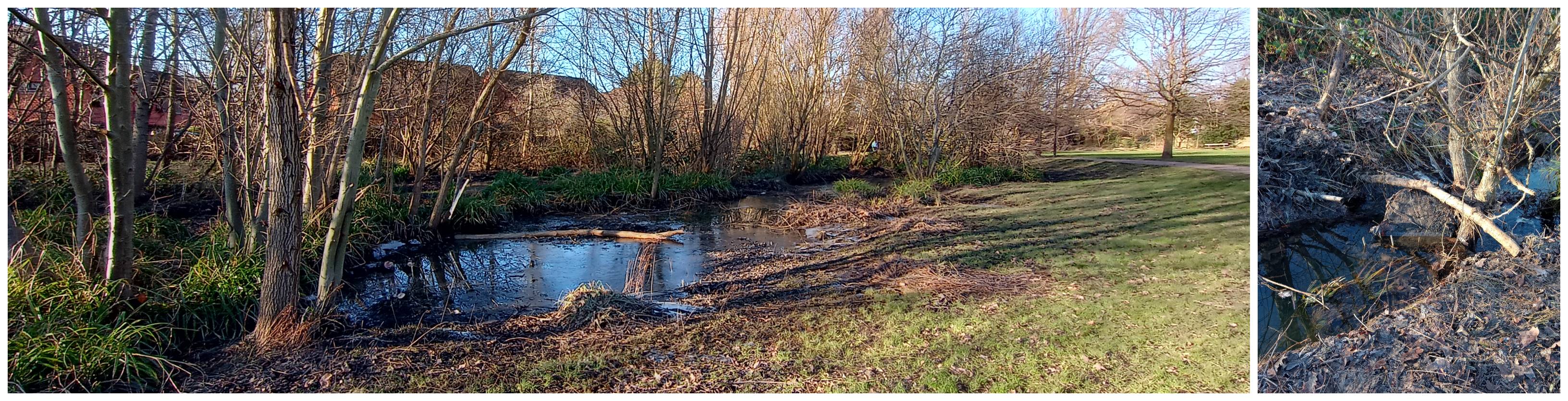
I went to Chinbrook meadows and I got to go in a newly built pond with a group of volunteers to plant some aquatic plants, helped make a dead hedgerow and litter picked the surrounding area. Everyone in the group is very kind and joyful because of being passionate about the type of work we were all doing. There was this one volunteer I started talking to during tea break and I told her about how my lecturer told me that conservation isn’t for me because I’m more aware of my surroundings and they reassured me to never let someone tell me what I can and can’t do and how I possibly even could have more to offer in the industry than I think. It was a long discussion and it really uplifted me, she was a very pleasant person to talk to. That just goes to show how great it is to volunteer in this group. I find it also easier to talk to people in this community due to relevant interests and you can talk for hours because there is so much about the industry such as different plant species, wildlife etc. I really enjoyed myself today.

Thursday 27th March
Today I built my first bug hotel! As a group we stacked up 4 or 5 wooden pallets and then gathered materials such as sticks and cut dried bamboo lengths to put into the bug hotel as sheltering space for insects and invertebrates. After we did that we applied chickenwire around the top of the bug hotel to prevent the sticks from falling out and to prevent any hazard to the public.
I also had the opportunity to put vertical logs into the ground which acts as food and shelter source for insects and invertebrates, these were called loggeries (A vital use of deadwood for the stag beetle lifecycle). During this volunteering I felt like I fit in and I felt welcomed to the group of volunteers where most of them I did not know.

Volunteer Sessions in February

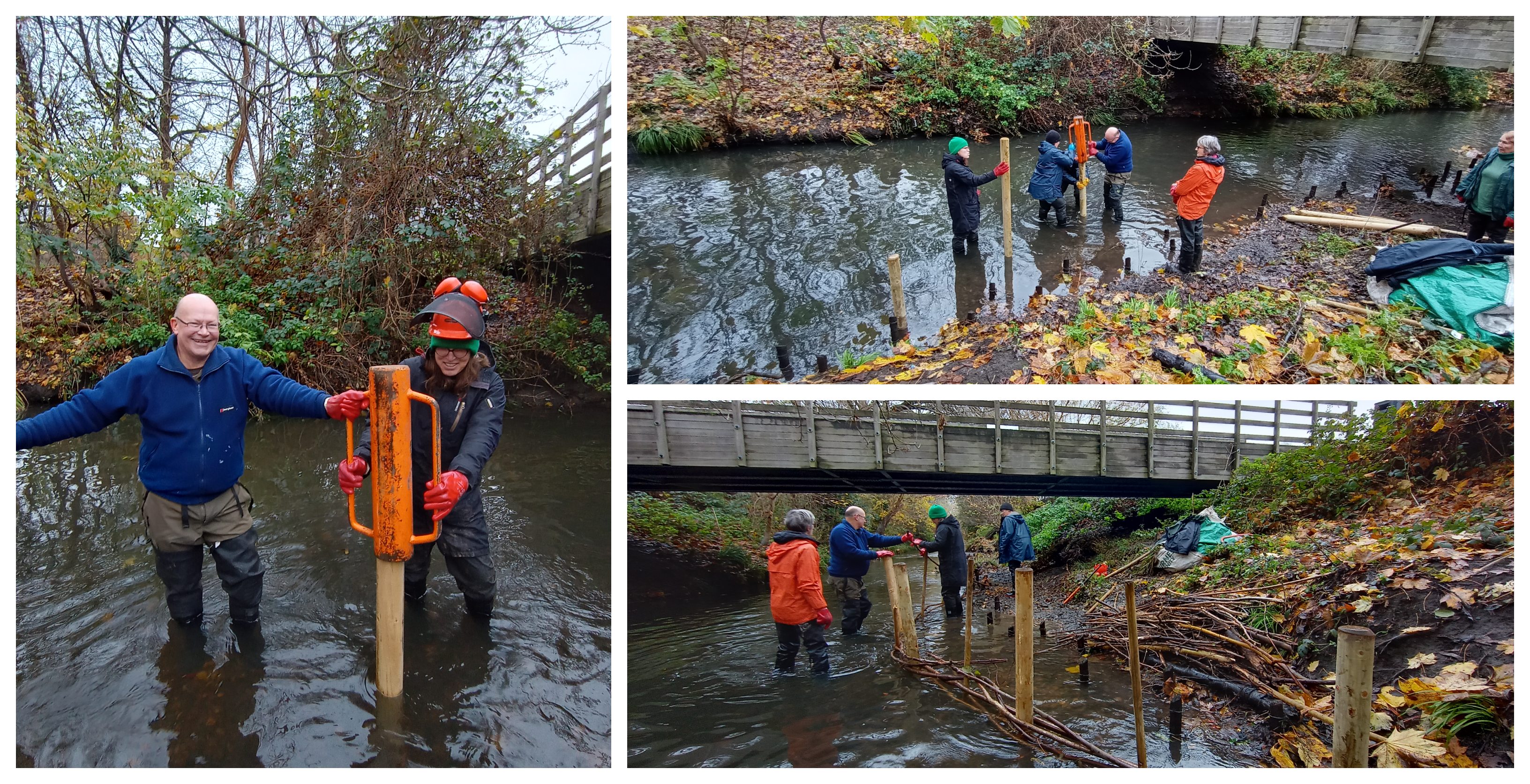
February was a busy and very wet working month for our volunteers, we fixed brash bundles into our berm in our ongoing Ladywell Fields (middle field) project and weaved the main ‘wall’ of the structure with coppiced hazel and lime that was situated alongside the river.

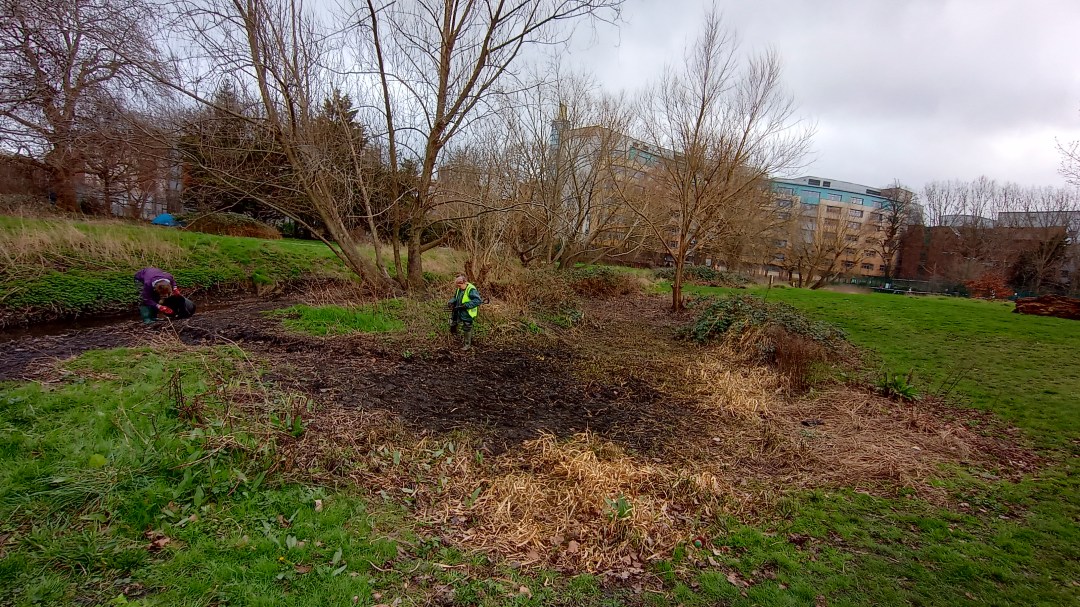
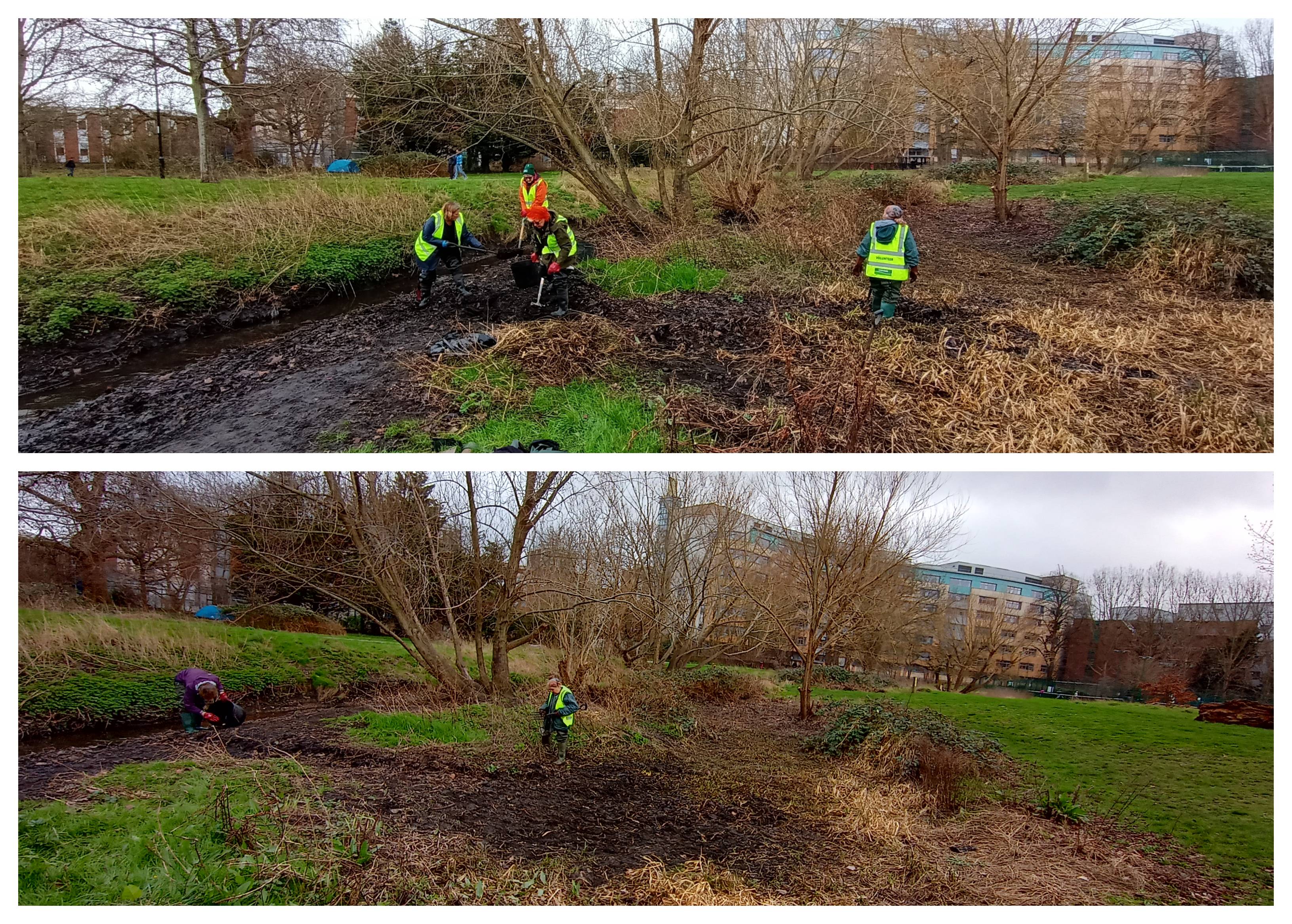
For the latter half of the month we were digging out reeds, iris and encroaching grasses from the ephemeral pool alongside the secondary channel in Ladywell Fields. Although the recent wet weather made it easier to dig the soil, it was still a heavy and very mucky task to do!

Volunteer Sessions in January

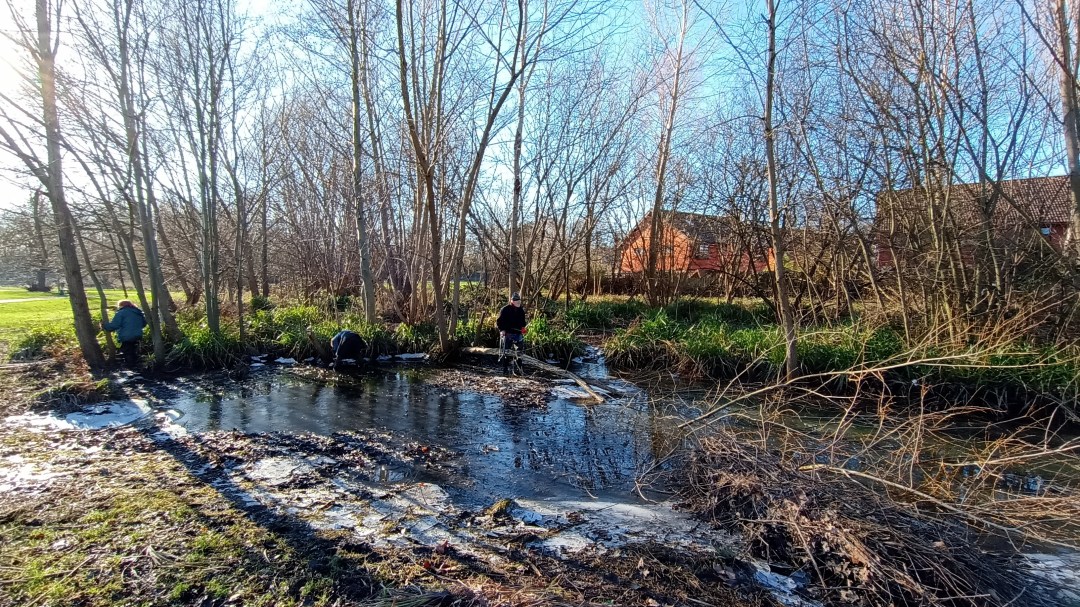
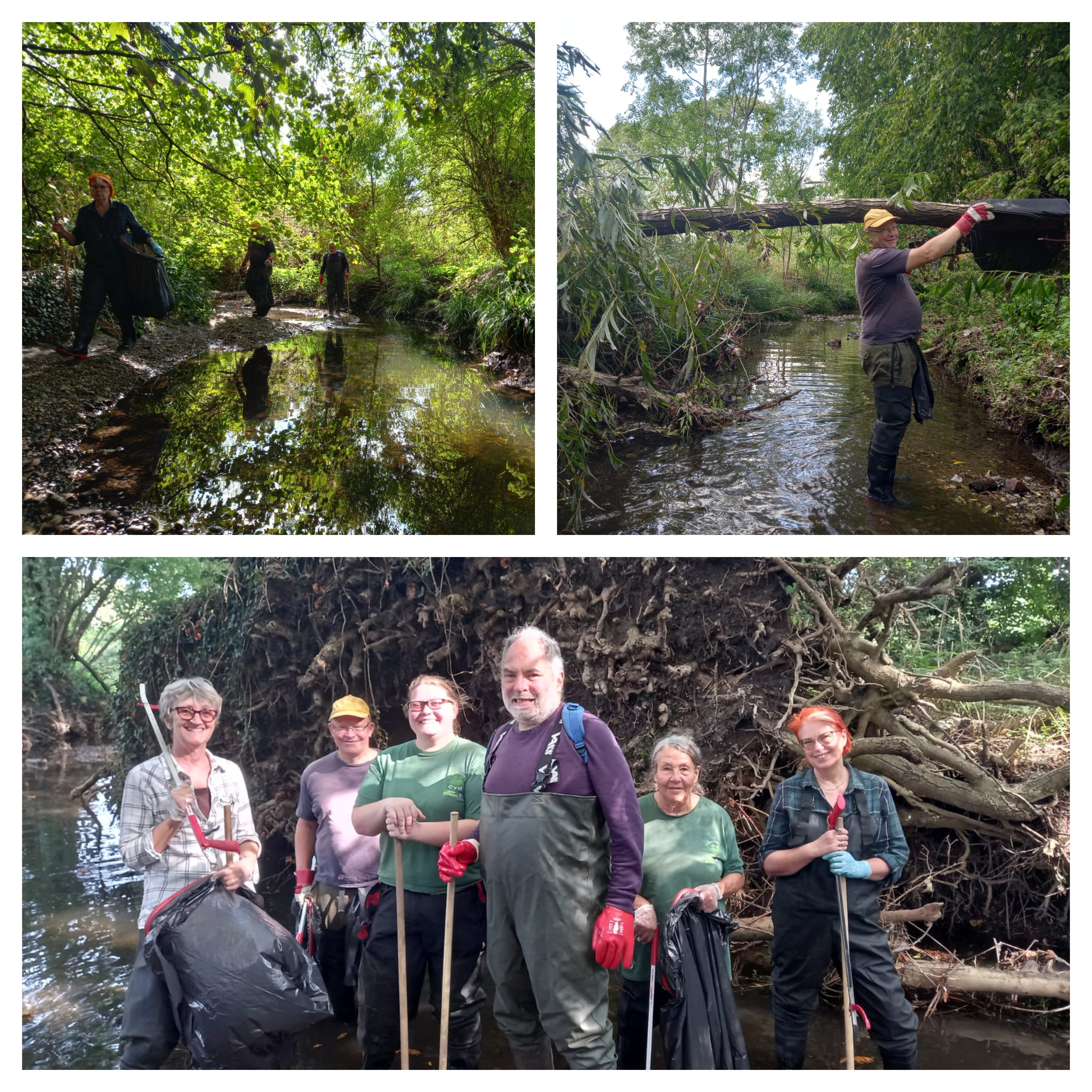
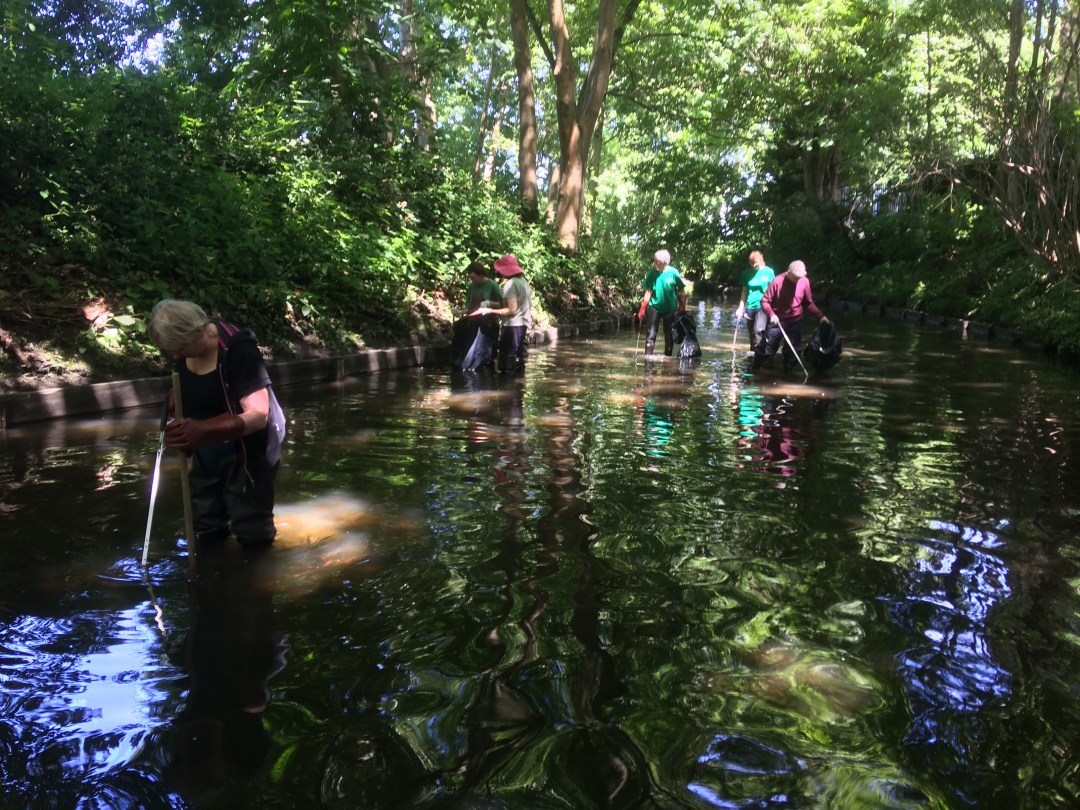
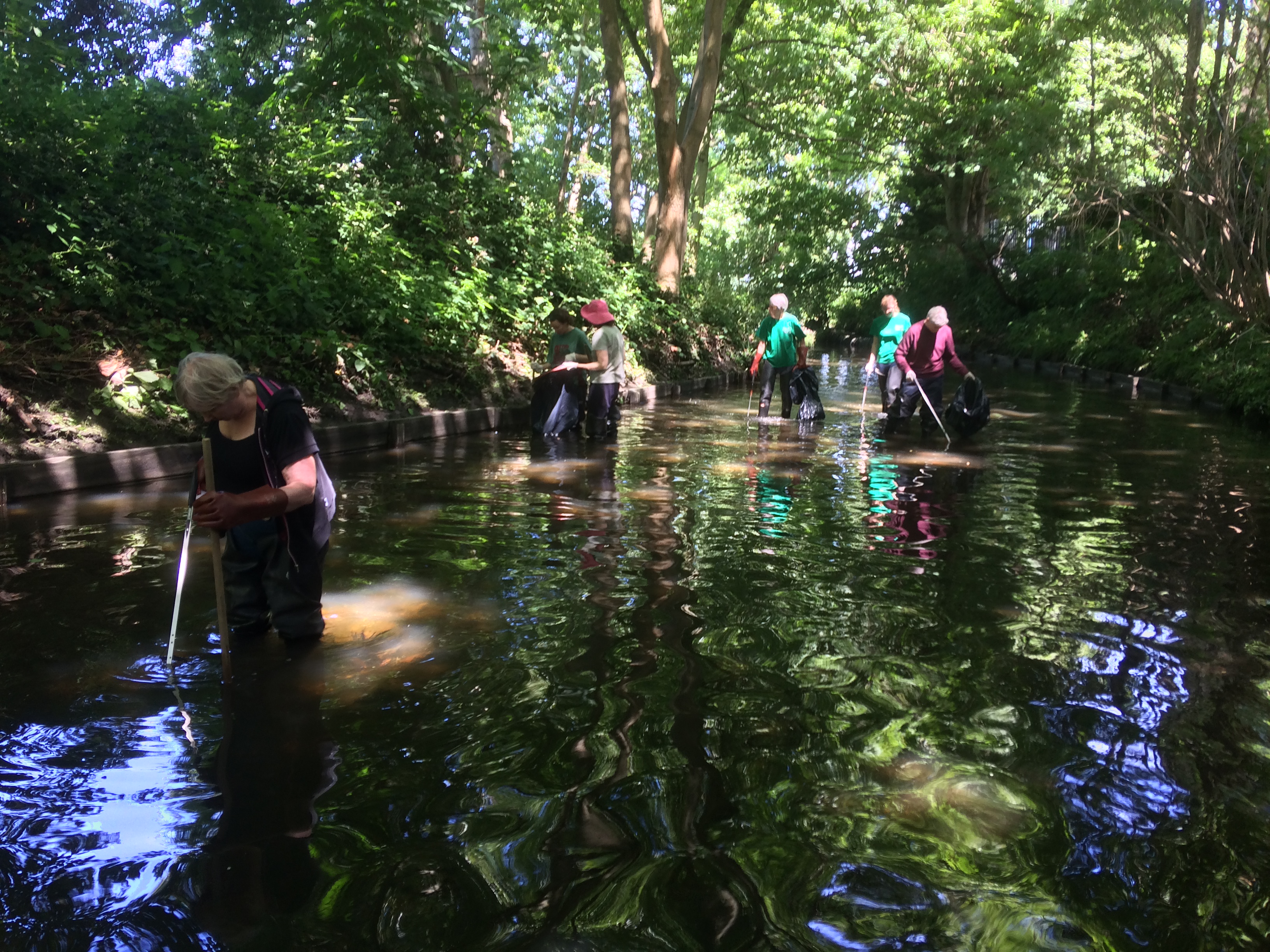
It’s January and the Rivers & People volunteers are back in the water! After heavy rain and storms you’ll notice that the banks collect both litter and fallen branches. some of which restrict the flow of the river and mean that the banks burst. Our group started the year at Cornmill Gardens and was busy clearing the dipping platform of debris. We also managed to collect 8 bags of rubbish and a bicycle from the banks, collected by the Glendale park cleansing team.

At Chinbrook Meadows, our volunteers continued cutting back the overhanging willows and other trees around the pond to allow more light onto the water’s surface. Whilst there we cleared an obstruction in the River Quaggy to reduce localised flooding onto the path adjacent.

Rivers & People Volunteer Programme [January – March 2024]

New Year, New You? Don’t want to pay a gym fee to be indoors working out? Why not join us once a week in the Rivers of Lewisham? Plus, whilst you do that you are actively helping the blue spaces within the borough!

The volunteer session programme has now been released for October to December 2023. Check out the programme HERE. If you would like to get involved in volunteering on Lewisham’s rivers please read through the the River Volunteering web page, and if you have any questions or queries please get in touch with Emily.

Volunteer Sessions in December

December is a shorter month for our volunteers, and with our final and 40th session of the year taking place on December 12th we celebrated with mince pies, yule log and other snacks… after 2 heavy hours building a berm!

From me, I’d like to say a HUGE thank you to all our wonderful volunteers working to keep Lewisham’s rivers so healthy and encouraging others to learn more about this great part of the borough. A special thanks especially to the #RiversandPeople volunteers who join me every week to get waders on and get into the river to make practical improvements- I’m looking forward to 2024 where we can do even more!

One project that will continue into the new year is the new berm our group is building in the middle field of Ladywell Fields, we’ve put the posts in, weaved the frame, and we’ll be back in mid-January to build up the bank.

Volunteer Sessions in November

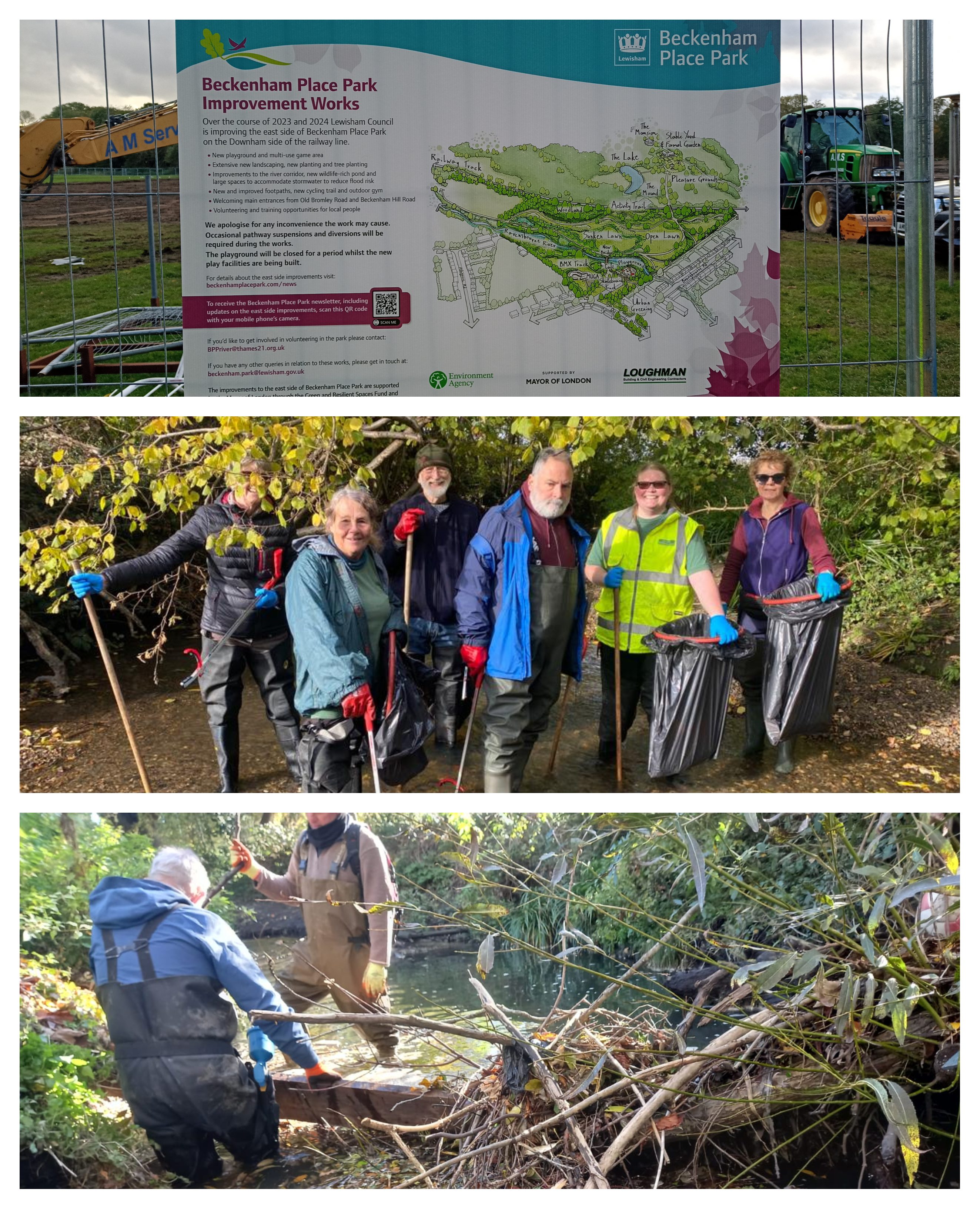
The volunteers have been all across the borough this month, starting with visiting the regeneration works at Beckenham Place Park (East). We also cleared trapped debris from the recent heavy rains, especially with fallen trees down over the channel.

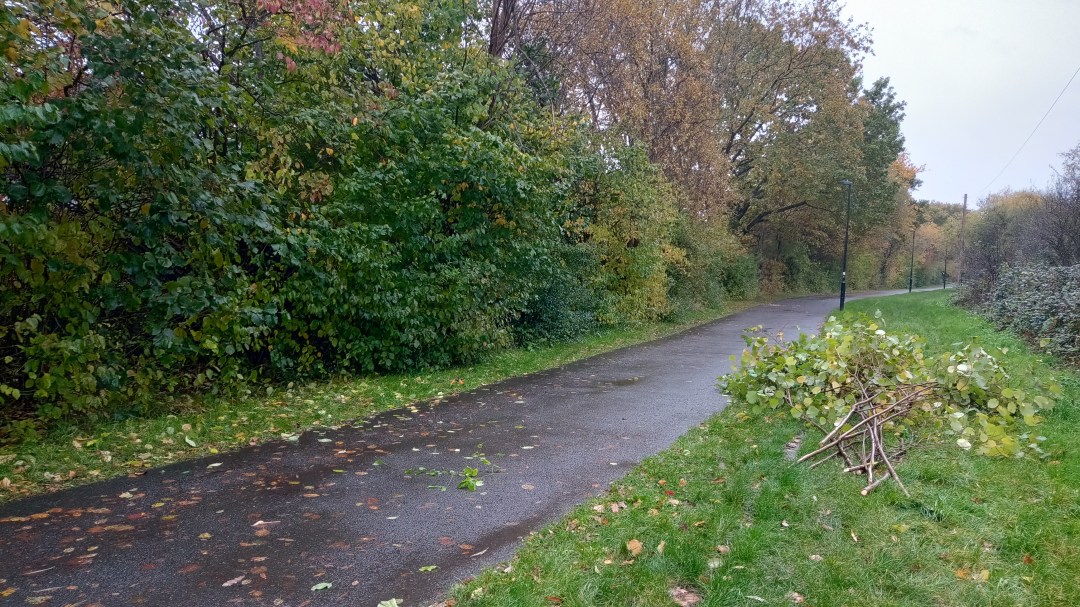
Combining forces with the Friends of the River Pool, we thinned a section of hazel for a future project in another Lewisham Park where we needed long malleable lengths for weaving. This was a testing day of weather as the light rain predicted was actually a downpour- but the volunteers persevered.

Volunteer Sessions in October

October gave us the perfect weather for working in the rivers in Lewisham, dry and cool enough to still be working in t-shirts! This time at Chinbrook Meadows we were working on the wildlife pond, clearing more of the willow surrounding and blocking light into the pond, and removing any silted islands that were growing vegetation to halt succession from happening on the pond. The pond itself would benefit from being desilted, so we’re keeping an eye out for any funding to hire a mini-digger to help us out in the future. For now, our volunteer group and the wonderful Friends of Chinbrook Meadows are continuing to monitor wildlife in and around the pond.

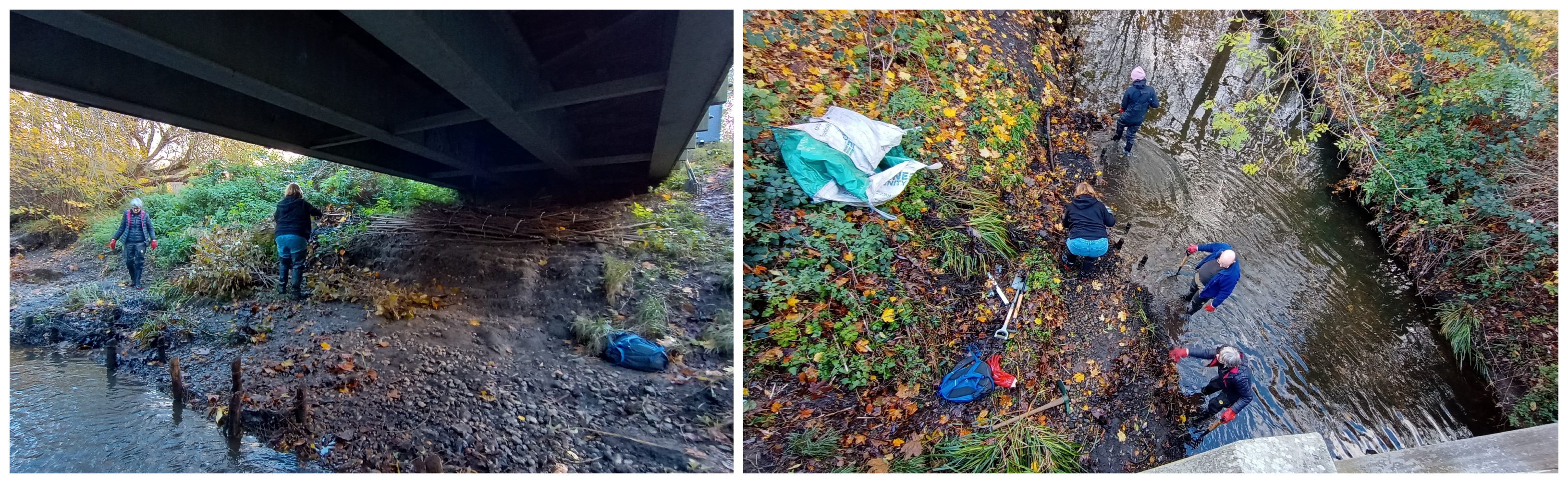
Another spot we’ve been working on this month is the area under the Ladywell Road bridge in Ladywell Fields. This is a special location for us to work in as it’s near to one of Lewisham’s kingfisher nest boxes, so we only work in the areas nearby outside of their nesting season.

There was a huge fig tree growing into the channel and blocking debris in teh channel, so we spent a few hours working on the lower branches of the tree and allowing the full width of the channel to flow as intended. It’s also a good time to note that sadly this area is affected by litter thrown from the bridge above, but during these volunteer sessions our team get into the undergrowth to prevent this litter from entering the river.

NB: Our volunteer on the left hand image doesn’t normally wander under bridges with a pruning saw but as it was halloween the photo opportunity seemed to good to miss! #SpookySeason

Volunteer Sessions in September

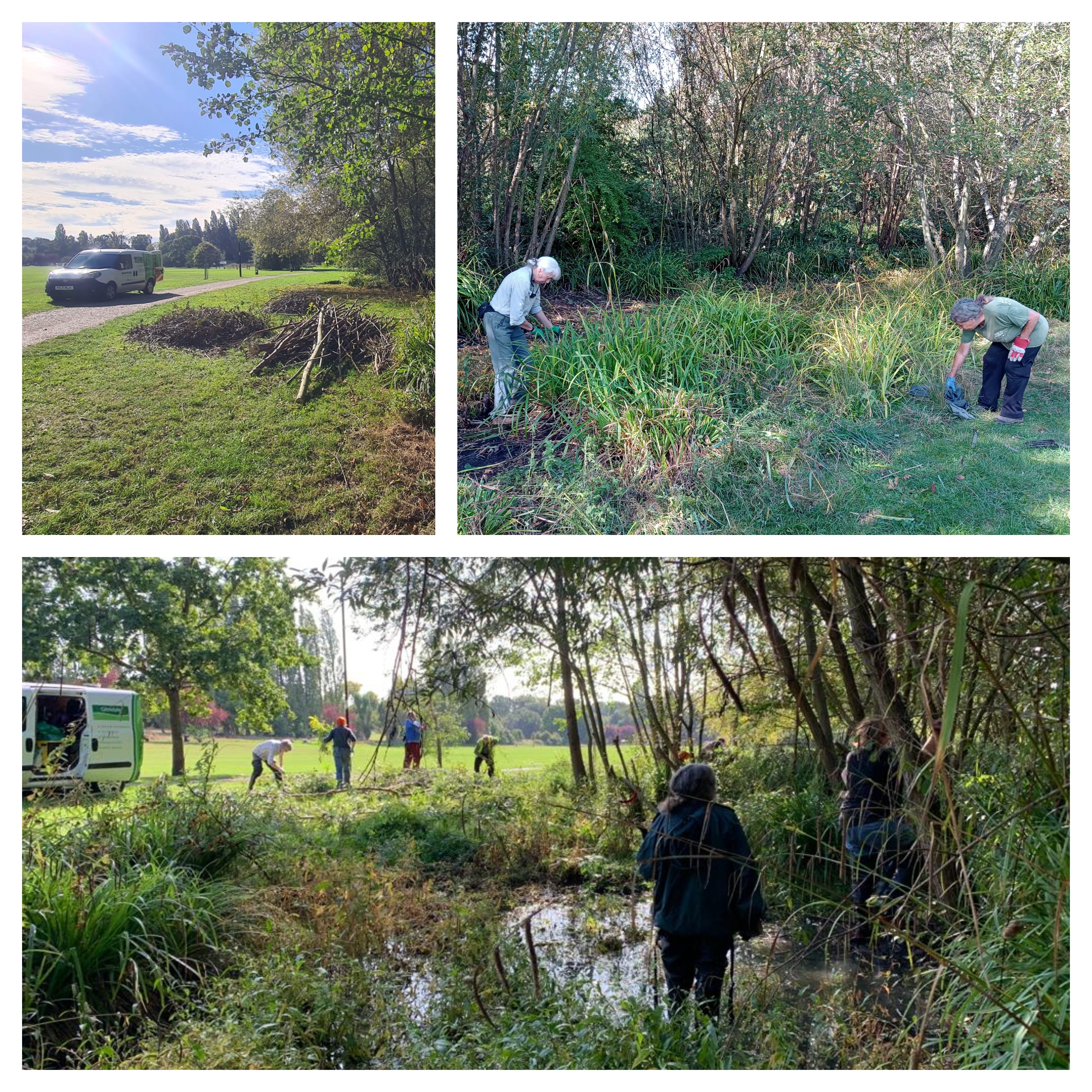
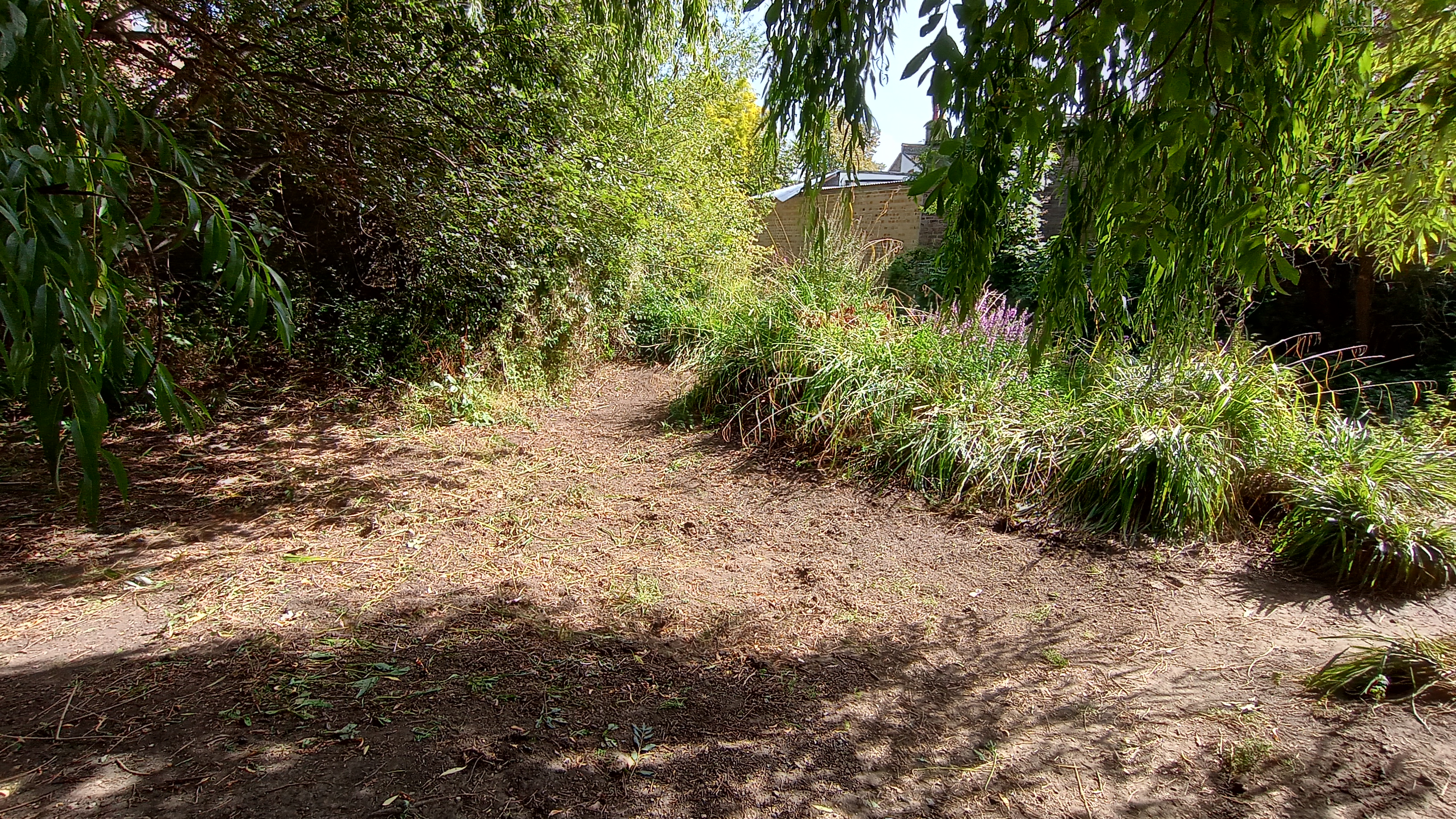
September was a month of hot and dry weather, which was showcased by low water levels across the River Ravensbourne catchment. During this period we took our opportunity to work on the boggy areas to remove encroaching vegetation, like above, which is normally a wet area in Manor Park but had previously been overtaking by sedge, bramble and grass!

The lower water level across the month also helped us access the deeper sections of the rivers. We spent some time in Beckenham Place Park (East side) performing litter picks and clearing areas of the main channel. We found more than 25 golf balls in this stretch, along with parts of an old fireplace surround!

Rivers & People Instagram

This month we’ve launched our brand new social media account, RiversandPeople_Lewisham, where you can stay up to date with all the work we’ve been doing on the River Ravensbourne, River Quaggy and River Pool.

You will still find our monthly ‘what we’ve been up’ blogs and any information about upcoming sessions on here, but do check out and give us a follow on Instagram to stay in the loop sooner!

Our Instagram account will be managed by one of our wonderful volunteers, Sarah, who is more than happy to help answer your queries or send you Emily’s way for anything you may want to find out.

Volunteer Sessions in August

August brought the volunteer team some hot weather, so being in the river was a pleasant break from the heat! We started the month working on the boardwalk section of Cornmill Gardens, removing plants that had grown up through teh accessible viewing platform then reducing the vegetation height so you can get a clear view of the river. One bonus from our time at Cornmill was we got to watch Lewisham town centre’s resident peregrine falcons flying overhead!

We’ve also continued the job of clearing eel tiles around the catchment, and monitored the areas where we know siltation happens in backwaters and small channels.

We were also very lucky to have Philippa Nicholls, European Eel Officer, from Thames21 come along to our group and present on London’s European Eel population and some of the challenges and obstacles they face within the Ravensbourne Catchment.