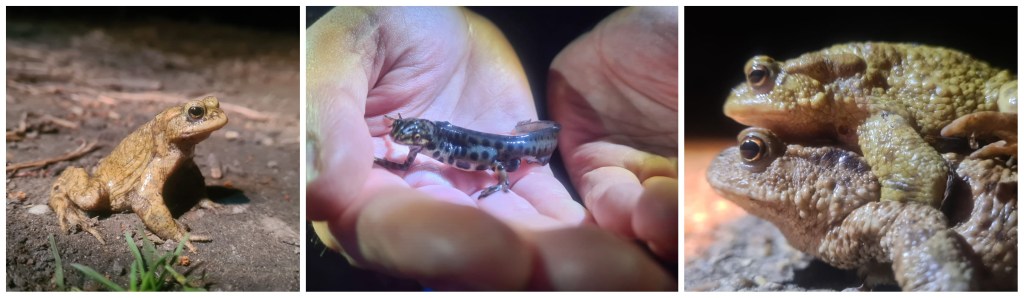
March means Amphibians! As the amphibian migration begins, we start to check all the ponds within Lewisham for signs of amphibian presence. This year we visited Bell Green Pond, in Linear Park and Chinbrook Community Orchard. We change our session time from 11am-2pm to evening sessions 4.30pm-7pm to catch dusk into darkness where we can practice many different amphibian survey techniques.
If you’ve been reading the blog over the past year, you may remember we’ve been working on the hub area of Ladywell Fields (South), previously digging up the brambles and reducing nettles etc in 2 of the 4 areas. In March we returned to plant up marginal plants at the bottom next to the river and a wildflower mix of plug plants and seeds for the rest of the slope.
We donned our waders and started our quarterly clean up of the River Ravensbourne working from Ladywell Road up to Lewisham Hospital and then around the secondary channel.
In this blog conservation student Riley talks us through his second and longer work experience placement with Glendale’s Nature Conservation Officer.
Monday 3rd of February Today at the office I learned how to remove seeds from Wildflowers, and then put them into a separate tray to be put into a bag for planting later in the year. I then went out into the vehicle to attain some young tree whips that was temporarily stored in a secure area, which we then brought to deposit at Brookmill park. I then learned how to organise and prepare tools and equipment for the following practical session with volunteers, such as checking Wellingtons and how many and what sizes were needed for the day.
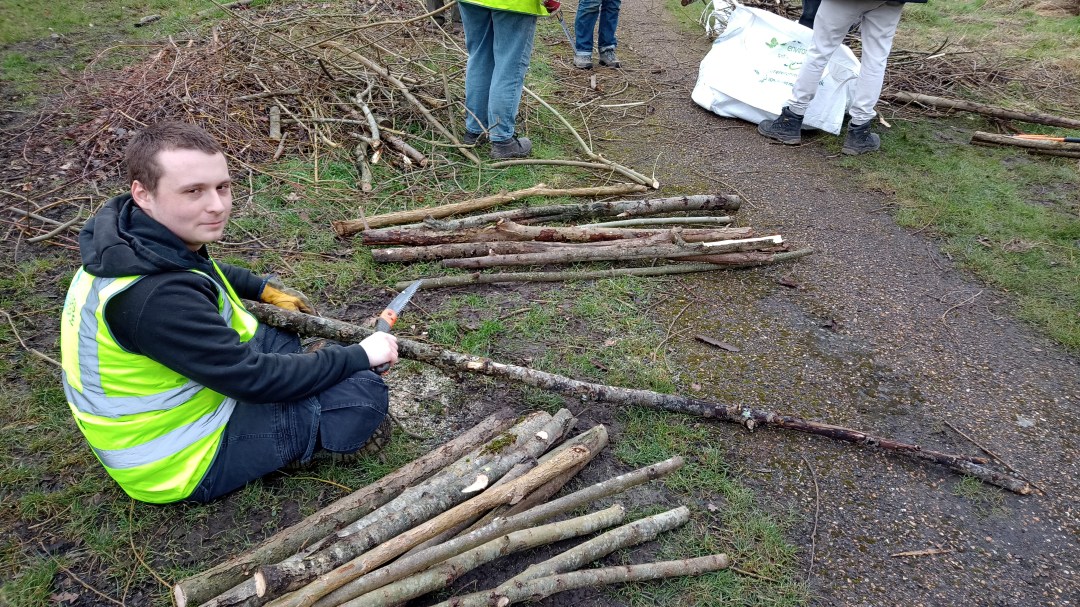
Tuesday 4th of February Today I processed Willow into stakes. We then used the Stakes and left over sticks to create structures that will be a beneficial food source for invertebrates. I learned how to use a Sledge-hammer to put in Stakes. I also got the opportunity to give the volunteers of Rivers & People a Health and Safety talk, and Tool talk.
Wednesday 5th of February This morning I laminated flower sheets that will be used for a future practical session. I then finished sorting the Wildflower seeds from the Monday, and then assisted in the Bird watch at Lady well fields that was partnered with SLAMS. When we got back to the office, I written down what to say for the Thursday’s Tool talk and Health and Safety talk to ensure I am more effective at giving important information. I also learned how to put bird survey data into a system called the “National Biodiversity Network database”.
Thursday 6th of February Today we removes Bramble in a “U” shape to allow new plants to develop and thrive. I then raked the area to clear of any debris, which also helped to see any more litter than needed to be removed. I afterwards made teas for volunteers and later at the lodge washed them up. I learned how to make a practice risk assessment with a chosen scenario; my one was clearing Bramble and placing the vegetation into the dead hedge.
Friday 7th of February Today we conducted a bird survey at Mountfield park, we saw a few interesting birds including two Red wings, a Mistle thrust, Woodpecker and two Goldfinches! Afterwards, we went inside and I assisted with developing posters of ten lost natural history words, which will later in the year (possibly summer time) be put in the most populated parks within Lewisham. I then finished of the Risk assessment I started producing yesterday, and then Emily went through my CV for me and gave me useful pointers; including two print out examples of conservation jobs, and how to depict what to include in your CV and/ or cover letter to stand out to the job.
Conclusion: Emily Millhouse was a delightful person to do work experience with, and I couldn’t have chosen a better organisation to do my weeks’ experience with; alongside my Wildlife and Conservation Level 3 Diploma course. This was one of the best work experiences so far!
Lots happening in February! We spent most of this month’s sessions in Northbrook Park, near Grove Park station, working both within the park’s new wetland area and just across the boundary on Network Rail’s land to improve the wet woodland and the park’s stream of water that flows into it. The image below shows the channel from the second pond in the stream being widened and graded to allow the flowing water to spread out into the woodland (where the photo was taken).
On the park’s side of the fence we have been processing the limbs and branches of a few trees that have come down in recent high winds and working with local schools to help plant up the pond and the banks.
We then ventured further south into the borough to Chinbrook Meadows, where we have to keep on top of teh growth of the willows along the stretch of river (and overhanging the paths and boardwalks). In addition to dead hedges, woven fences we’ve also created some hexagonal and pentagonal dead wood piles to allow the sneadings to be kept on site in a neat but still great for wildlife purpose! These worked really well, so look out for them in other parks across the borough soon.
January began as a frosty month, where we finished up our work on a section of reeds in the Hare & Billet pond, Blackheath. We’ll return next winter to tackle the next area of reeds, as we cut areas back on rotation
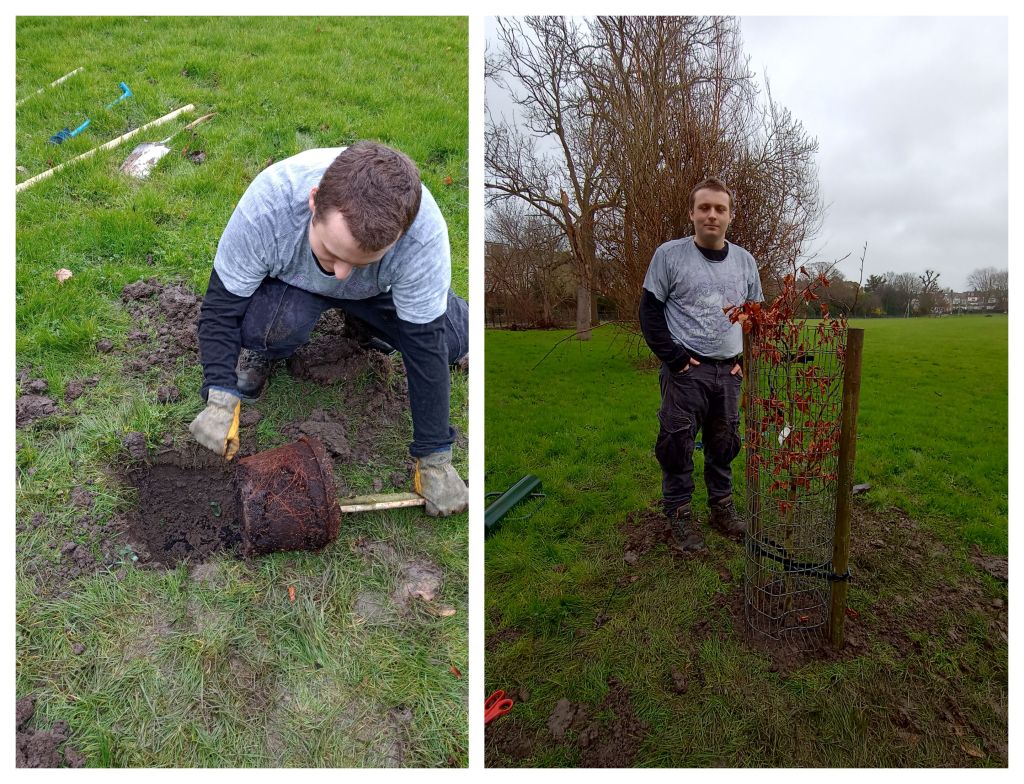
Elsewhere in the borough, we were planting native black poplar trees along the River Pool, we planted 5 trees, 3 male and 2 female along the stretch of the river and installed protective cages around them to give them time to grow large enough without any disturbance.
The volunteer session programme has now been released for April to June 2025. Check out the programme HERE. If you would like to get involved in volunteering on Lewisham’s rivers please read through the the River Volunteering web page, and if you have any questions or queries please get in touch with Emily.
December was a busy month, considering that we only had a few sessions due to the festive break. We began our winter management of the Hare & Billet pond up on Blackheath. This is a task we do annually to keep the reeds and flag iris contained in one area of the pond (otherwise they’d spread across the whole pond).
Later in the month we had some new bird boxes to put up in Northbrook Park, where there has been a big project to turn one corner of the park into a wetland, linking up the wet woodland and large pond in the adjacent Network Rail Land.
We finished our year with a walk around Beckenham Place Park, looking at all the work and different projects that have been occurring there over the past year. From me personally I’d like to say a HUGE thanks to all the wonderful volunteers that help to continue improve our wonderful green and blue spaces in Lewisham!
The volunteer session programme has now been released for October to December 2024. Check out the programme HERE. If you would like to get involved in volunteering on Lewisham’s rivers please read through the the River Volunteering web page, and if you have any questions or queries please get in touch with Emily.
Bramble Bashing! We started our month off in Brookmill Park, where we rotationally remove bramble from two of the path bends. This is a once a year task and we only clear one area at a time to allow for winter foraging and shelter for wildlife that remain local in the winter months.
One of those animals that use the vegetation as cover is the wonderful common frog, like the one pictured below. Also pictured is the river with a lovely shadow of the bare trees.
November also marked leaving Lewisham’s rivers to dip our waders in one of the boroughs many wildlife ponds. This year we got into Hare & Billet pond to remove some of the reed growth, we try to maintain an area of the pond as a reedbed, but have to keep on top of the reeds before they expand into the deeper areas of the pond where we cannot reach. We’ll be back in the pond in January to finish up the last bits!
We started off in October continuing with our hub project in Ladywell Fields (South Field), where we continued with teh ground preparation for our future planting on the banks. The list of plants has been confirmed, and come spring we’ll be back to get planting!
Our group then spent the rest of October in Chinbrook Meadows, swapping bramble bashing for willow coppicing. Each year we coppice another selection of willows alongside the river and wildlife ponds- we do quite drastic work at the far wildlife pond to enable enough light to hit that pond. Fun fact with that pond is that it is the only pond in the meadows that isn’t regularly fed by river water, it’s actually mainly filled with run-off from the football pitches on the other side of the footpath. The exception to this is when the Quaggy is in flood state, where it bursts it’s banks and then runs into the pond.
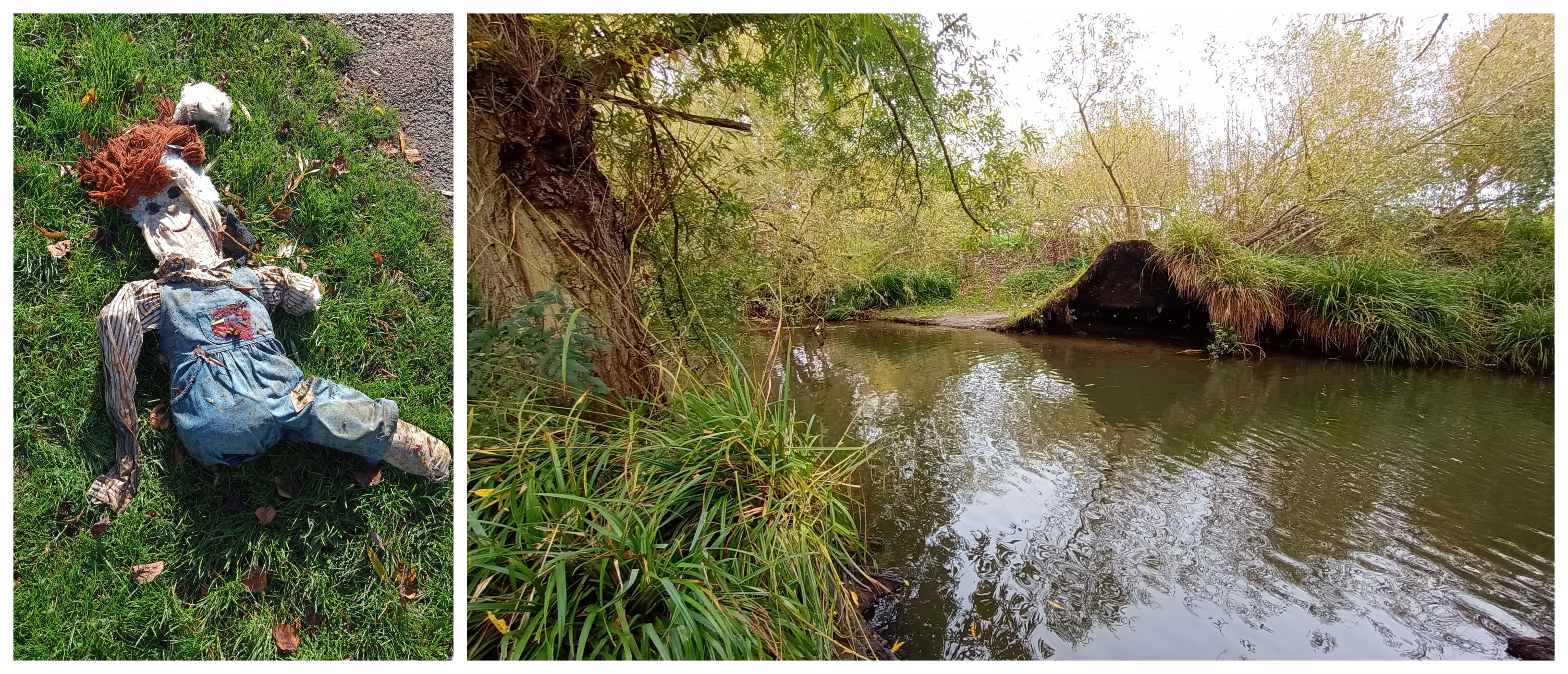
To add to spooky season, look at this creepy doll found face down in some nettles next to the river!
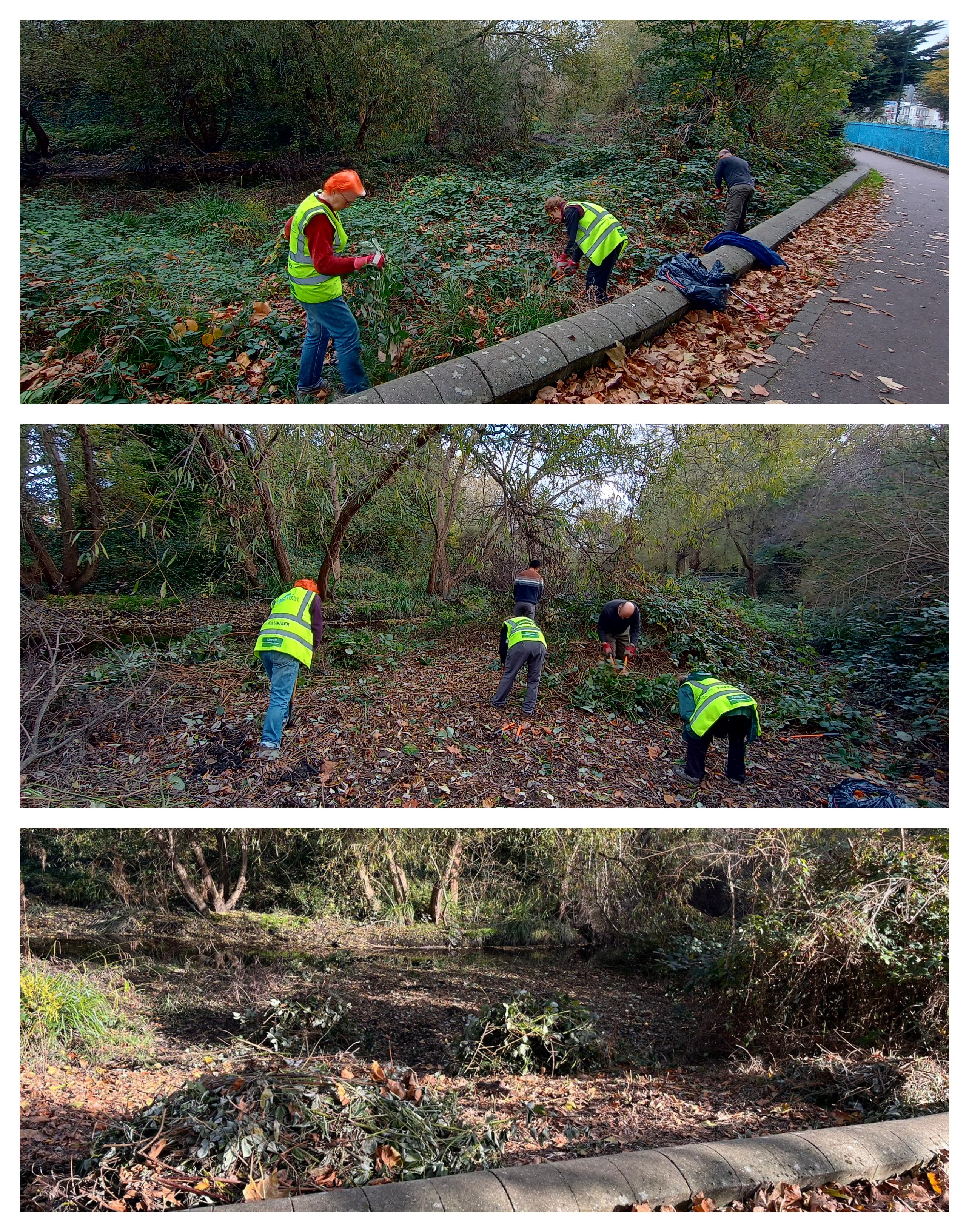
September saw us heading back into bankside management. Starting off with the backwater in Ladywell Fields (middle field), we removed the last strands of Himalayan Balsam and reduced the nettles and brambles.
The following week we were back to start the work on clearing the channel, which involved moving some large logs from the entrance to the pond area.
Lots of pictures this month! Towards mid-September we did our quarterly clean up of the secondary channel and weir in Ladywell Fields (North). You can often see the weir being cleared here as whenever the river is in flood mode it brings all kinds of debris down through the park that gets caught here.
Lastly, we started our project at the hub, but we’ll share more about this project next month as we have more sessions coming up there!












 Rivers and People