Volunteer Sessions 2025 Wrap-up

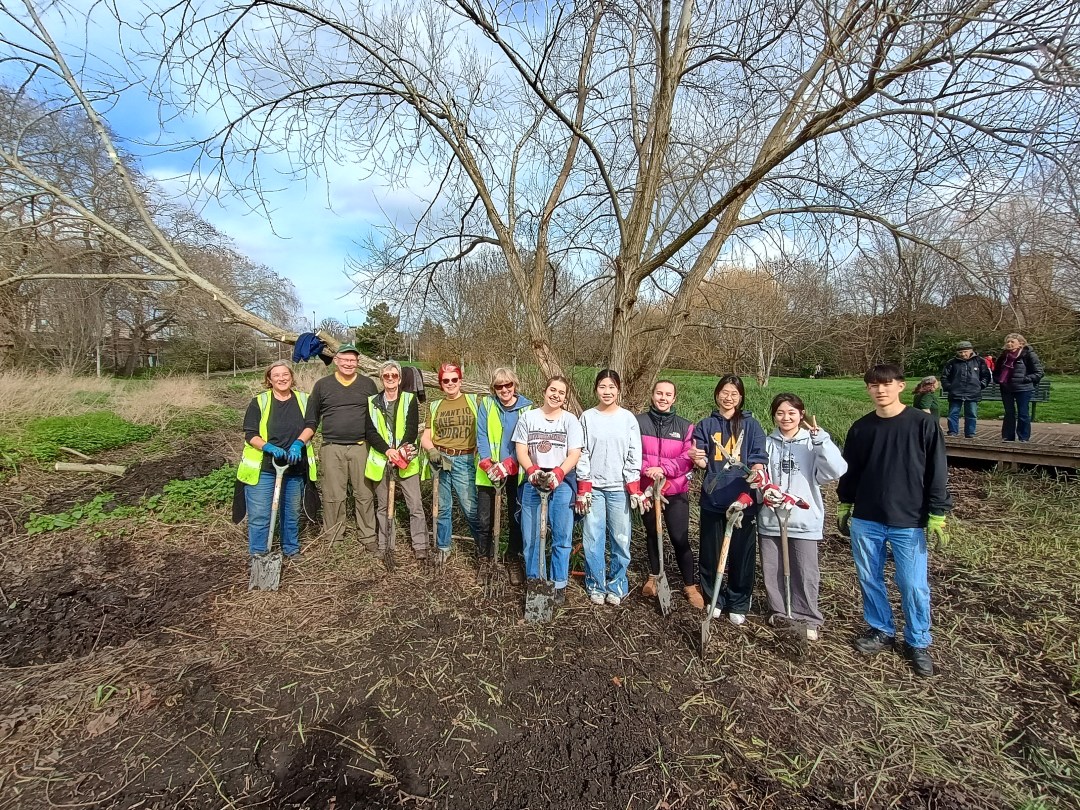
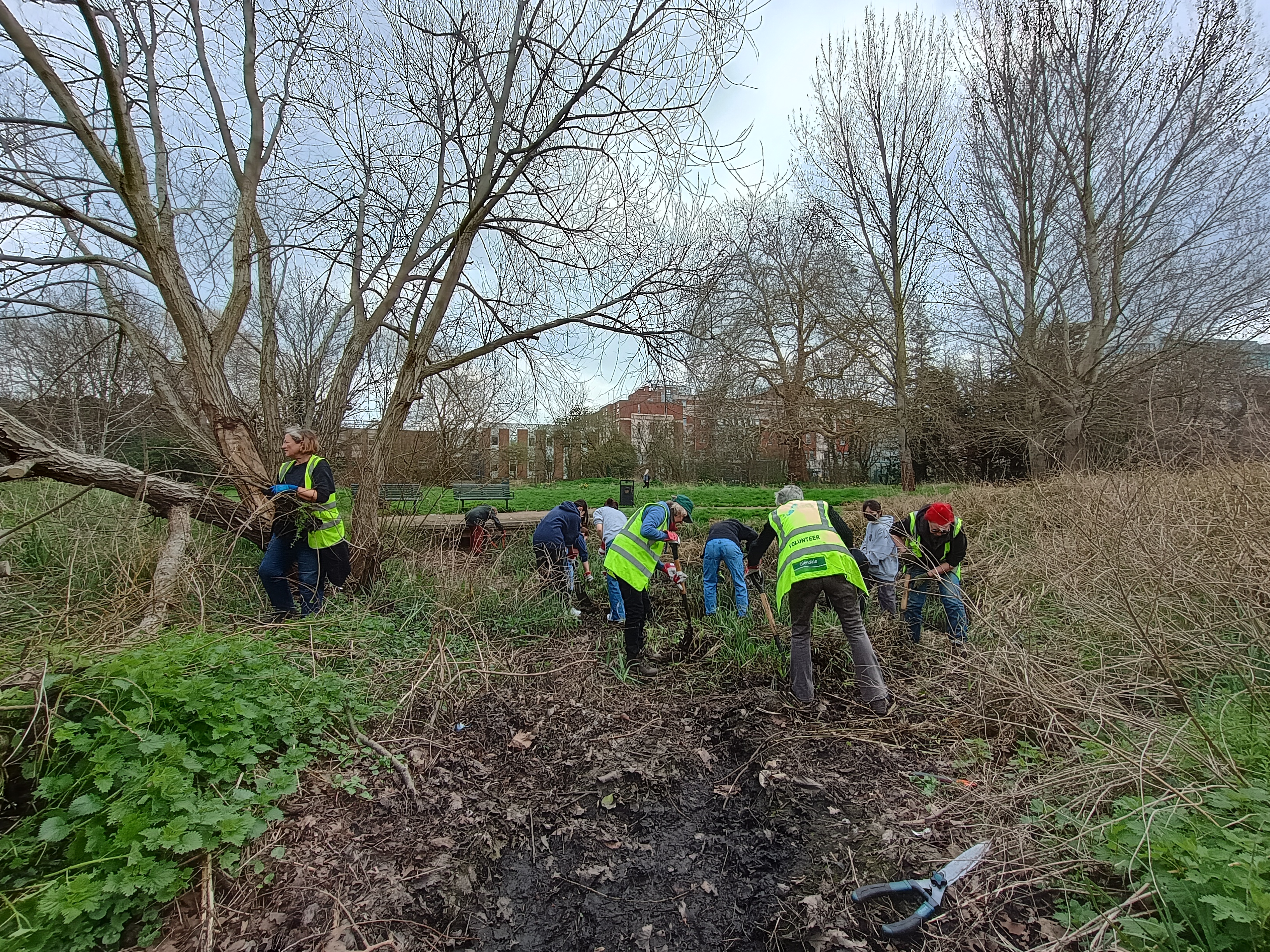
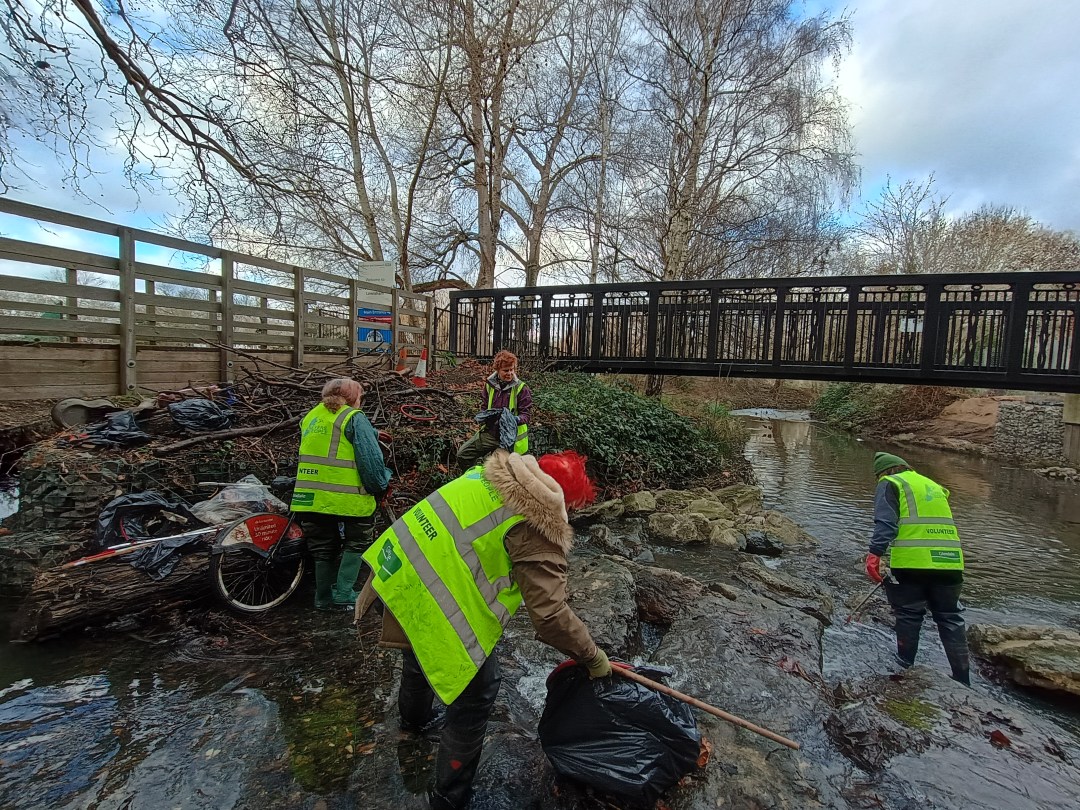
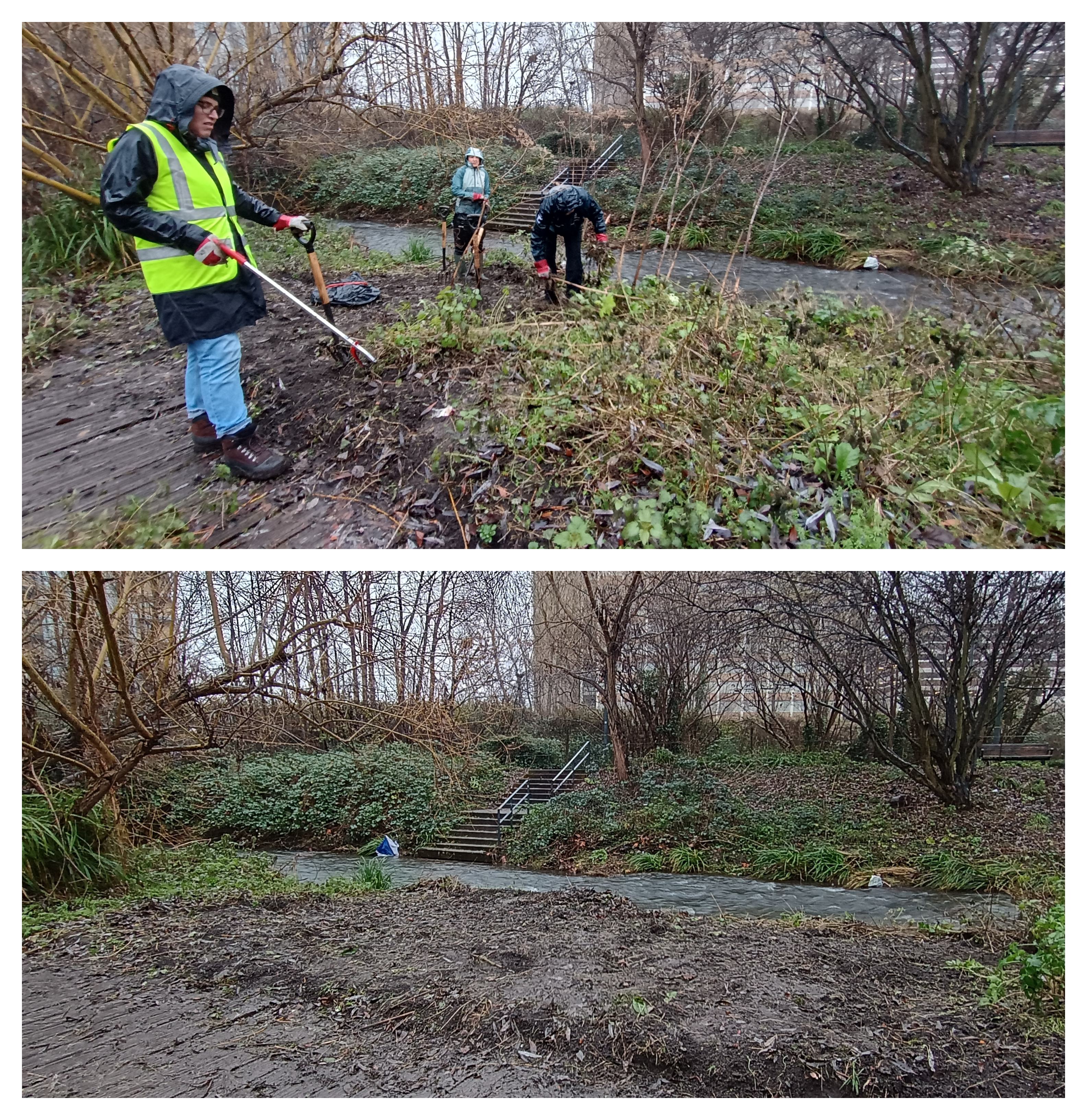
It doesn’t feel too long since I wrote a post about the end of 2024, but 2025 has been a really busy and varied year for our Rivers & People volunteers. Firstly, I want to extend a HUGE thank you to everyone who helped out at one of our 36 sessions this year. We covered all three rivers within Lewisham, and miles of banksides, surveying for wildlife, litter-picking, restoration projects within the channel to improving access to the river from within the parks. Overall, 693 volunteer hours have been given to the rivers in Lewisham, so thank you to everyone who has been involved.

To join the Rivers & People volunteer group in 2026, please check out our January-March session programme.

Rivers & People Volunteer Programme [January – March 2026]

The volunteer session programme has now been released for January – March 2026. Check out the programme HERE. If you would like to get involved in volunteering on Lewisham’s rivers please read through the the River Volunteering web page, and if you have any questions or queries please get in touch with Emily.

Student Work Placement: Quin

In this blog conservation student Quin talks us through their work experience placement with Glendale’s Nature Conservation Officer.

I had a really good time during my work experience at Glendale, learning more about what is involved in conservation as well as meeting lots of people with an interest in nature and doing lots of practical work.

Day 1

My first day was an office day near Mountsfield Park, where I met Emily Millhouse, who was really nice and told me about what her job involved- monitoring wildlife populations in parks in Lewisham as well as leading volunteer groups and teaching at local schools. I redesigned some worksheets for a school trip during the morning and in the afternoon I organised the van and made a list of all the items.

Day 2 

On my second day I met with a group of volunteers in Brookmill Park, we waded down the river, uprooting Himalayan Balsam and other invasive species. It was amazing to see how much wildlife there was in 1 urban river, including a heron, an egret, several crabs, some moorhen nests, multiple flower species,  some ducklings, and a kingfisher box. We also collected lots of litter.

Day 3 

I spent half of Wednesday in the office again editing worksheets and then headed to Ladywell Fields Park. We met Jess who works conserving wildlife in public  gardens around Lewisham and she gave me some useful tips on where to get more work experience and volunteering in order to pursue a career in conservation. We walked around ladywell fields to check up on the river and we saw a mistle thrush and many other birds.

Day 4

Thursday was another river walk in the river Ravensbourne, there was a large group of volunteers this time, many of which volunteered in the river regularly. We picked up a lot of litter as we waded through the river towards Lewisham and uprooted some invasive plants. We saw some fish and shrimps in the river and there were two peregrine falcons nesting in a high-rise building which was an incredibly lucky spot.

Day 5

I met a group of bird watchers in Hilly Fields Park and with our binoculars, we went around taking note of all the bird species. There was a collared dove, a chiffchaff, a great spotted woodpecker, several long-tailed tits, a buzzard flying high in the sky and we heard a nuthatch. We also saw some interesting butterflies and beetles. The volunteers were all really nice people who knew a lot about nature, although it was a bit humbling that a 10 year old could recognise more bird species than me.

In conclusion, I had a lovely time working with Emily Millhouse and Glendale was an amazing organisation to find, and it’s very impressive how much they do to keep the Lewisham parks and gardens in good shape. This work experience week has definitely convinced me that I want to go into conservation.

Volunteer Sessions in May

We had slightly less sessions in May due to some staff annual leave, but the sessions we had were full on! From clearing the weir in Ladywell Fields, and getting that water flowing through all the rocks to heading back to the willow lined Quaggy in Chinbrook Meadows. In this latter location we manage the veegtation that grows into and through the boardwalk to keep it accessible for everyone to walk through the ponds and over the river here on the pathways.

Above the Ravensbourne on the bridge to St Mary’s Churchyard and gardens we met a familiar avian face; a pair of mandarin ducks who have called this stretch of river home for the past three years. We know its the same female mandarin as she has a twisted lower bill, so she stands out, we also imagine she gets a lot of food from park visitors as she has certain grown in confidence as she was the first bird to fly up and ask for crumbs (swiftly followed by the male, pictured above, then some feral pigeons)!

Volunteer Sessions in April

We’ve been all over the borough this April! Starting out at Cornmill gardens, located behind Lewisham Town Centre, we did a litter pick upstream towards Riverdale Sculpture trail. We removed a whopping 9 full bags of rubbish and a large shopping trolley from this section of the river. We also observed a large shoal of Chub and spotted one small European Eel slightly upstream of this park.

Lots of work has been happening in the east side of Beckenham Place Park, so it’s been a while since we’ve waded this section. We found some interesting things in the river including a collection of little plastic fish floating downstream towards, they were a bit brighter coloured than the fish we normally find!

Heading into the Quaggy later in the month, heading downstream from Manor Park to behind the Lidl on Lee High Street. Although still early in the growing season we did find a bunch of Himalayan Balsam, which we removed on our wade downstream.

Volunteer Sessions in March

March means Amphibians! As the amphibian migration begins, we start to check all the ponds within Lewisham for signs of amphibian presence. This year we visited Bell Green Pond, in Linear Park and Chinbrook Community Orchard. We change our session time from 11am-2pm to evening sessions 4.30pm-7pm to catch dusk into darkness where we can practice many different amphibian survey techniques.

If you’ve been reading the blog over the past year, you may remember we’ve been working on the hub area of Ladywell Fields (South), previously digging up the brambles and reducing nettles etc in 2 of the 4 areas. In March we returned to plant up marginal plants at the bottom next to the river and a wildflower mix of plug plants and seeds for the rest of the slope.

We donned our waders and started our quarterly clean up of the River Ravensbourne working from Ladywell Road up to Lewisham Hospital and then around the secondary channel.

Student Work Placement: Riley

In this blog conservation student Riley talks us through his second and longer work experience placement with Glendale’s Nature Conservation Officer.

Monday 3rd of February
Today at the office I learned how to remove seeds from Wildflowers, and then put
them into a separate tray to be put into a bag for planting later in the year. I then
went out into the vehicle to attain some young tree whips that was temporarily stored in a
secure area, which we then brought to deposit at Brookmill park. I then learned how
to organise and prepare tools and equipment for the following practical session with
volunteers, such as checking Wellingtons and how many and what sizes were
needed for the day.

Tuesday 4th of February
Today I processed Willow into stakes. We then used the Stakes and left over sticks
to create structures that will be a beneficial food source for invertebrates. I learned
how to use a Sledge-hammer to put in Stakes. I also got the opportunity to give the
volunteers of Rivers & People a Health and Safety talk, and Tool talk.

Wednesday 5th of February
This morning I laminated flower sheets that will be used for a future practical
session. I then finished sorting the Wildflower seeds from the Monday, and then
assisted in the Bird watch at Lady well fields that was partnered with SLAMS. When
we got back to the office, I written down what to say for the Thursday’s Tool talk and
Health and Safety talk to ensure I am more effective at giving important information. I
also learned how to put bird survey data into a system called the “National
Biodiversity Network database”.

Thursday 6th of February
Today we removes Bramble in a “U” shape to allow new plants to develop and thrive.
I then raked the area to clear of any debris, which also helped to see any more litter
than needed to be removed. I afterwards made teas for volunteers and later at the
lodge washed them up. I learned how to make a practice risk assessment with a
chosen scenario; my one was clearing Bramble and placing the vegetation into the
dead hedge.

Friday 7th of February
Today we conducted a bird survey at Mountfield park, we saw a few interesting birds
including two Red wings, a Mistle thrust, Woodpecker and two Goldfinches!
Afterwards, we went inside and I assisted with developing posters of ten lost natural
history words, which will later in the year (possibly summer time) be put in the most
populated parks within Lewisham.
I then finished of the Risk assessment I started producing yesterday, and then Emily
went through my CV for me and gave me useful pointers; including two print out
examples of conservation jobs, and how to depict what to include in your CV and/ or
cover letter to stand out to the job.

Conclusion: Emily Millhouse was a delightful person to do work experience with, and I couldn’t have chosen a better organisation to do my weeks’ experience with; alongside my
Wildlife and Conservation Level 3 Diploma course. This was one of the best work
experiences so far!

Volunteer Sessions in February

Lots happening in February! We spent most of this month’s sessions in Northbrook Park, near Grove Park station, working both within the park’s new wetland area and just across the boundary on Network Rail’s land to improve the wet woodland and the park’s stream of water that flows into it. The image below shows the channel from the second pond in the stream being widened and graded to allow the flowing water to spread out into the woodland (where the photo was taken).

On the park’s side of the fence we have been processing the limbs and branches of a few trees that have come down in recent high winds and working with local schools to help plant up the pond and the banks.

We then ventured further south into the borough to Chinbrook Meadows, where we have to keep on top of teh growth of the willows along the stretch of river (and overhanging the paths and boardwalks). In addition to dead hedges, woven fences we’ve also created some hexagonal and pentagonal dead wood piles to allow the sneadings to be kept on site in a neat but still great for wildlife purpose! These worked really well, so look out for them in other parks across the borough soon.