Our friends at Creekside Discovery Centre have their annual open day coming up! Please read below for more information about the event.
This is your best chance to experience the full variety of wildlife experiences and activities we offer here at Creekside, and to meet the whole team of staff, volunteers and trustees whilst you enjoy an afternoon immersed in urban wildlife. Mark your calendars and book your tickets, as it’s an event not to be missed!
On the day you’ll be able get up close and personal with wild plants and animals sharing Creekside with us – on land and in the river! The event will be packed full of guided and self-led activities, including river dipping, pond dipping and bug hunting, to name just a few. There will be lots to entertain young ones and grown-ups alike. And for those interested in learning about how we are conserving and enhancing the local environment, join our guided wildflower walk where you’ll also learn about our exciting wildlife and community projects.
Most of all, we hope you join us on the day and connect with the wonder of Creekside’s urban wildlife!
Our events starts at 11am and so far, activities will include:
river dipping for ages 5+ (11:00-13:00)
bug hunting for all ages
crab racing at 13:30
pond dipping for all ages (14:00-15:00)
a Lost & Found project talk
a pop-up museum by Deptford Ragged School Archive
badge making + arts & crafts
tadpole corner for the tots
Slimewatch Studio – get up close and personal with algae
wildflower bingo
a wildflower and Creekside conservation walk ‘n’ talk (14:00)
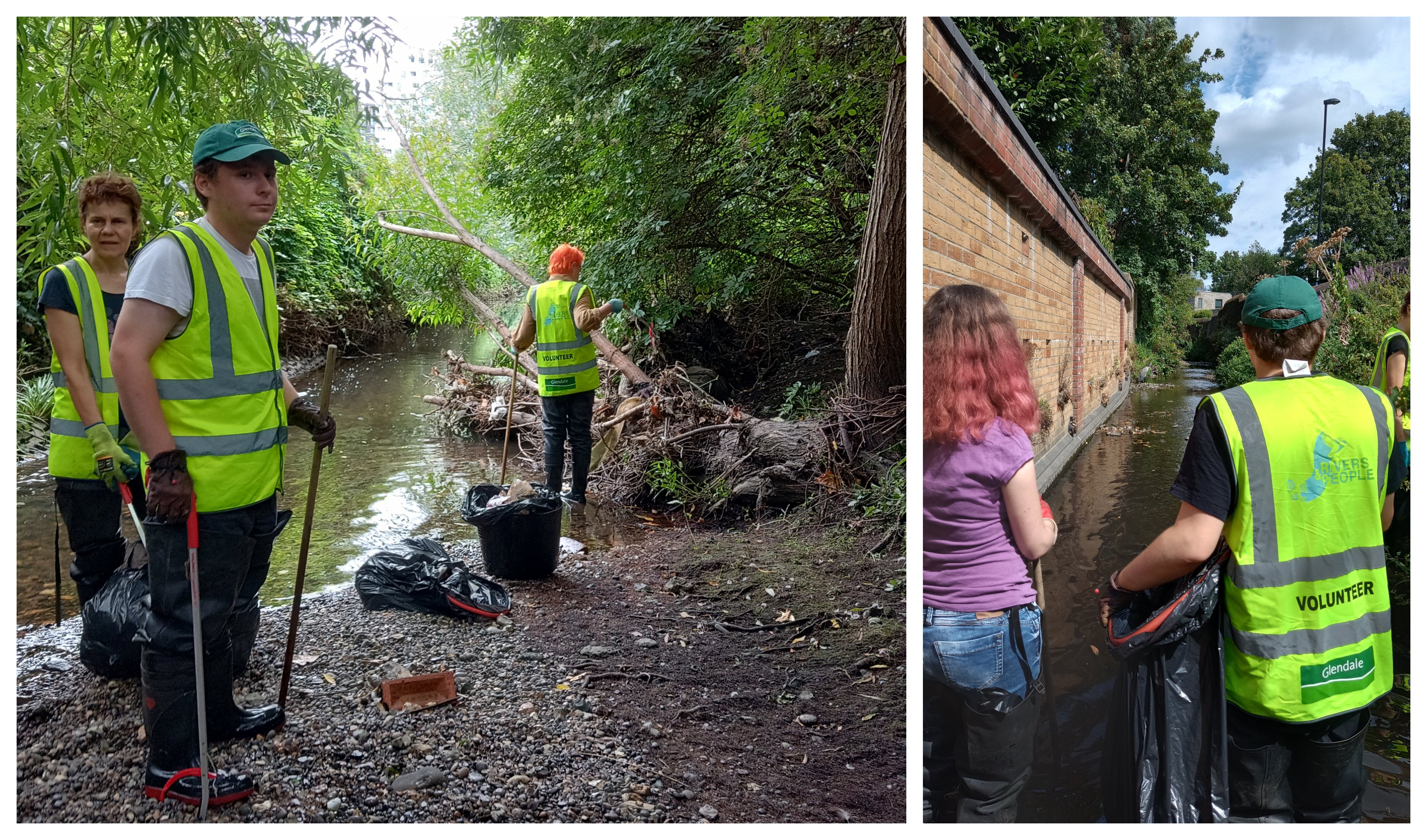
September saw us heading back into bankside management. Starting off with the backwater in Ladywell Fields (middle field), we removed the last strands of Himalayan Balsam and reduced the nettles and brambles.
The following week we were back to start the work on clearing the channel, which involved moving some large logs from the entrance to the pond area.
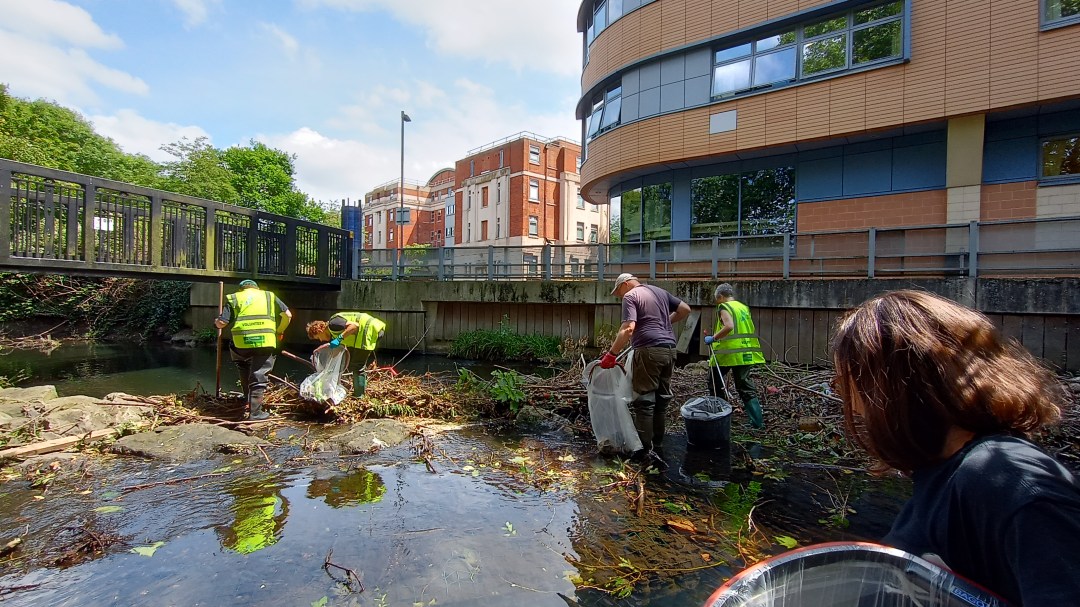
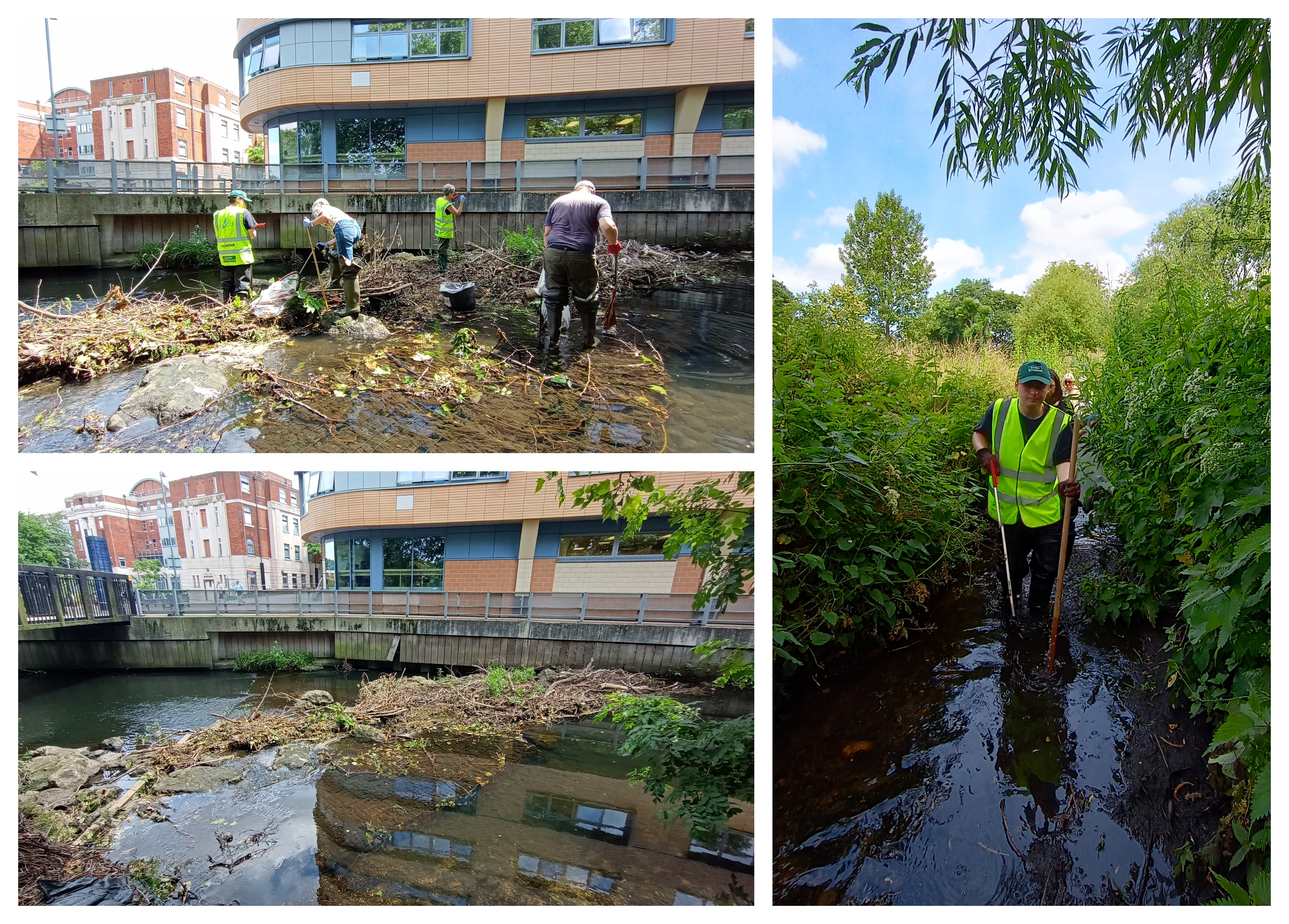
Lots of pictures this month! Towards mid-September we did our quarterly clean up of the secondary channel and weir in Ladywell Fields (North). You can often see the weir being cleared here as whenever the river is in flood mode it brings all kinds of debris down through the park that gets caught here.
Lastly, we started our project at the hub, but we’ll share more about this project next month as we have more sessions coming up there!
August saw us enter the River Quaggy and the River Ravensbourne from a variety of parks and places. We started the month off by finishing our plastic clearance project in Lewisham town centre, you might actually be able to spot the fallen willow that we attended to from the bridge on Smead Way.
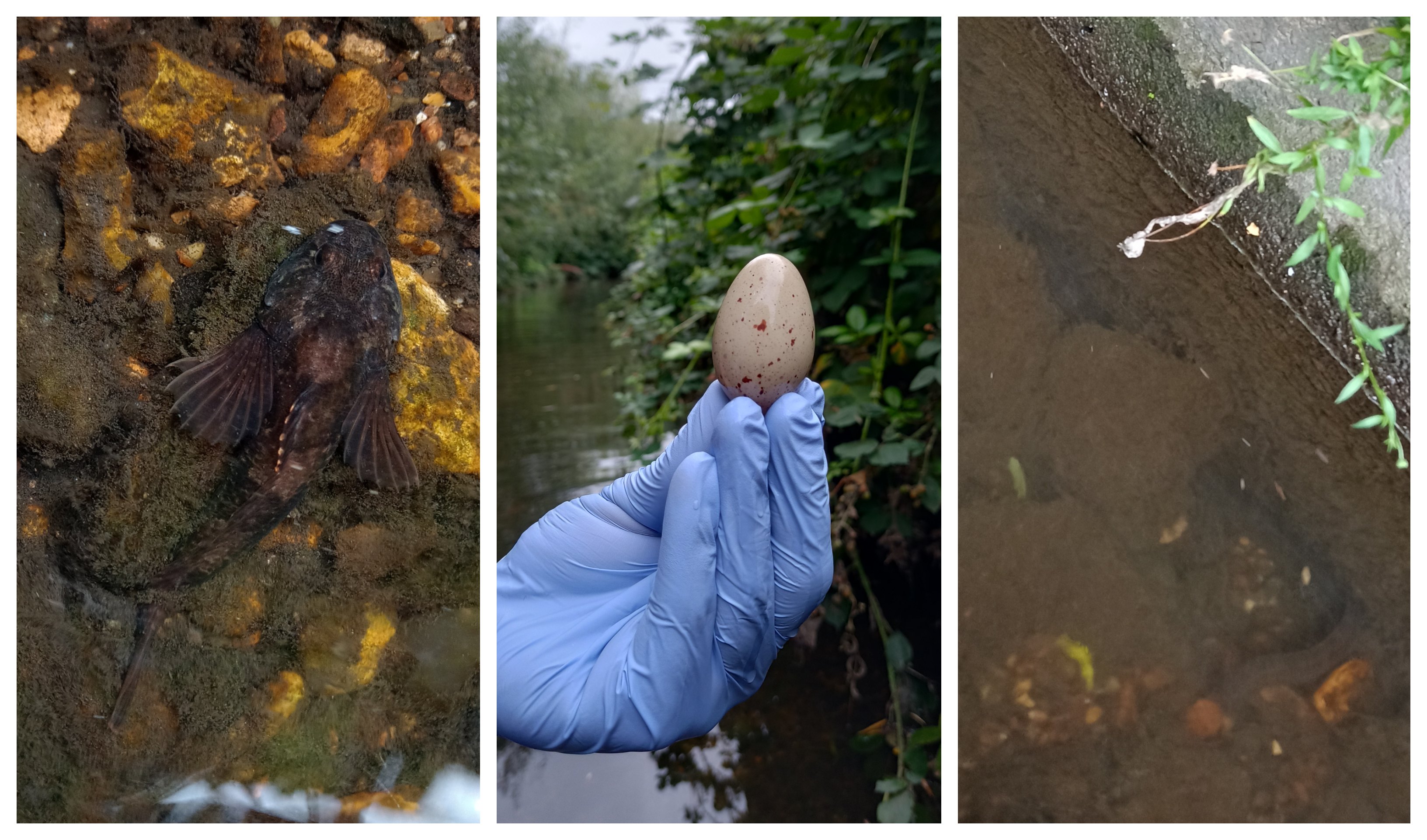
August has been a great month for spotting wildlife for our team! Not only have we seen a few grey wagtails and grey herons, including the very confident young heron pictured above, but we’ve seen three European Eels, at varying ages, during our sessions, Can you spot the eel in the last photo below? Another notable spot from one of our volunteers was the wonderful bullhead fish pictured below.
Do you know the owner of the red speckled egg below? It’s a Moorhen egg! This one was no longer viable as it was found on the riverbed, but from the number of moorhens we see on the rivers normally they seem to have enough hatch to allow for some to not make it. Do keep an eye out for nests on the rivers whilst you’re walking around– many of the poorly placed nests are from our Moorhen friends!
In the beginning of July we were still in the midst of the #3RiversCleanUp, so our wonderful volunteers were busy removing Himalayan balsam from our waterways. There was less balsam on the catchment than in previous years, testament to our volunteers fantastic efforts each year. We do have a few sites lower down the catchment, like Brookmill Park, which are hit harder by the invasive plant, but it’s still no match for our volunteer effort!
Later in the month, we started on a plastic clearance project in the middle of Lewisham town centre. Wading upstream from Cornmill Gardens we’d identified a fallen willow earlier in the year which needed a bit of maintenance so it didn’t block the whole width of the channel and to remove all the plastic detritus that had been caught by it. As a rule we don’t remove all deadwood/ fallen branches from the river as they create brilliant ecological niches for some animals to use. In this case a whole shoal of chub were sheltering behind it in the still water, perfect spawning and sheltered space for young fish.
Amongst the litter we do occasionally come across offerings to the river, in most circumstances we do leave these within the water as most are made of materials that eventually break down, and it’s wonderful to see people have that connection with our rivers. Unfortunately we do sometimes find plastic offerings, or items within plastic bags that need to be removed for the health of the river.
First up in June, our team of volunteers tackled the weir in Ladywell Fields, next to the Kenneth White Bridge and hospital. At this time of year the water level is low enough to allow us safe access onto the gabions to clear any obstructions caught on the weir itself. The larger area of branches and brash on the side gets removed by the Environment Agency periodically.
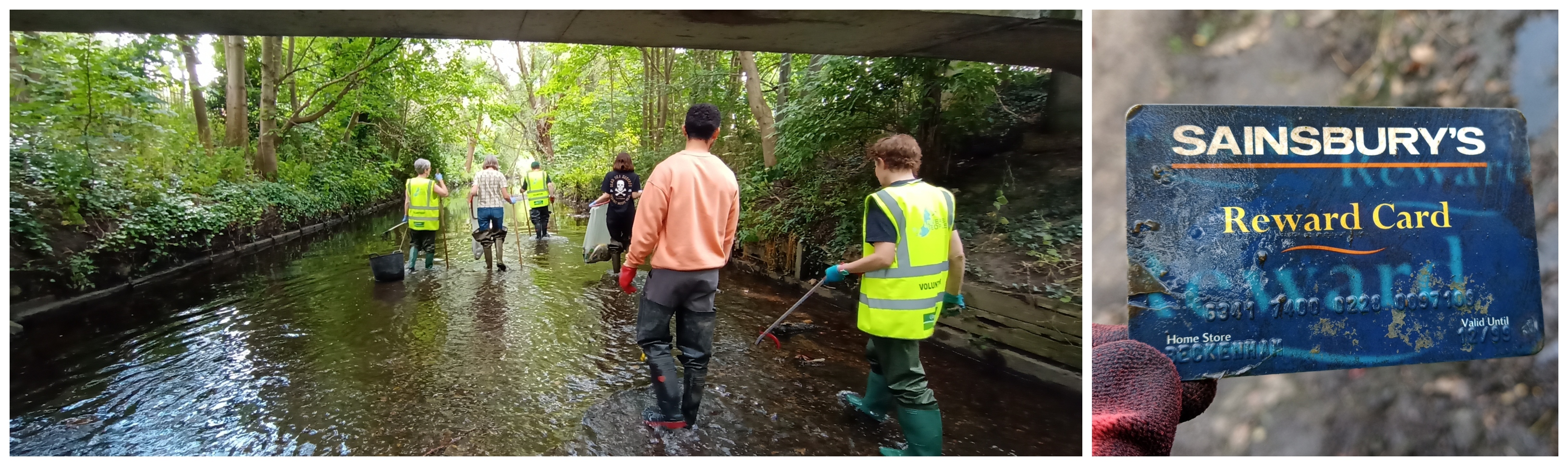
Heading downstream and through the secondary channel we found this old Sainsbury’s reward card which expired in Dec 1999! Shows how long plastics will remain in our environment and waterways.
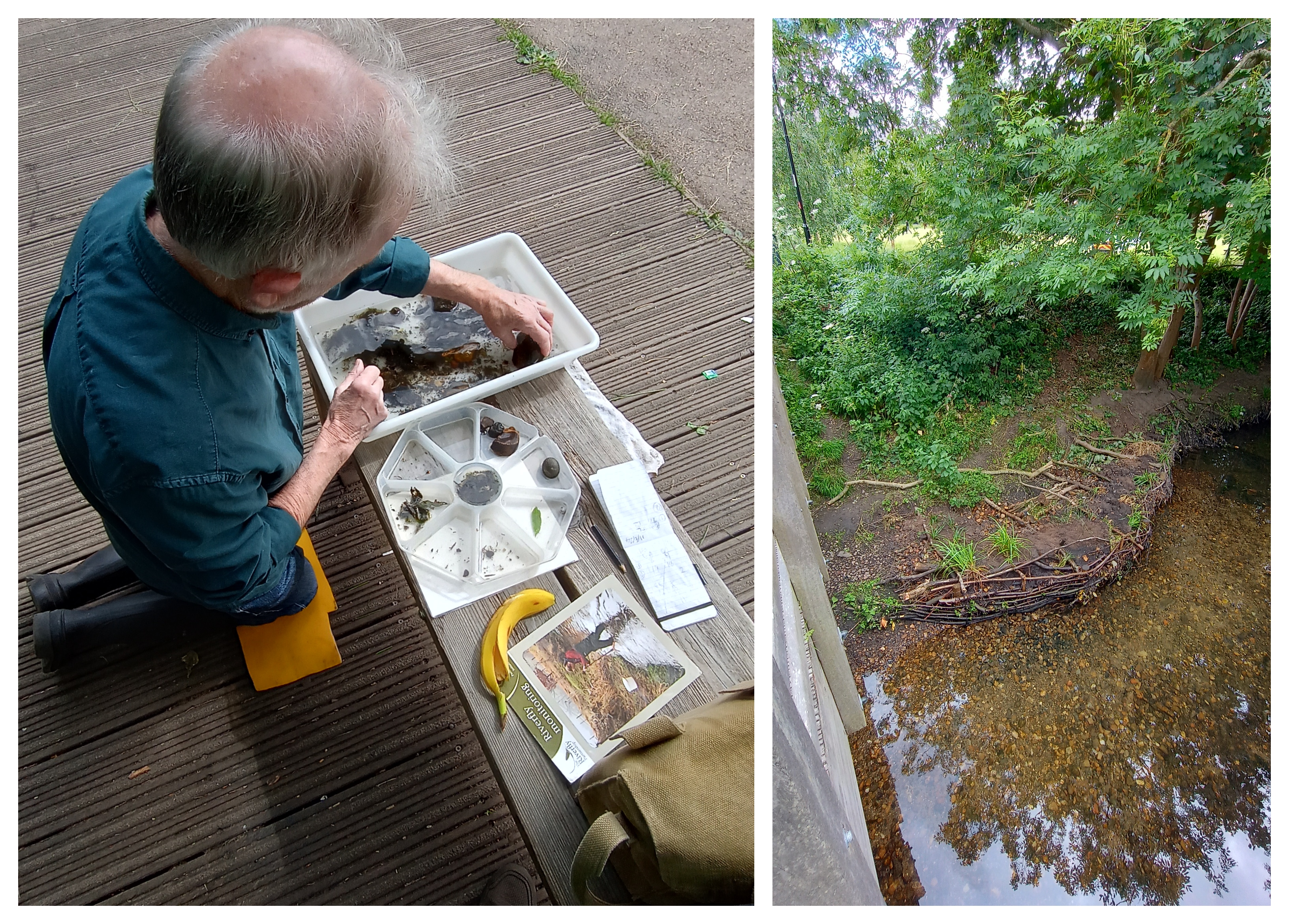
Elsewhere in the catchment, the lovely riverfly monitoring volunteers Tom and Julia were in the middle field in Ladywell fields performing a kick sample.
Join urban sociologists Dr Emma Jackson and Dr Louise Rondel to celebrate the launch of the Place-making and the Rivers of Lewisham podcasts and project report, hosted by the Centre for Urban and Community Research (Goldsmiths).
As part of this event, you are invited to join us to walk along two stretches of Lewisham’s rivers, from Lower Sydenham to Catford Bridge and from Confluence Park (Lewisham Gateway) to Deptford Creekside and listen to podcasts with stories and soundscapes from the rivers. You are also invited to join us at Creekside Discovery Centre for the launch of the project report followed by a drinks reception.
Friday 28th June, 1pm-7pm – Various venues across Lewisham (please see event information and tickets for more details)
This walk will follow the Waterlink Way and will be on a mix of off-road paths and pavements. It will involve crossing roads. For more details see: https://www.accessable.co.uk/venues/waterlink-way
4.30pm – 7pm Report launch at Creekside Discovery Centre
While the Thames looms large in questions of the past, present and future of London, a network of 25 smaller tributary rivers criss-cross the city, shaping the landscape and impacting in dramatic and mundane ways on people’s lives. These include the rivers of Lewisham: the Ravensbourne, the Quaggy and the Pool.
Over the course of a year, the research project Place-making and the Rivers of Lewisham has conducted a close-up exploration of two stretches of Lewisham’s rivers, through the use of creative qualitative methods, walking interviews, soundscape recordings, ethnography and a review of policy documents that are relevant to blue and green spaces across the borough.
The two stretches of river we are following in the project take us through a fast-changing part of Lewisham. They thread together landscapes of newly privatised high-rise development where the rivers have only recently been opened up as part of the Lewisham Gateway regeneration, the well-established Waterlink Way Linear Park, stretches dominated by transport infrastructure and the unique ecology and heritage of Deptford Creek.
Caring for Lewisham’s stretches of river are groups such as the Friends of the River Pool, Quaggy Waterways Action Group [QWAG], the Friends of Brookmill Park, Creekside Discovery Centre, Thames21, Healthy Rivers Project and Lewisham’s Nature’s Gym. These groups meet regularly to pull on their waders, don litter pickers and bin bags, and walk the river and its banks collecting litter, weeding out invasive plants, clearing debris which impedes the water’s flow, monitoring water quality, and carrying other such essential maintenance tasks; and, of course, sharing flasks of tea and donuts.
If you have any questions or accessibility requirements, please contact the organisers: Emma Jackson and Louise Rondel e.jackson@gold.ac.uk and l.rondel@gold.ac.uk
With thanks to the Goldsmiths Strategic Research Fund for funding the project.
A WaterBlitz is a water sampling event that helps provide a snapshot of pollution issues across a river’s catchment area.
This event is for local people and citizen scientists to take water samples of points of interest to them across the Ravensbourne Catchment (which includes the Ravensbourne, Pool, Chaffinch Brook, The Beck, Quaggy, Kyd Brook) to identify ongoing pollution issues impacting the catchment’s water quality. This event will also be an important opportunity to sample areas in the catchment that generally have relatively good water quality to understand how poorer quality stretches of our rivers could perform throughout the catchment in the absence of pollution challenges.
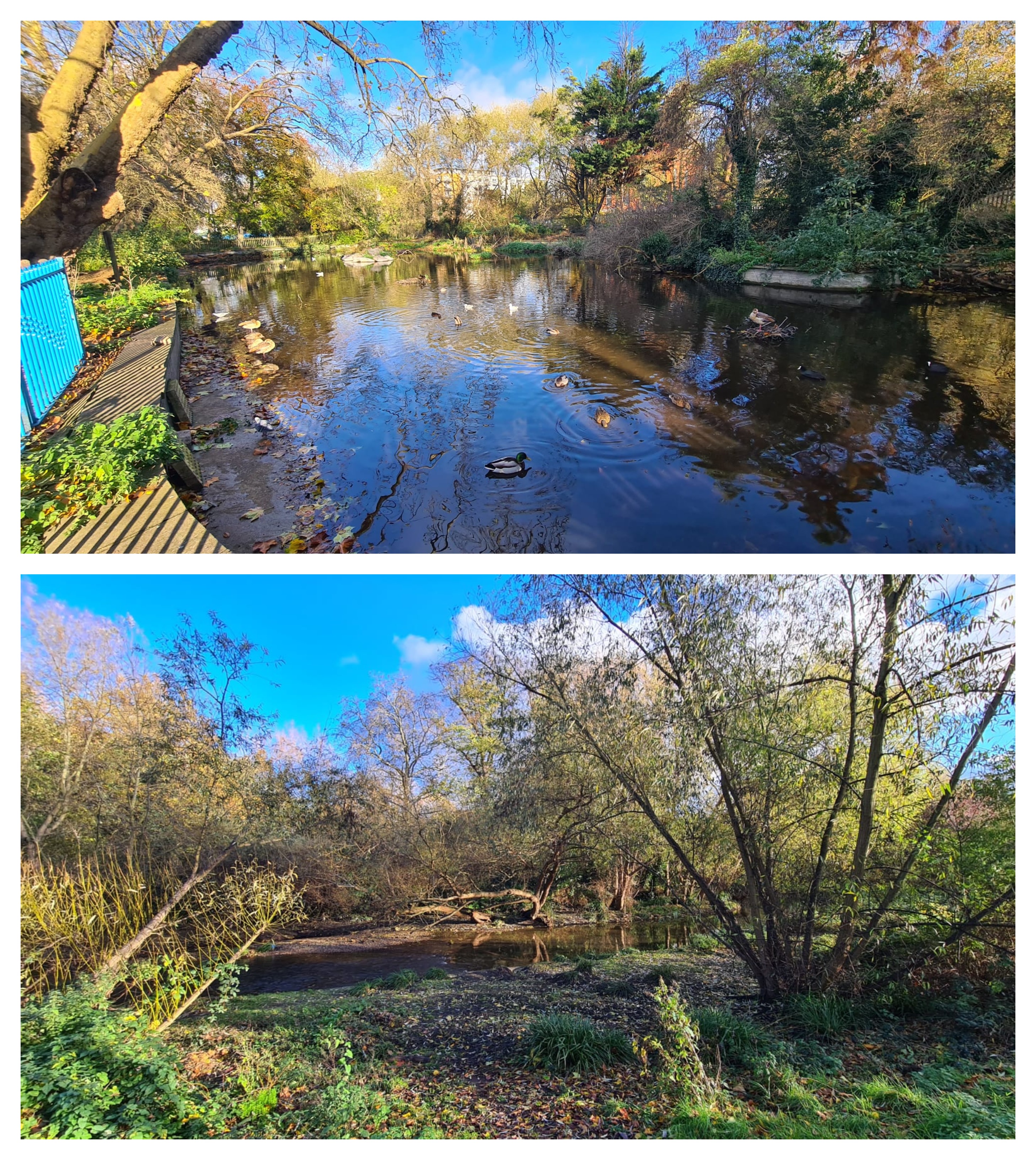
The Rivers & People volunteers have been all across the borough this month despite the very wet weather. The volunteer team have opened up one of ponds in Chinbrook Meadows, by cutting back some of the overhanging willows and removing the encroaching sedge and grasses. They also got into the River Quaggy to unblock the channel from a fallen tree, the bankside volunteers then used the bras cutting to create a habitat pile further into the woodland.
The team also visited Brookmill Park to do a quick kick sample for the Riverfly Monitoring Partnership. Although it is later in the year it was interesting to find a selection of freshwater invertebrates such as caddisfly larvae, leeches, freshwater hoglouse, mayfly nymphs. After our short sampling session the volunteers worked to clear a section of the overgrown bramble on the bank, so that any park visitors using the pathway can now see the River Ravensbourne. We only clear half the sections in winter to keep some coverage for birds to forage in whilst maintaining a view of the river.
As a pre-festive period treat, you should visit your local blue space and see the wildlife that’s about. Black headed gulls, kingfishers and grey wagtails are common sights in ponds and on the river around the borough. If you do spot anything please do share your sightings with @GlendaleLew as we’d love to know!
Join the Friends of Brookmill Park for a weekend river clean up on Saturday 10th December.
This clean up will be led by local resident Samantha Dhedhi, NCFE qualified River Action Leader and Lawrence Beale Collins from the Healthy Rivers Project.
Last month, the Rivers & People volunteers took part in The Thames and Tributaries ‘Plasticblitz’ week. This week of events was organised by Thames21, the Environment Agency and Rotary in the Valley (through their international End Plastic Soup campaign) to collate details on the amount and differing types of plastic pollution groups find across The Thames and it’s tributaries.
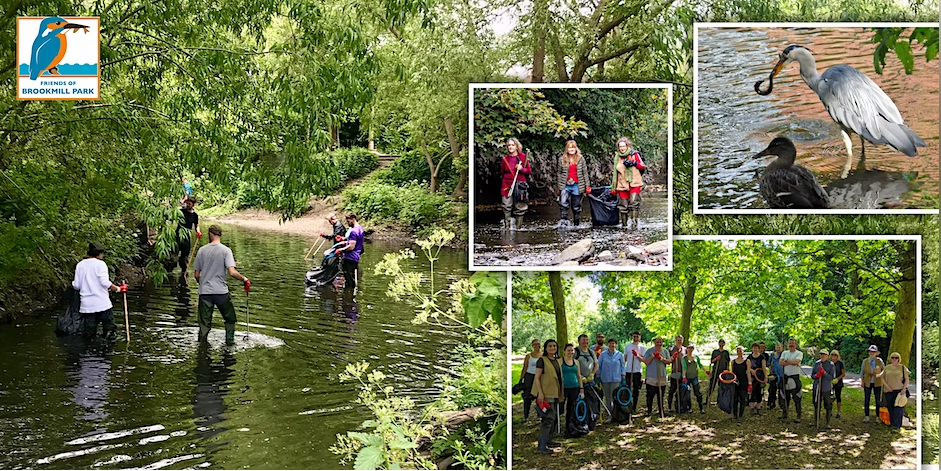
The Rivers & People group held a session at Brookmill Park where we cleared 6 bags of rubbish from the Ravensbourne River and it’s banks. A wide variety of litter was collected from plastic bottles to curtains. Our team collected 6 full bags of rubbish over a few hours and covered a stretch of river over 250 metres.






 Rivers and People