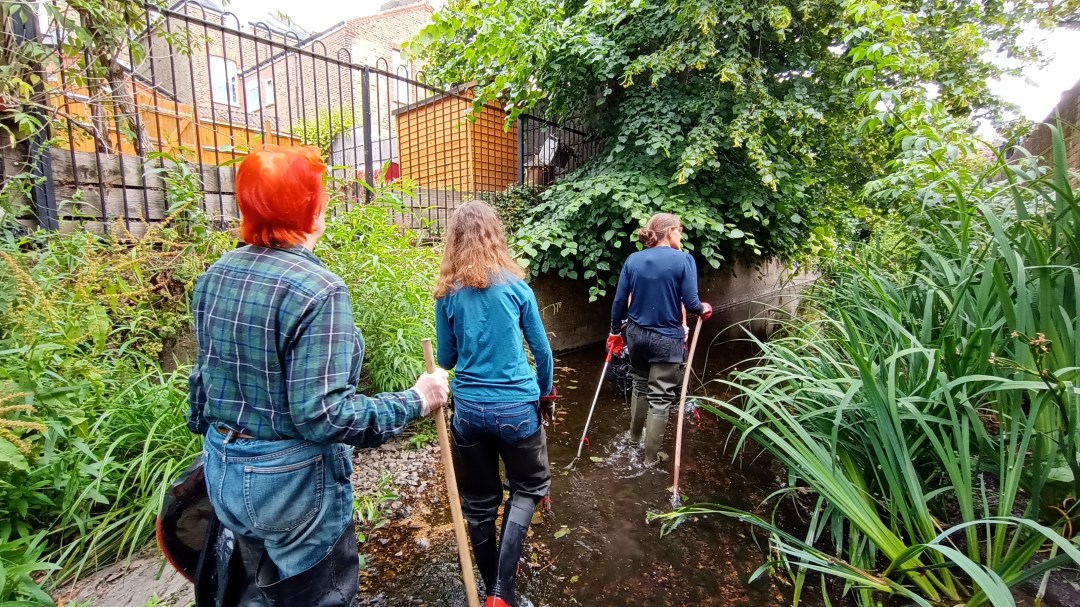
It’s January and the Rivers & People volunteers are back in the water! After heavy rain and storms you’ll notice that the banks collect both litter and fallen branches. some of which restrict the flow of the river and mean that the banks burst. Our group started the year at Cornmill Gardens and was busy clearing the dipping platform of debris. We also managed to collect 8 bags of rubbish and a bicycle from the banks, collected by the Glendale park cleansing team.
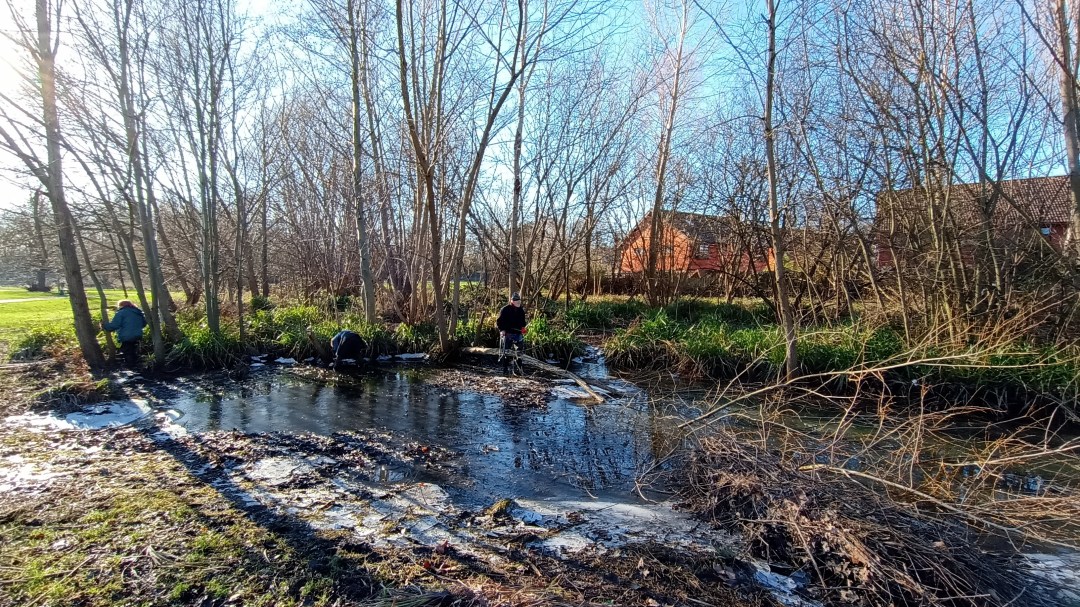
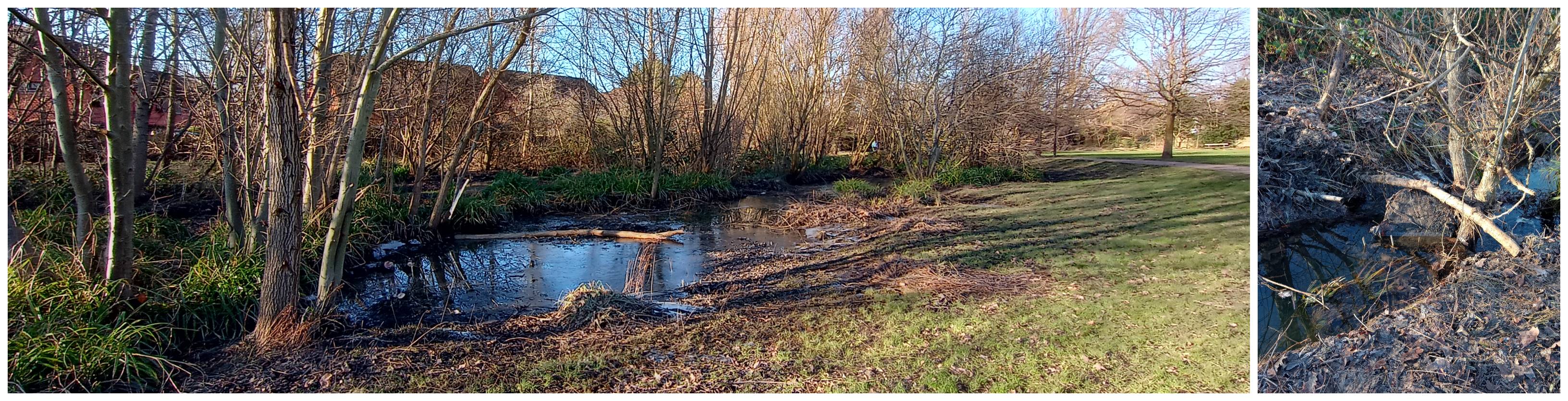
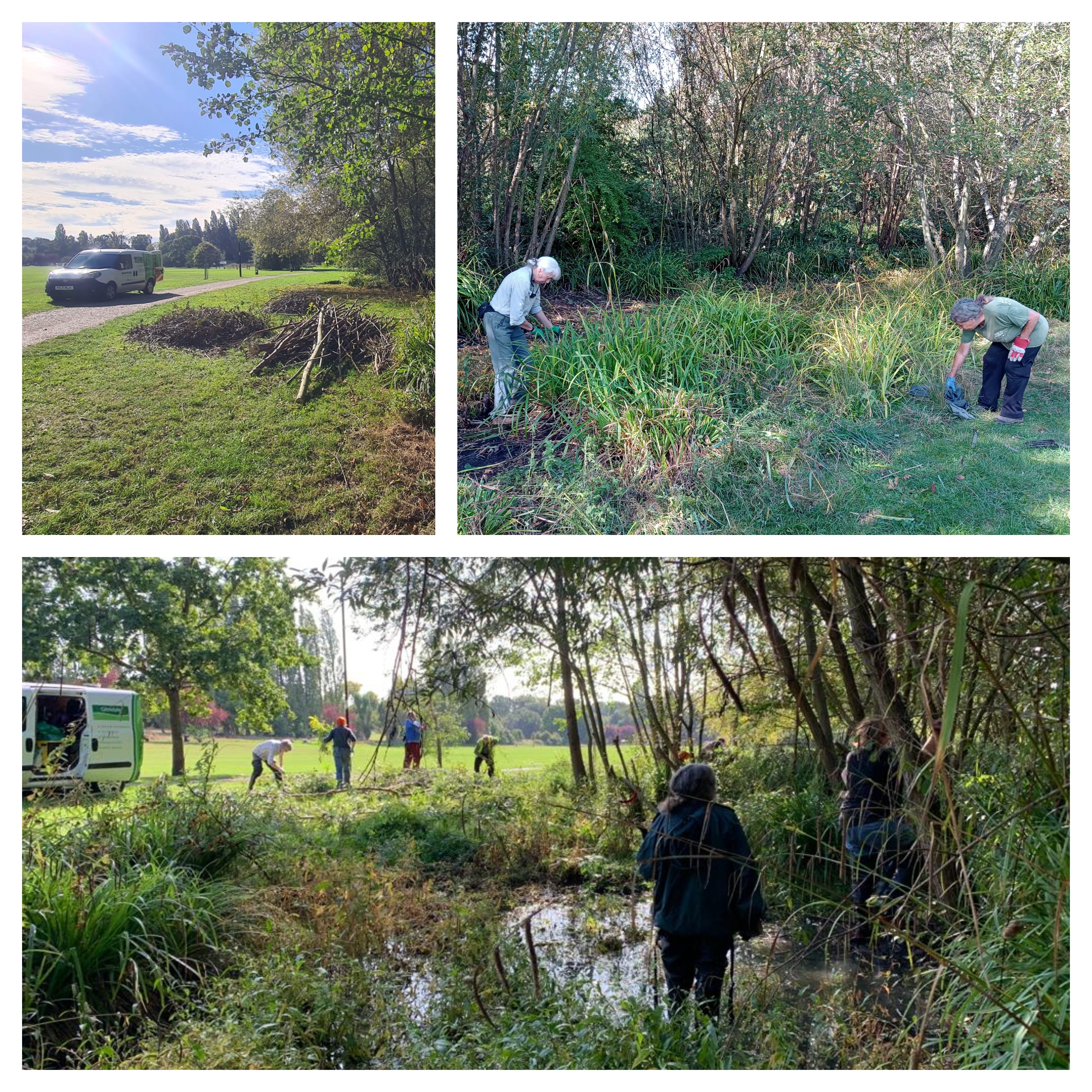
At Chinbrook Meadows, our volunteers continued cutting back the overhanging willows and other trees around the pond to allow more light onto the water’s surface. Whilst there we cleared an obstruction in the River Quaggy to reduce localised flooding onto the path adjacent.
New Year, New You? Don’t want to pay a gym fee to be indoors working out? Why not join us once a week in the Rivers of Lewisham? Plus, whilst you do that you are actively helping the blue spaces within the borough!
The volunteer session programme has now been released for October to December 2023. Check out the programme HERE. If you would like to get involved in volunteering on Lewisham’s rivers please read through the the River Volunteering web page, and if you have any questions or queries please get in touch with Emily.
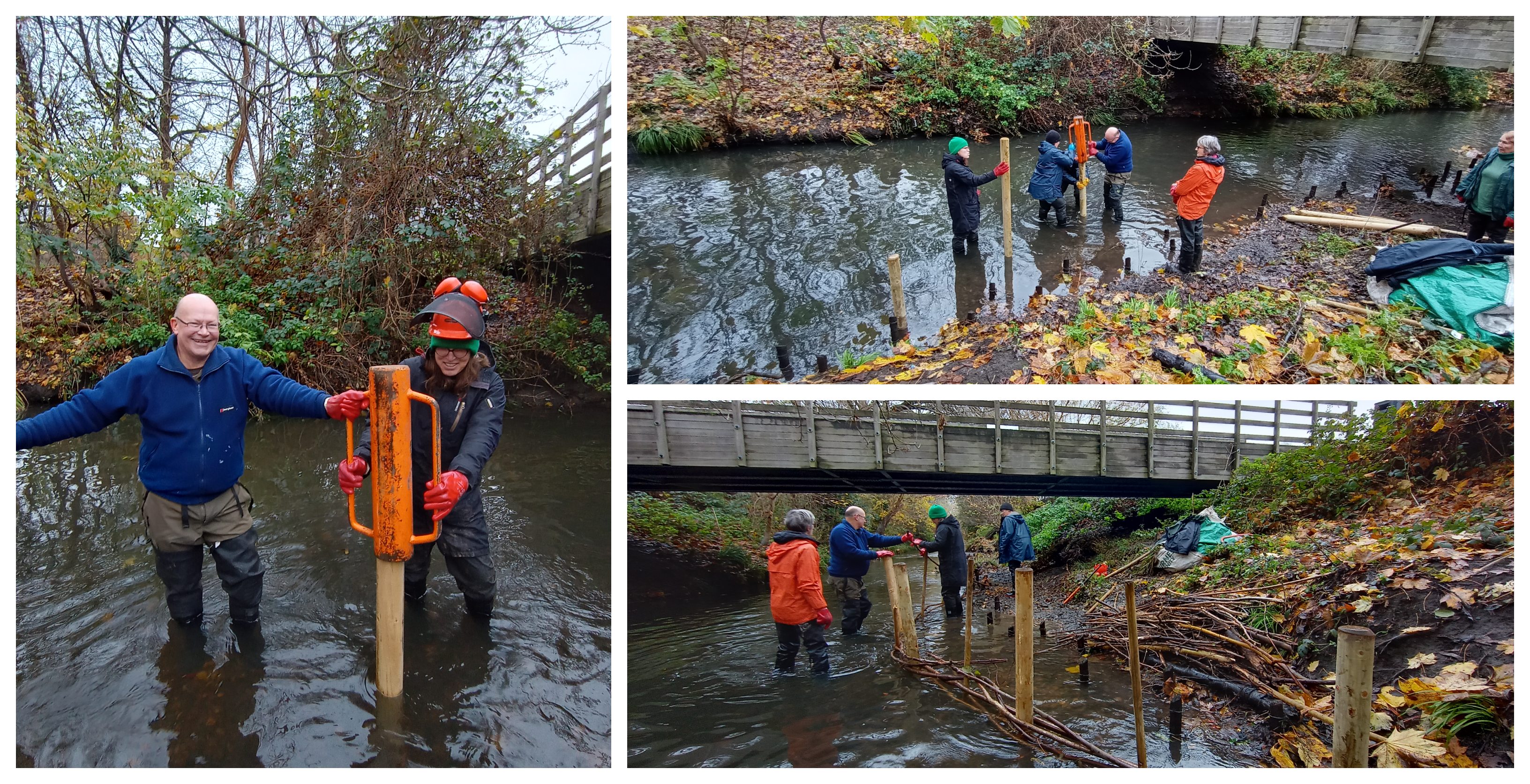
December is a shorter month for our volunteers, and with our final and 40th session of the year taking place on December 12th we celebrated with mince pies, yule log and other snacks… after 2 heavy hours building a berm!
From me, I’d like to say a HUGE thank you to all our wonderful volunteers working to keep Lewisham’s rivers so healthy and encouraging others to learn more about this great part of the borough. A special thanks especially to the #RiversandPeople volunteers who join me every week to get waders on and get into the river to make practical improvements- I’m looking forward to 2024 where we can do even more!
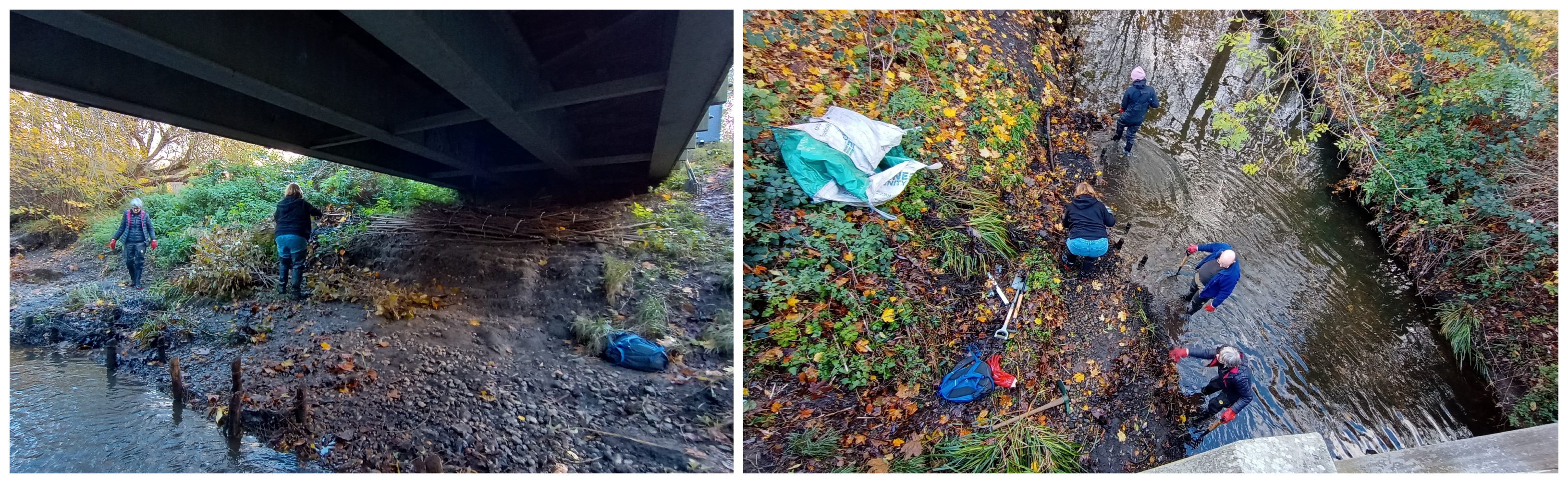
One project that will continue into the new year is the new berm our group is building in the middle field of Ladywell Fields, we’ve put the posts in, weaved the frame, and we’ll be back in mid-January to build up the bank.
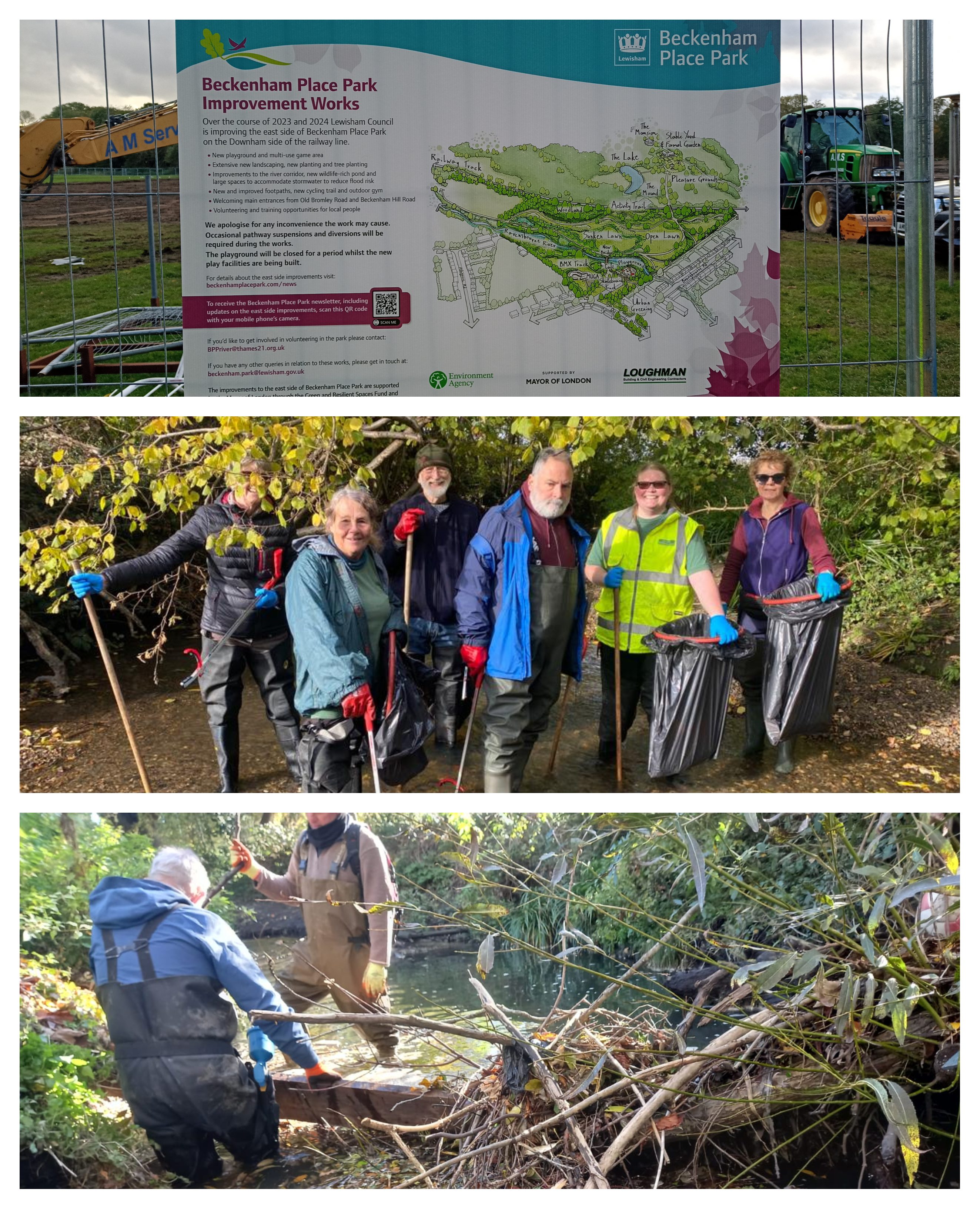
The volunteers have been all across the borough this month, starting with visiting the regeneration works at Beckenham Place Park (East). We also cleared trapped debris from the recent heavy rains, especially with fallen trees down over the channel.
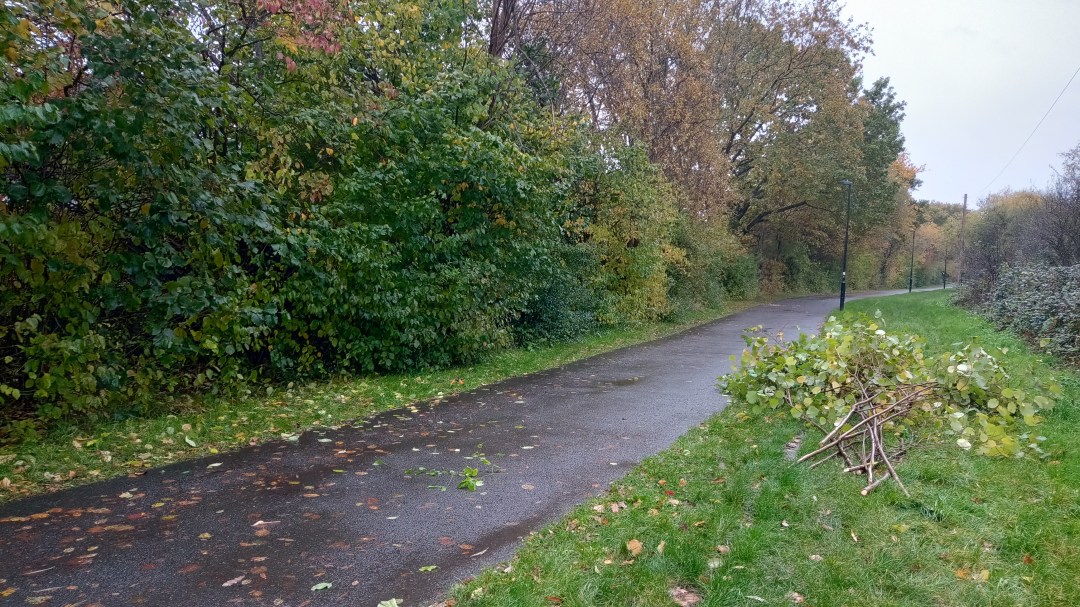
Combining forces with the Friends of the River Pool, we thinned a section of hazel for a future project in another Lewisham Park where we needed long malleable lengths for weaving. This was a testing day of weather as the light rain predicted was actually a downpour- but the volunteers persevered.
October gave us the perfect weather for working in the rivers in Lewisham, dry and cool enough to still be working in t-shirts! This time at Chinbrook Meadows we were working on the wildlife pond, clearing more of the willow surrounding and blocking light into the pond, and removing any silted islands that were growing vegetation to halt succession from happening on the pond. The pond itself would benefit from being desilted, so we’re keeping an eye out for any funding to hire a mini-digger to help us out in the future. For now, our volunteer group and the wonderful Friends of Chinbrook Meadows are continuing to monitor wildlife in and around the pond.
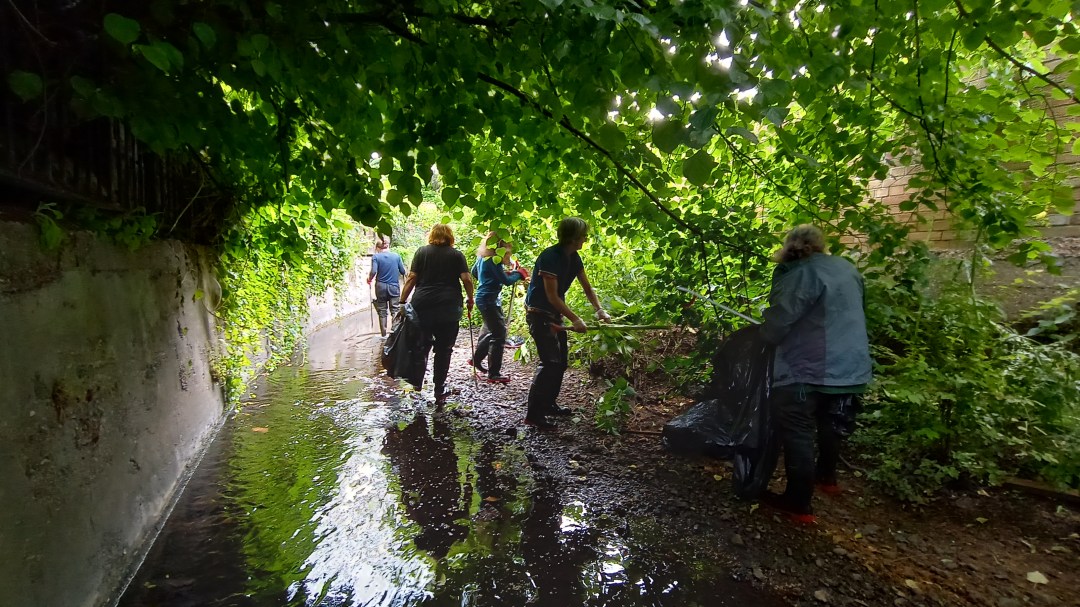
Another spot we’ve been working on this month is the area under the Ladywell Road bridge in Ladywell Fields. This is a special location for us to work in as it’s near to one of Lewisham’s kingfisher nest boxes, so we only work in the areas nearby outside of their nesting season.
There was a huge fig tree growing into the channel and blocking debris in teh channel, so we spent a few hours working on the lower branches of the tree and allowing the full width of the channel to flow as intended. It’s also a good time to note that sadly this area is affected by litter thrown from the bridge above, but during these volunteer sessions our team get into the undergrowth to prevent this litter from entering the river.
NB: Our volunteer on the left hand image doesn’t normally wander under bridges with a pruning saw but as it was halloween the photo opportunity seemed to good to miss! #SpookySeason
August brought the volunteer team some hot weather, so being in the river was a pleasant break from the heat! We started the month working on the boardwalk section of Cornmill Gardens, removing plants that had grown up through teh accessible viewing platform then reducing the vegetation height so you can get a clear view of the river. One bonus from our time at Cornmill was we got to watch Lewisham town centre’s resident peregrine falcons flying overhead!
We’ve also continued the job of clearing eel tiles around the catchment, and monitored the areas where we know siltation happens in backwaters and small channels.
We were also very lucky to have Philippa Nicholls, European Eel Officer, from Thames21 come along to our group and present on London’s European Eel population and some of the challenges and obstacles they face within the Ravensbourne Catchment.
Continuing on from last month, we spent the first couple of weeks in July taking part in the 3 Rivers Clean Up. After 3 weeks of being in river we removed over 5000 Himalayan balsam plants from the River Quaggy and River Ravensbourne.
One fantastic sighting when we were downstream of Manor Park was a large European Eel feeding amongst the gravel riverbed. Can you spot it in the photo below?
Whilst in Manor Park it was also wonderful to look at the bug hotels that the 12th North Lewisham Scout Group have been looking after.
Back in 2021 Dr Louise Rondel and colleagues at Goldsmith’s University captured a series of interviews and sounds along the River Quaggy, exploring the soundscape of the urban River Quaggy.
The project strived to understand how the river impacts the local area and vice versa through an interactive app, the public contributed their own field recordings at the participatory workshop and sound walk, and talks from resident scientific and cultural experts, including John Drever and Emma Jackson, about the importance of the river to both the community and local eco-system.
Learn how people interact with the Quaggy and how this heavily engineered South London river is becoming re-naturalised. All done in conjunction with the Quaggy Waterways Action Group (QWAG).
June marks the beginning of the Three Rivers Clean Up, also known as 3RCU, for the London Borough of Lewisham. Rivers & People, Nature’s Gym and various river projects/ user groups combine to make a group effort to remove Himalayan Balsam before it seeds around the banks of the three rivers.
Whilst bashing the Himalayan balsam we also litter pick the channels and take the what3words locations of any other invasive plant species, such as Japanese Knotweed and Giant Hogweed. These plants get treated and tackled by the wider Glendale team, whilst we focus our efforts on the Balsam.
Over the last 2 weeks, the Nature Conservation team has been joined by Sophia who wished to carry out her work experience with us. Here she writes about her time. We wish Sophia well in the future.
Being an A level geography student and an avid environmentalist, I did two weeks of work experience with Nature Conservation Lewisham. Having lived in Lee or Grove Park for all of my life, I feel passionate about the borough I live in and the importance of allowing for young people like myself to support it and help prevent potential future damage to it. This was what inspired me to work with Nature Conservation Lewisham.
The work was hugely varied and involved working in a variety of situations including working with primary school aged children in public green spaces, cleaning rivers, and removing invasive plant species from riverbanks. Working outdoors allowed for me to gain practical experience and be able to face and resolve potential challenges such the impacts of the weather and finding unexpected numbers of a plant species. I thoroughly enjoyed the variety and unpredictable nature of the work in that each day we would be working on different tasks each day and not visiting one place more than once. This allowed for me to plan ahead and demonstrate the skills and ability to complete tasks of strongly different disciplines; one day we could be waist length deep in mud and river water removing Himalayan Balsam, and the next we would be in a park counting and observing birds. How different this is to most people’s perceptions of work: 9-5 hours at a desk doing a fairly predictable job in a centrally heated building wearing a suit!
The people I was working with were friendly and welcoming (special thanks to Jess and Emily!) and I immediately felt like one of them and part of their projects as soon as I started work at Nature Conservation Lewisham and felt that it was a very supportive working environment.
I wish the organisation and its people all the best for the future and (despite the awkwardness of having a large proportion of cold and dirty river water enter my wader when I was in the river) feel proud to have had the chance to work with them and feel that this would be a unique and interesting opportunity to reflect on and relate to when I complete my A levels and go on to do a human geography degree in the not-so-distant future.









 Rivers and People