
Hello everyone!
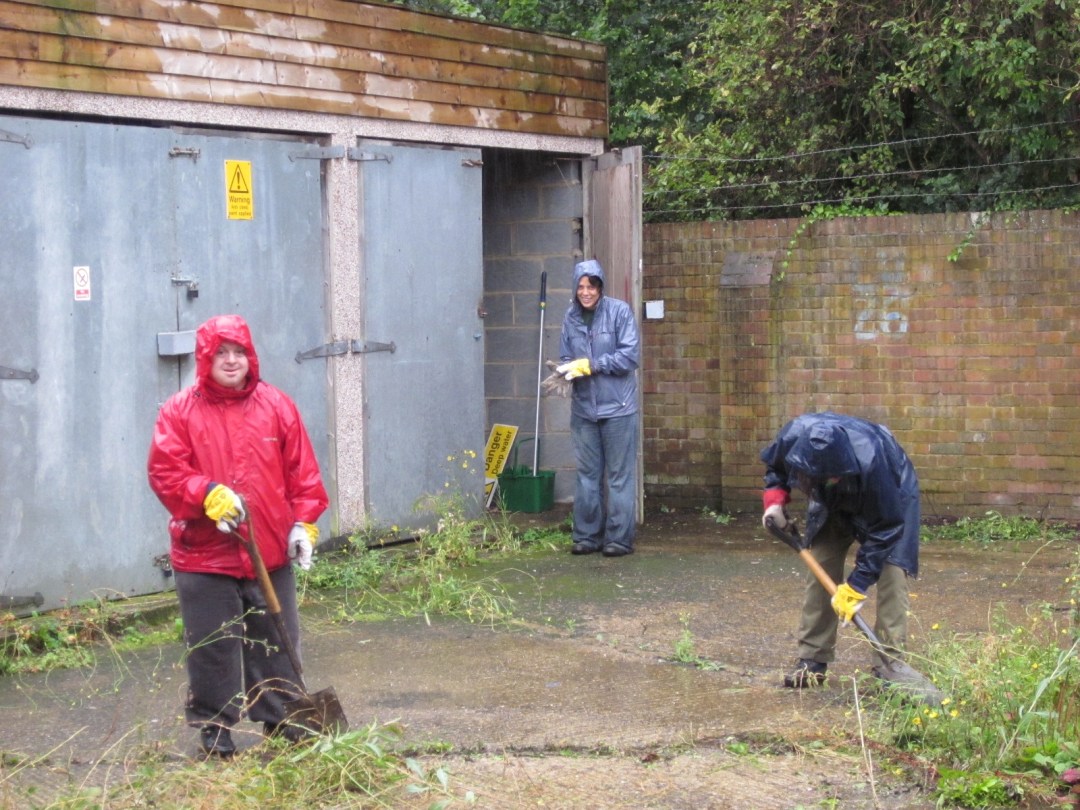
This is just a short blog post introducing myself as the new nature conservation officer for Glendale Lewisham. With my appointment I can also share the good news that we will be restarting the Tuesday Rivers & People sessions from Tuesday 20th September at Brookmill Park. Booking for this session is essential- especially as we will need to bring you waders that fit!
Over the next few weeks I will be updating the webpages on this website, including adding the programme of sessions for the next quarter, and an updated volunteer form. If you have not volunteered with Rivers & People before and would like to join in the coming weeks, please do not hesitate to email me at Emily.Millhouse@glendale-services.co.uk and I will email you a volunteer form.
Hope to see you at a session soon!
Latest News


Come on an Outfall Safari and help us raise awareness about river pollution!

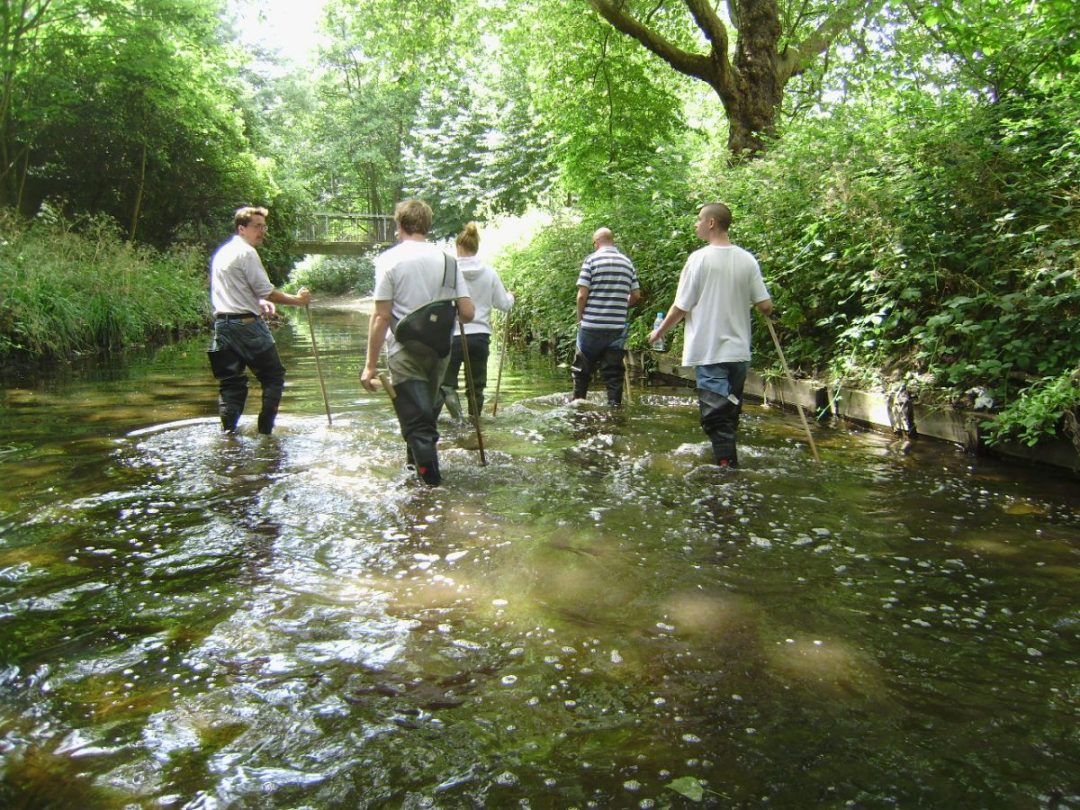
It is five years since we ran our first Outfall Safari along the Ravensbourne river catchment and it’s time to run another health check on our rivers. This is an opportunity for volunteers from Keston to Deptford, from Eltham to Sydenham, to join us and help identify pollution hotspots and raise public awareness around drainage misconnections that can harm our rivers.
The waterways of the Ravensbourne, Quaggy and Pool join the Thames at Deptford and, like all London’s rivers, they can be polluted by chemicals found in detergents, building material, paint etc and by sewage due to misconnected plumbing. Pipes that lead into surface water drains, rather than into sewers, bring these pollutants into our rivers and impact the species that live in them.
While Thames Water and the Environment Agency monitor the river catchment and respond to pollution incidents, it is very hard to create a detailed map of all the troublesome outfalls that have, so far, remained under the radar. An Outfall Safari is the answer.
Designed to be undertaken by local volunteers, an Outfall Safari requires no expertise beyond simple data collection, which is covered by our bespoke training in March, and keenness to take walks alongside our rivers.
This is a short-term commitment: it will be run over a period of around one month (April 2022) and relies on lots of small teams of volunteers each doing as much or as little as they want. One team member will record the observations of the group using a simple mobile App, and the uploaded data collected by all the teams will create a detailed picture of the current state of the catchment.
Outfall Safari training will be on Wednesday, March 30th from 10.30am to 12.30pm at the Althletics Hub meeting room in Sutcliffe Park Sports Centre, London SE7 5LW. Our trainer is Phoebe Shaw Stewart of the Zoological Society of London. Poster attached – training is of course free.
An Outfall Safari gathers valuable information. Data from the App is mapped and passed on the Environment Agency and Thames Water. And any severe pollution revealed can be investigated immediately by these agencies. It is a proven method of checking on London’s rivers, already tested on the rivers Crane, Wandle, Hogsmill, Dollis Brook and many more. It relies fully on Citizen Scientists! Which could be you. Please contact us you’d like to take part.
Lewisham has a new biodiversity action plan!
Local councillors have voted to endorse the plan, the ‘Natural Renaissance’ for Lewisham, which will aim to do the following….
Supporting the installation of more green roofs in Lewisham, which are roofs where vegetation has been planted to boost biodiversity.
Working with landlords and other landowners to help them transform urban areas to provide habitats for local wildlife.
Reconnecting people with rivers and highlighting how safe access to rivers and an improved river corridor can provide a range of health, safety and environmental benefits.
Delivering at least 60 nature conservation volunteer sessions and 30 guided walks per year
Delivering 500 educational events for 8,000 local children every year.
Working with community art groups to enhance urban locations, such as tunnels, with biodiversity inspired art murals.
Providing practical advice to local residents on how they can enhance their private gardens and local areas to boost biodiversity.
To read more, follow this link:

Lewisham Wins Good Parks for London!
https://lewisham.gov.uk/articles/news/lewisham-parks-named-best-in-london
Lewisham has been ranked top of all the 32 London boroughs, well done to everybody who helps to look after and improve our wonderful green spaces!
London Rivers Week: Photo Competition #PictureBlueLondon
Thames 21 write...
The CPRE London photo competition returns for 2021, with cash prizes and tickets to top London attractions on offer to the photographer who best captures this year’s theme of ‘Picture Blue London’.
We are launching our annual photography competition in celebration of London Rivers Week which ran from 23-31 October 2021. CPRE London is delighted to be working with Thames21, the Environment Agency, ZSL London Zoo, the London Aquarium and others to celebrate London’s rivers and waterways.

Capture London’s waterscapes
Judges will be looking for uplifting images that capture the beauty and variety of the London’s waterscapes – whether that be landscape, wildlife, rivers, canals, a piece of history, places that heal or replenish or people enjoying London’s wet outdoor spaces. We challenge you to grab your camera or phone, explore the watery side of the capital and capture London’s countryside at its very best. We want to see it all!
This year we welcome your interpretation of three categories that represent the city’s key environmental challenges and opportunities: climate change, access to nature, and health and wellbeing. All entries should fall within one category and a winner will be chosen from each.
The photographs will be judged by an impressive line-up of key figures in London’s photography and environmental community including Shirley Rodrigues (Deputy Mayor for Environment and Energy, Greater London Authority), Dave Webb (Environment Agency) and Peter Coles (professional photographer and urban ecologist).
All our winners and finalists will be showcased on our website, featured in the next edition of our Green London newsletter and on our social media channels.
Enter the competition
Competition entry is free, and entrants can enter up to three photographs, one in each category – climate change, access to nature, and health and wellbeing.
The winning entries will receive a cash prize of £100, free membership to CPRE London for a year and tickets to the London Aquarium, plus a cuddly toy! One overall winner will also receive a free family ticket to ZSL London Zoo.
Entries close on 26 November 2021. To enter please read the webpage and terms and conditions (PDF 138 KB).
London Rivers Week is a partnership campaign run through London Rivers Restoration Group, a sub-group of the Catchment Partnerships in London. It is sponsored by Thames Water.
London Rivers Week – Saturday 23 October – Sunday 31 October 2021
(with thanks to Thames 21 for the information)
London Rivers Week is a week-long annual campaign inspiring the public to celebrate London’s rivers and the projects taking place to rewild and renaturalise them and connecting them with their local communities.
The campaign was launched by the London Rivers Restoration Group in 2016 on behalf of the Catchment Partnerships in London (CPiL) to highlight river restorations. Between 2008 and 2017 a total of 23.5km (14.6 miles) of rivers have been restored.
About the London Rivers Restoration Group
The purpose of the London Rivers Restoration Group, a sub-group of CPiL, is to promote and report on the delivery of river restoration and enhancement projects in support of the Catchment-based Approach to delivering Water Framework Directive objectives across London.
Its specific objective is to achieve the following aspirations set out in the London Rivers Action Plan (LRAP):
- Improve flood management using more natural processes
- Reduce the likely negative impacts of climate change
- Reconnect people to the natural environment through urban regeneration
- Gain better access for recreation and improved well-being
- Enhance habitats for wildlife
The London Rivers Restoration Group includes the Environment Agency, Thames21, the Greater London Authority, the South East Rivers Trust, London Wildlife Trust, ZSL, the Thames Estuary Partnership, CPRE London and Thames Water.
About the Catchment Partnerships in London (CPiL) Group
The purpose of CPiL is to support 12 different Catchment Partnerships within Greater London to share lessons, experiences, best practice and to help achieve a coordinated approach to delivering the objectives of the Water Framework Directive.
CPiL is not a Steering Group for the Catchment Partnerships; instead it supports and facilitates shared action, decision making and communication for the Catchment-based Approach in London.
Catchment Partnerships are groups of organisations working in different geographical locations to improve water quality.
London Rivers Week 2021
Thames 21 London Rivers Week events
Stumps Hill pond at Beckenham Place Park gets some weevils!
A water fern called Azolla, originally from America has been spreading in the British Isles in recent years and has established itself in the pond at Beckenham Place Park. It is spread by wildfowl and spore dispersal and can quickly take over a pond, swamping the native vegetation and wildlife. It can develop a floating mat 30cm thick, which shades the sunlight from the water and chokes the pond. To control this invasive weed, weevils have been introduced into the pond that eat the Azolla. This should keep it under control and prevent it from taking over the pond. This is a safe natural way to control the weed without using harsh chemicals. To watch the video about the project, click the link below!
World Wetlands Day with the Wildlife Trust
World Wetlands Day with Walthamstow Wetlands
Below are details of the Wildlife Trusts Wetland Day on the 2nd February, which is being hosted online over zoom:
The events are:
10:00 – Come and join guest speaker Ian Crump, Biodiversity Field Officer for Thames Water, for a talk about freshwater habitats, their management, uses as vital sources of supply and habitats for a wide range of species, to celebrate World Wetlands Day 2021
https://www.wildlondon.org.uk/events/2021-02-02-world-wetlands-day-freshwater-its-importance-people-and-wildlife-ian-crump
12:30 – Join Walthamstow Wetlands visitor engagement ranger, Pete, to explore the types of wetland around the world, the life they support, the ecosystem services they provide and why they are worth protecting and restoring.
https://www.wildlondon.org.uk/events/2021-02-02-world-wetlands-day-wetlands-world-pete-salter
15:00 – Join patch birder and volunteer, Daniel Whitelegg, to get an inside peek of the reserves seasonal comings and goings. Learn how important the reservoirs are for over 140 species and why they choose to spend their lives here. From the glamourous bearded tit to the ubiquitous but overlooked greylag goose.
https://www.wildlondon.org.uk/events/2021-02-02-world-wetlands-day-birds-eye-view-wetlands-daniel-whitelegg
Click the links to sign up!
New programme for Jan-March
Hi Everyone!
Here is the new Rivers and People programme for January to March. Please note, we are currently not able to run sessions due to the lockdown but we hope to be back up and running in March.

