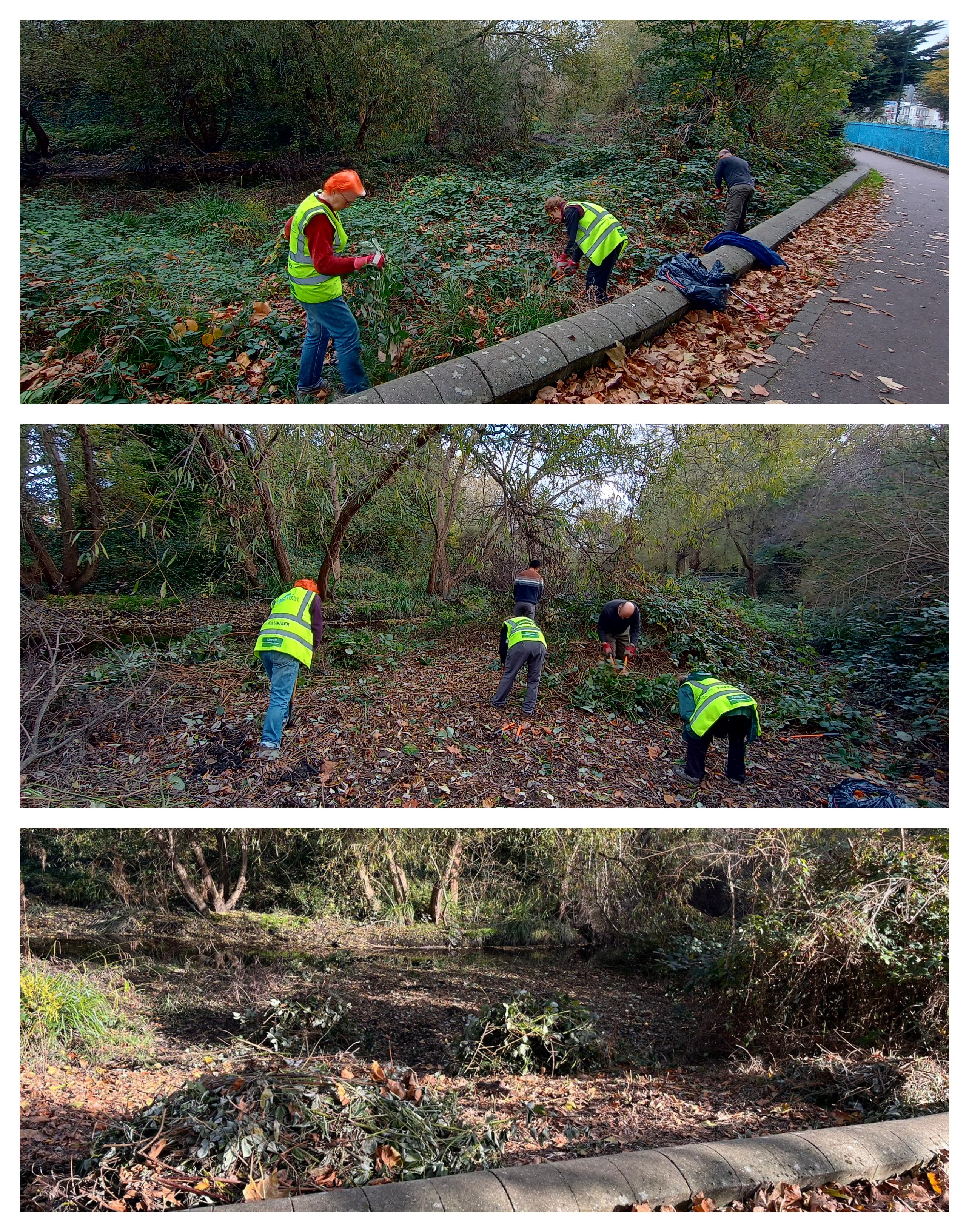
January began as a frosty month, where we finished up our work on a section of reeds in the Hare & Billet pond, Blackheath. We’ll return next winter to tackle the next area of reeds, as we cut areas back on rotation
Elsewhere in the borough, we were planting native black poplar trees along the River Pool, we planted 5 trees, 3 male and 2 female along the stretch of the river and installed protective cages around them to give them time to grow large enough without any disturbance.
The volunteer session programme has now been released for April to June 2025. Check out the programme HERE. If you would like to get involved in volunteering on Lewisham’s rivers please read through the the River Volunteering web page, and if you have any questions or queries please get in touch with Emily.
December was a busy month, considering that we only had a few sessions due to the festive break. We began our winter management of the Hare & Billet pond up on Blackheath. This is a task we do annually to keep the reeds and flag iris contained in one area of the pond (otherwise they’d spread across the whole pond).
Later in the month we had some new bird boxes to put up in Northbrook Park, where there has been a big project to turn one corner of the park into a wetland, linking up the wet woodland and large pond in the adjacent Network Rail Land.
We finished our year with a walk around Beckenham Place Park, looking at all the work and different projects that have been occurring there over the past year. From me personally I’d like to say a HUGE thanks to all the wonderful volunteers that help to continue improve our wonderful green and blue spaces in Lewisham!
The volunteer session programme has now been released for October to December 2024. Check out the programme HERE. If you would like to get involved in volunteering on Lewisham’s rivers please read through the the River Volunteering web page, and if you have any questions or queries please get in touch with Emily.
Bramble Bashing! We started our month off in Brookmill Park, where we rotationally remove bramble from two of the path bends. This is a once a year task and we only clear one area at a time to allow for winter foraging and shelter for wildlife that remain local in the winter months.
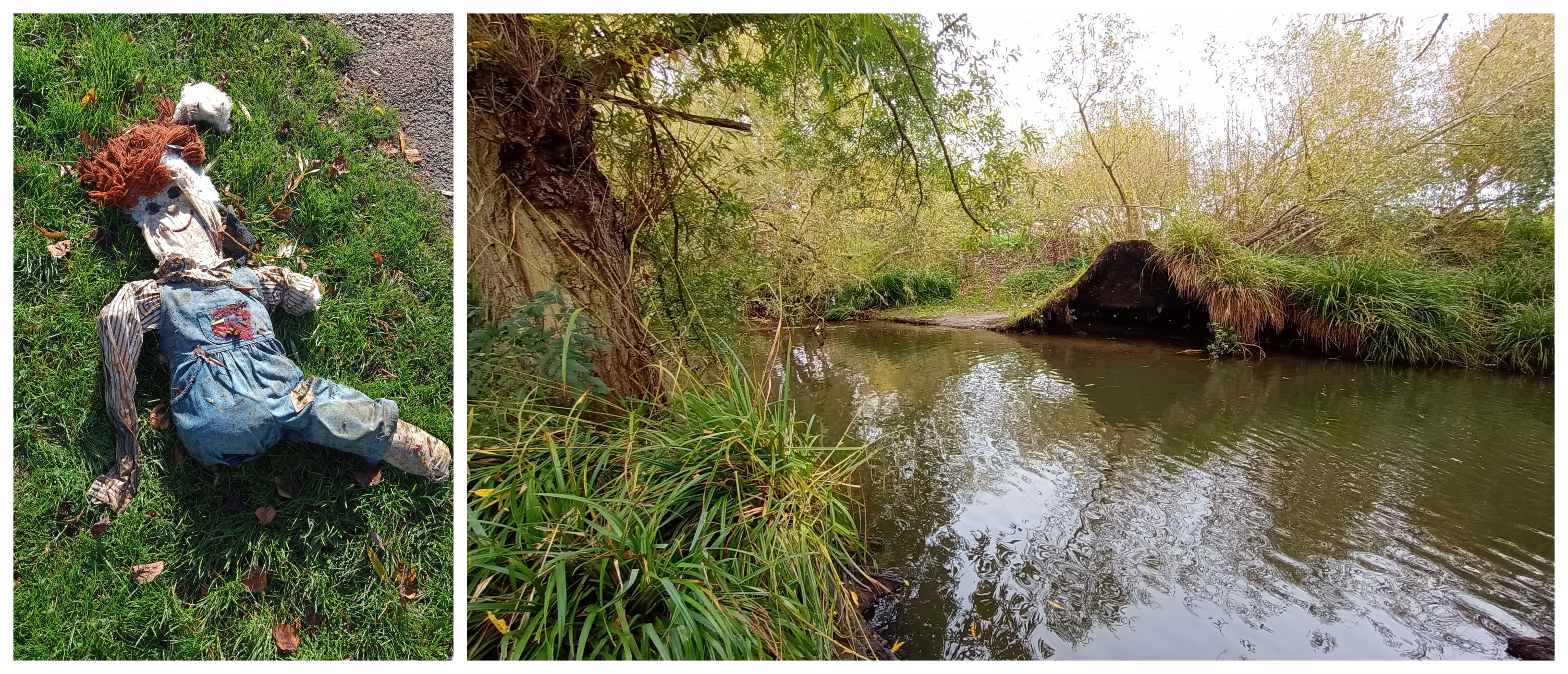
One of those animals that use the vegetation as cover is the wonderful common frog, like the one pictured below. Also pictured is the river with a lovely shadow of the bare trees.
November also marked leaving Lewisham’s rivers to dip our waders in one of the boroughs many wildlife ponds. This year we got into Hare & Billet pond to remove some of the reed growth, we try to maintain an area of the pond as a reedbed, but have to keep on top of the reeds before they expand into the deeper areas of the pond where we cannot reach. We’ll be back in the pond in January to finish up the last bits!
We started off in October continuing with our hub project in Ladywell Fields (South Field), where we continued with teh ground preparation for our future planting on the banks. The list of plants has been confirmed, and come spring we’ll be back to get planting!
Our group then spent the rest of October in Chinbrook Meadows, swapping bramble bashing for willow coppicing. Each year we coppice another selection of willows alongside the river and wildlife ponds- we do quite drastic work at the far wildlife pond to enable enough light to hit that pond. Fun fact with that pond is that it is the only pond in the meadows that isn’t regularly fed by river water, it’s actually mainly filled with run-off from the football pitches on the other side of the footpath. The exception to this is when the Quaggy is in flood state, where it bursts it’s banks and then runs into the pond.
To add to spooky season, look at this creepy doll found face down in some nettles next to the river!
September saw us heading back into bankside management. Starting off with the backwater in Ladywell Fields (middle field), we removed the last strands of Himalayan Balsam and reduced the nettles and brambles.
The following week we were back to start the work on clearing the channel, which involved moving some large logs from the entrance to the pond area.
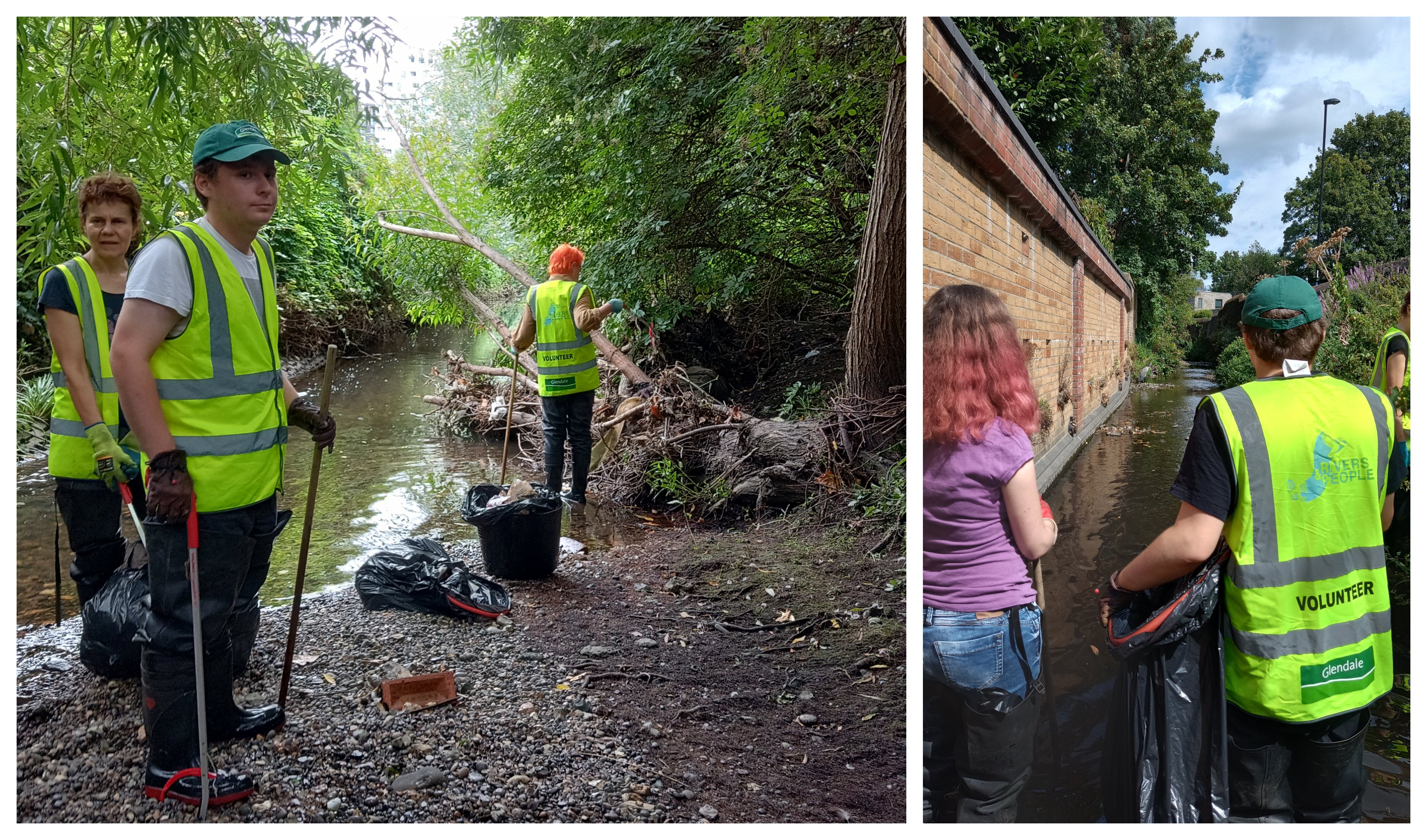
Lots of pictures this month! Towards mid-September we did our quarterly clean up of the secondary channel and weir in Ladywell Fields (North). You can often see the weir being cleared here as whenever the river is in flood mode it brings all kinds of debris down through the park that gets caught here.
Lastly, we started our project at the hub, but we’ll share more about this project next month as we have more sessions coming up there!
The volunteer session programme has now been released for October to December 2024. Check out the programme HERE. If you would like to get involved in volunteering on Lewisham’s rivers please read through the the River Volunteering web page, and if you have any questions or queries please get in touch with Emily.
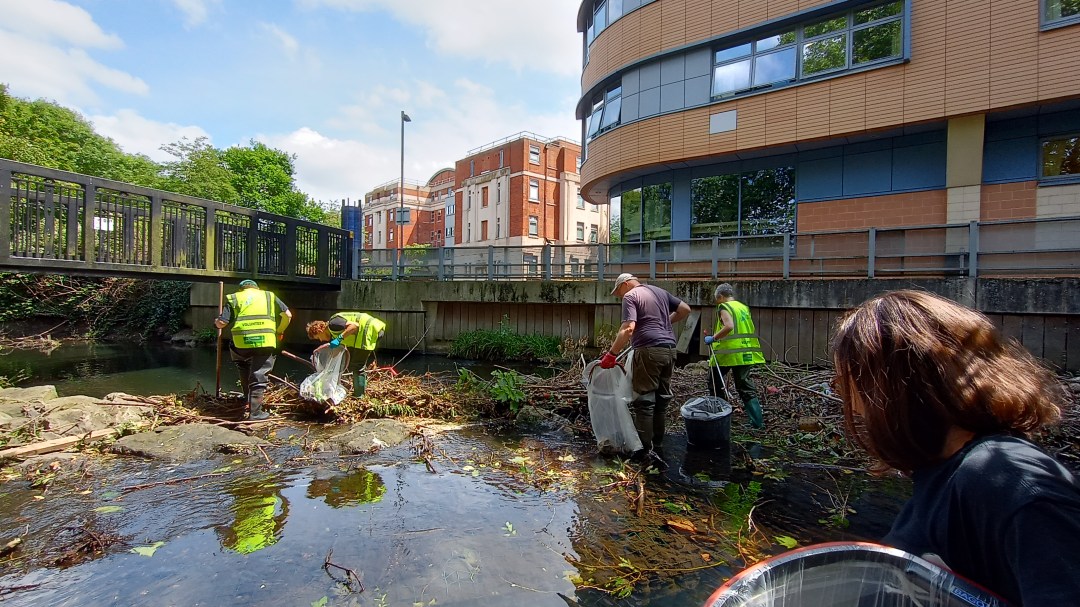
August saw us enter the River Quaggy and the River Ravensbourne from a variety of parks and places. We started the month off by finishing our plastic clearance project in Lewisham town centre, you might actually be able to spot the fallen willow that we attended to from the bridge on Smead Way.
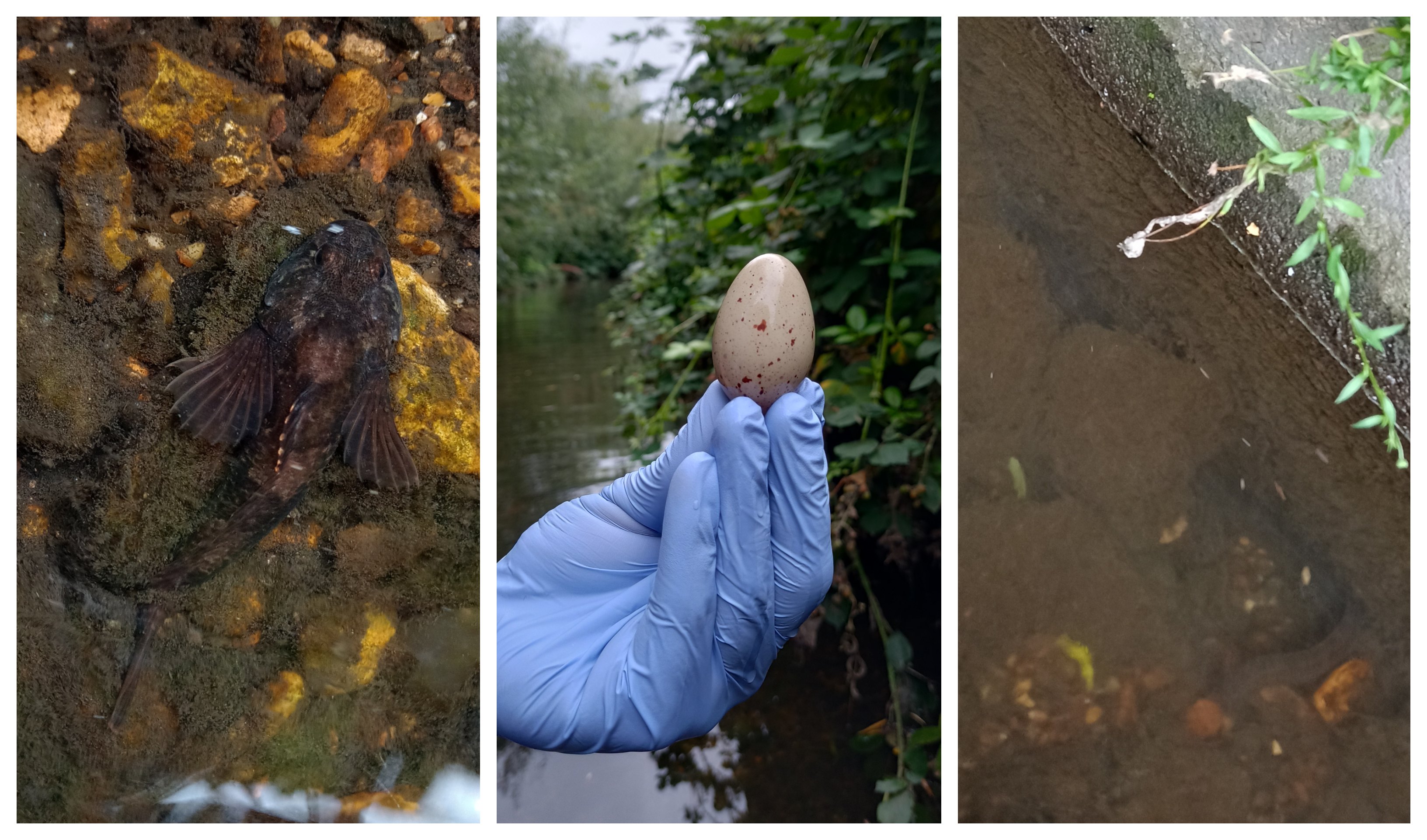
August has been a great month for spotting wildlife for our team! Not only have we seen a few grey wagtails and grey herons, including the very confident young heron pictured above, but we’ve seen three European Eels, at varying ages, during our sessions, Can you spot the eel in the last photo below? Another notable spot from one of our volunteers was the wonderful bullhead fish pictured below.
Do you know the owner of the red speckled egg below? It’s a Moorhen egg! This one was no longer viable as it was found on the riverbed, but from the number of moorhens we see on the rivers normally they seem to have enough hatch to allow for some to not make it. Do keep an eye out for nests on the rivers whilst you’re walking around– many of the poorly placed nests are from our Moorhen friends!
We will start with a presentation introducing the 3 types of bee, their ecology, declines and conservation, how people can help, then we will learn how to identify the bumblebees commonly found in east London. We will have an opportunity to view videos and identify specimens of different species. The workshop will be followed by a BeeWalk survey around the Ladywell Fields where attendees can learn how to safely catch and pot bumblebees. We will provide nets, pots and spotter guides.
Please bring drinking water, lunch and wear suitable clothing.
Date: Thursday 12th September, 11am-2pm Location: Education Building, Ladywell Fields (North Field) Nearest postcode: SE13 7XB Closest Train Station: Ladywell Bus Routes: 122, 284, 484, P4 and multiple others a short walk away on Lewisham High Street (8mins)
Brown Banded Carder Bee (Scarlett Weston)
This workshop is delivered through Buzzing in the East End (B.E.E), our exciting new project that works with local landowners and communities in east London to establish where rare bumblebees are and the current state of their habitat. We hope to inspire people to take action and help bumblebees thrive. To find out more about the project and how you can get involved, please visit: Buzzing in the East End (B.E.E) – Bumblebee Conservation Trust
You can sign up to the Buzzing in the East End (B.E.E) monthly newsletter for updates on the project, insights into the bumblebees living in London, and invites to upcoming events and volunteering opportunities here: http://eepurl.com/iKAyYA