Big River Watch

In just three easy steps, anybody can help The Rivers Trust get a clearer picture of river health across the UK and Ireland. Here’s how it works:

Step 1: Sign up
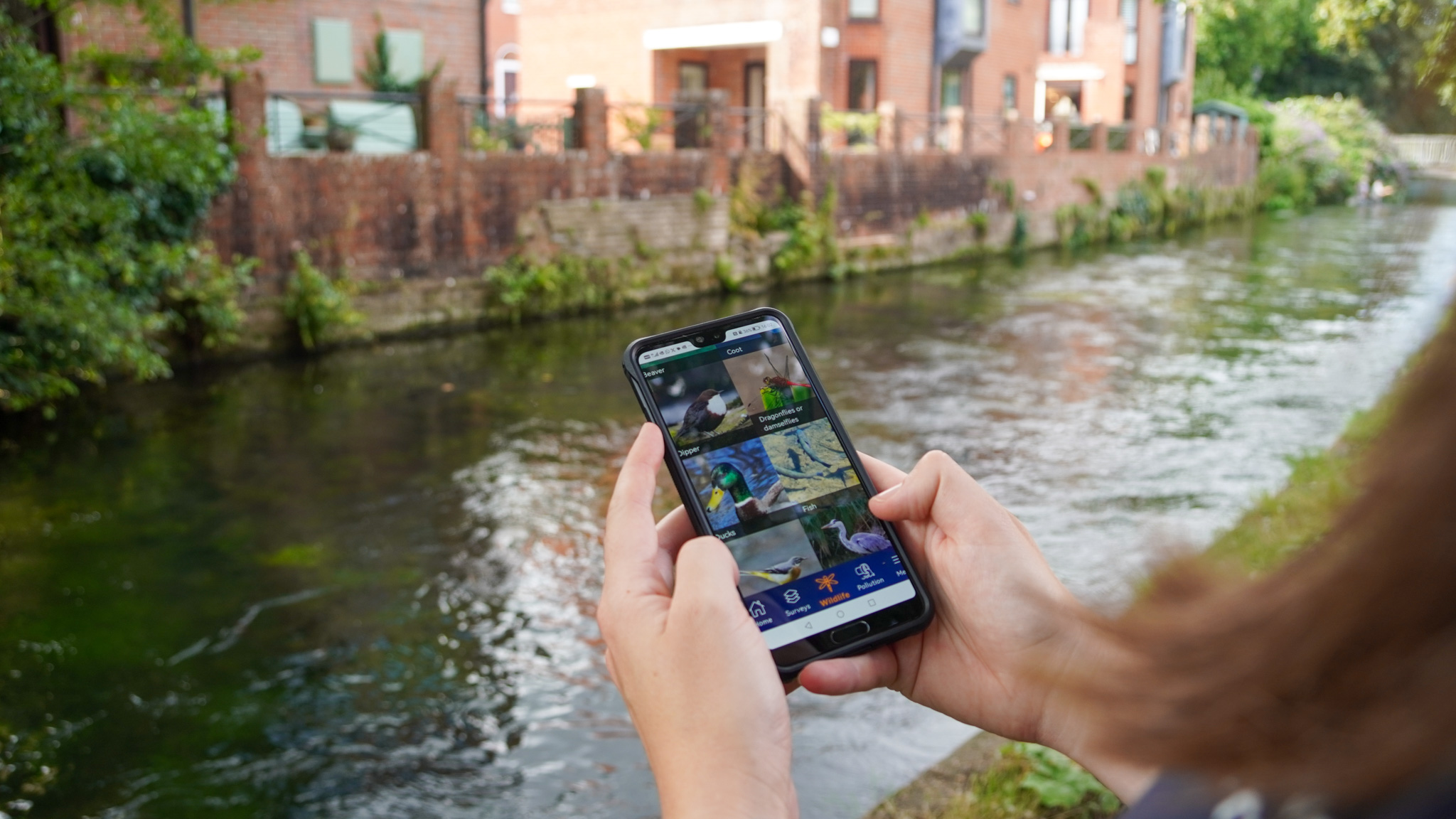
Sign up and download the survey app to your phone before visiting the site. The app will be available on 18th September. Links will be shared by The Rivers Trust, on their social media, and on their website.

Step 2: Take part
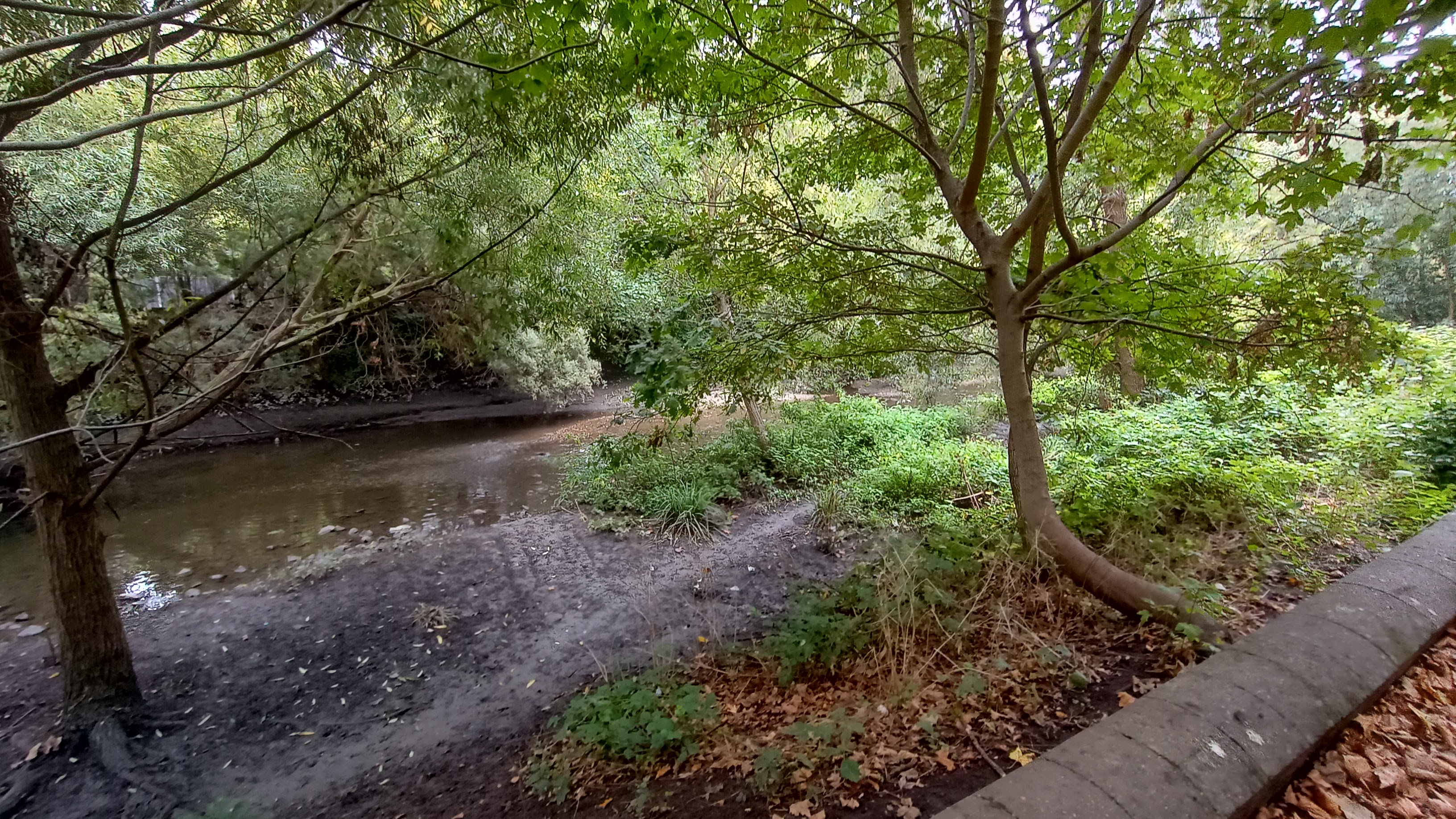
Pick a riverside location to join others around the country in collecting data about the health of your local river. You can complete the survey at your favourite local spot, or choose to get to know somewhere new!

Visit between the 22nd and the 24th September 2023, and spend just 15 minutes observing and answering the questions on the survey. You’ll tell The Rivers Trust about the things that you see – from wildlife and plants, to the flow speed of the water and whether you can spot any pollution. If you don’t know what you’re looking at, use The Rivers Trust’s handy in-app ID guides for pollution and wildlife.

Step 3: Upload
Upload your survey. The Rivers Trust will gather up all of your results and our data specialists will get busy analyzing the information so that The Rivers Trust and other environmental organizations can be better armed in the fight for healthier, wilder rivers.

Google Play:  Big River Watch – Apps on Google Play

https://play.google.com/store/apps/details?id=org.theriverstrust.bigriverwatch

‎Apple App Store: Big River Watch

https://apps.apple.com/gb/app/big-river-watch/id6463412601

Volunteer Sessions in June

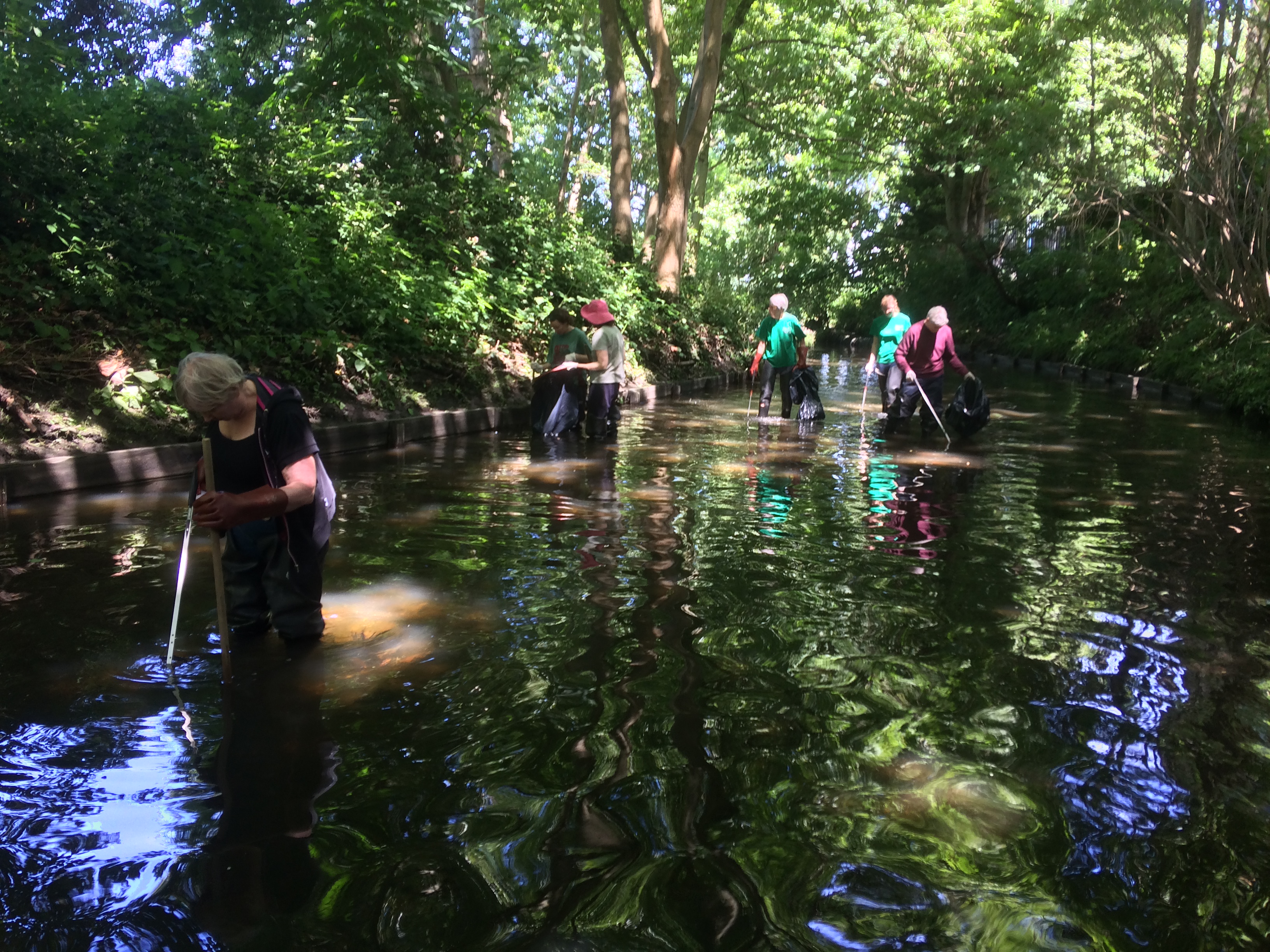
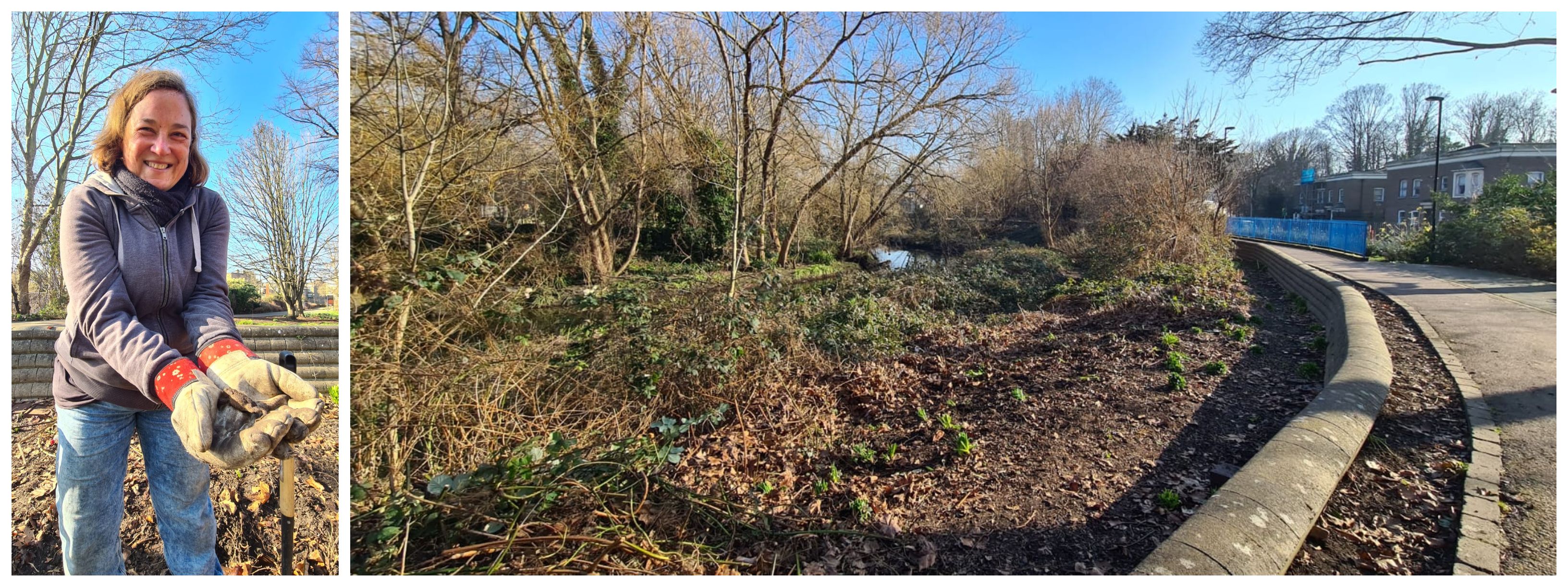
June marks the beginning of the Three Rivers Clean Up, also known as 3RCU, for the London Borough of Lewisham. Rivers & People, Nature’s Gym and various river projects/ user groups combine to make a group effort to remove Himalayan Balsam before it seeds around the banks of the three rivers.

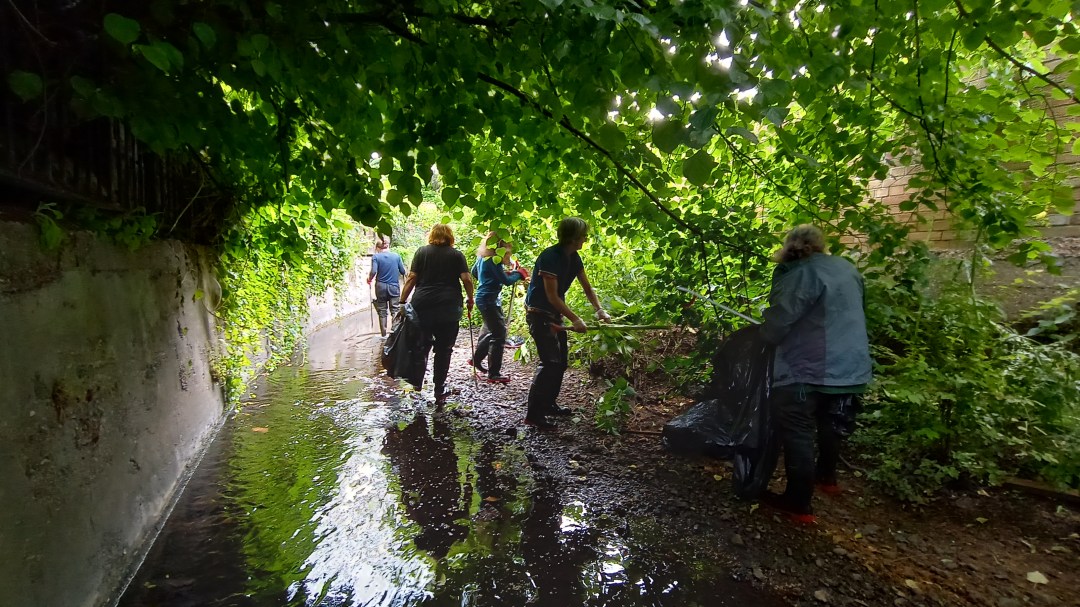
Whilst bashing the Himalayan balsam we also litter pick the channels and take the what3words locations of any other invasive plant species, such as Japanese Knotweed and Giant Hogweed. These plants get treated and tackled by the wider Glendale team, whilst we focus our efforts on the Balsam.

Read more about the 3RCU initiative at https://3riverscleanup.co.uk/

Volunteer Sessions in May

May saw a varied programme for our volunteers, from taking part in the EU-wide Preventing Plastic Pollution‘s #PlasticBlitz event to water quality testing to heavy silt removal in a pond fed by one of Lewisham’s rivers.

We were also joined by a group of students from Goldmith’s University who are looking into prevalence of plastics and invasive species in Rivers in urban areas.

Volunteer Sessions in April

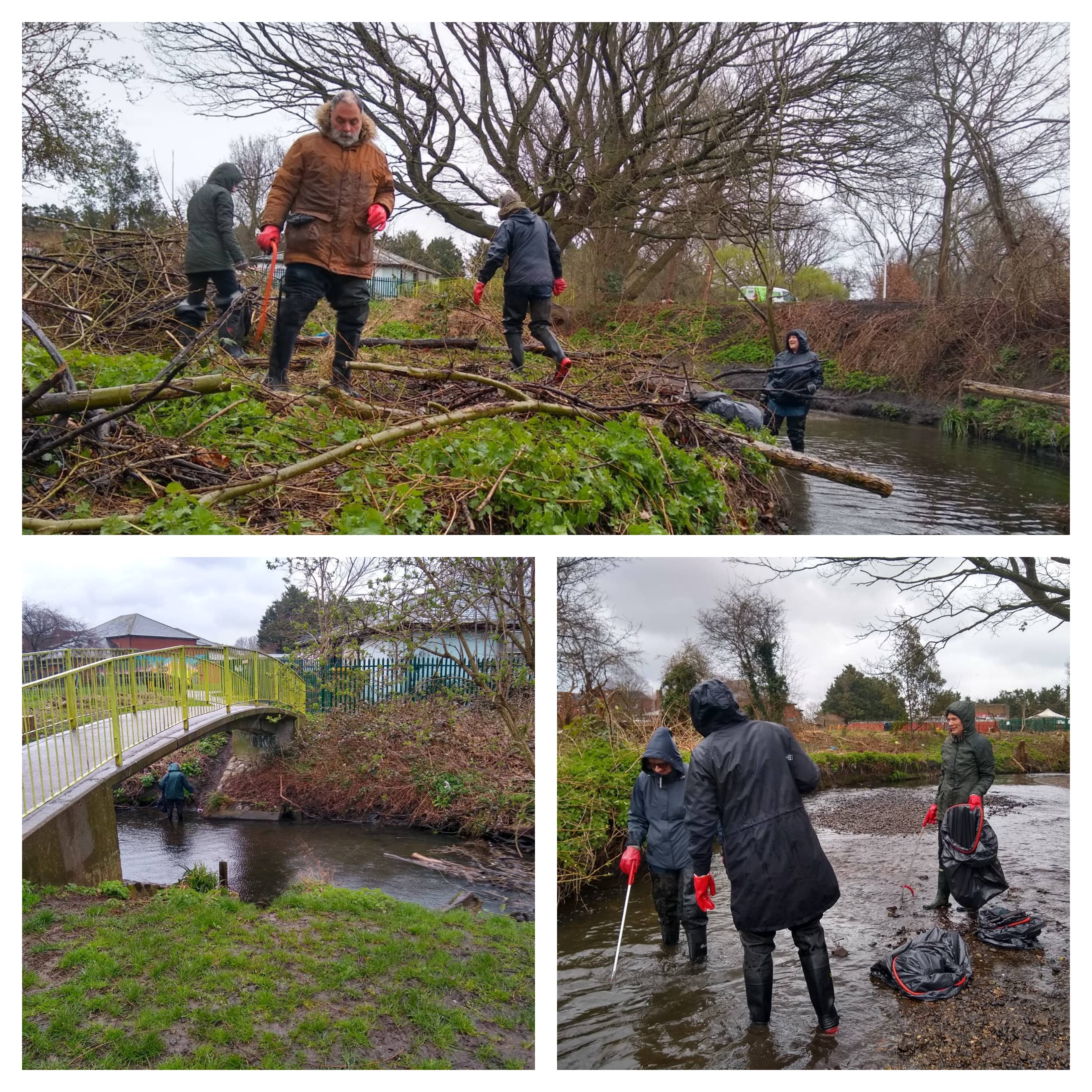
April had our volunteer team venture to Beckenham Place Park to clear the river channel of large fallen tree branches, obstructions and litter. All removed branches were cut down and used to create habitat piles along the higher banks.

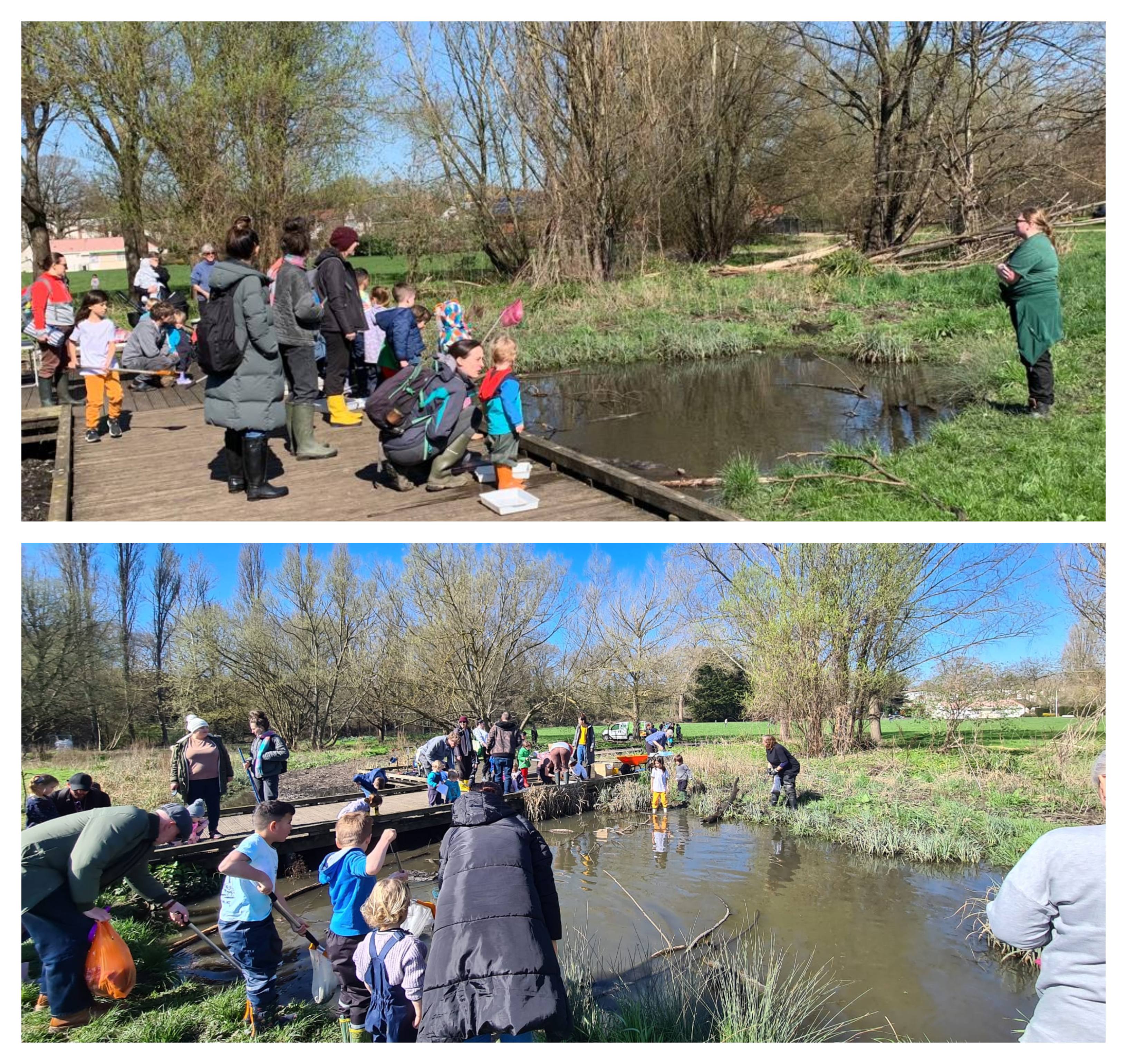
After a successful grant award from Groundworks, Rivers & People joined forces with the Friends of Chinbrook Meadows for a celebration event for how diverse the park is. Read more about the event at https://chinbrookmeadows.wordpress.com/. Twenty different species of aquatic species were found during the day of pond dipping, including smooth newts and common frogs.

Thames21 WATERBLITZ [30th May 2023]

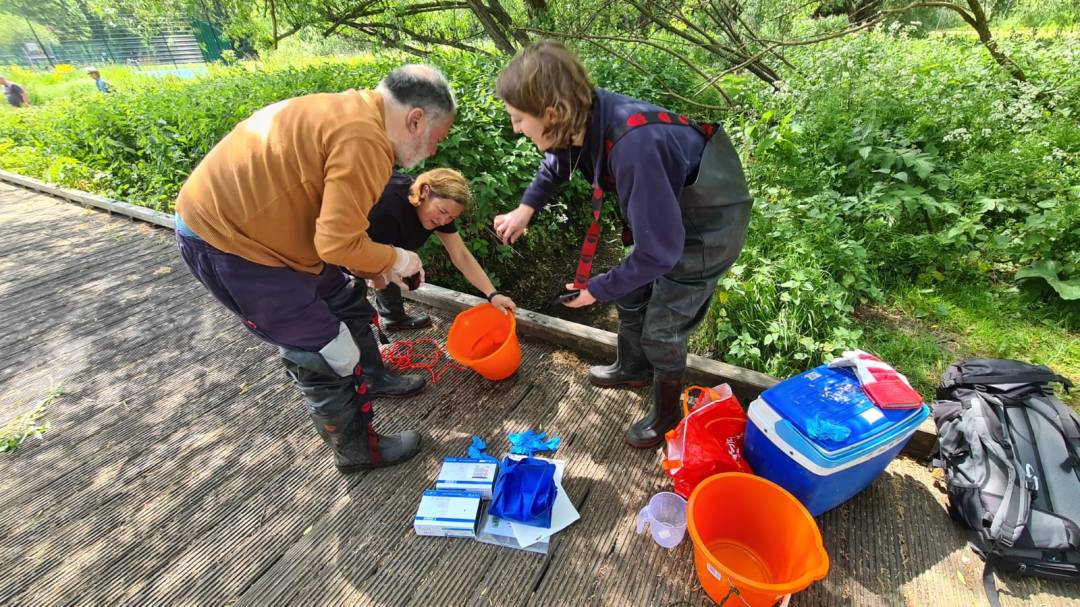
A WaterBlitz is a water sampling event that helps provide a snapshot of pollution issues across a river’s catchment area.

This event is for local people and citizen scientists to take water samples of points of interest to them across the Ravensbourne Catchment (which includes the Ravensbourne, Pool, Chaffinch Brook, The Beck, Quaggy, Kyd Brook) to identify ongoing pollution issues impacting the catchment’s water quality. This event will also be an important opportunity to sample areas in the catchment that generally have relatively good water quality to understand how poorer quality stretches of our rivers could perform throughout the catchment in the absence of pollution challenges.

There is booking page for people to sign up

Volunteer Sessions in January

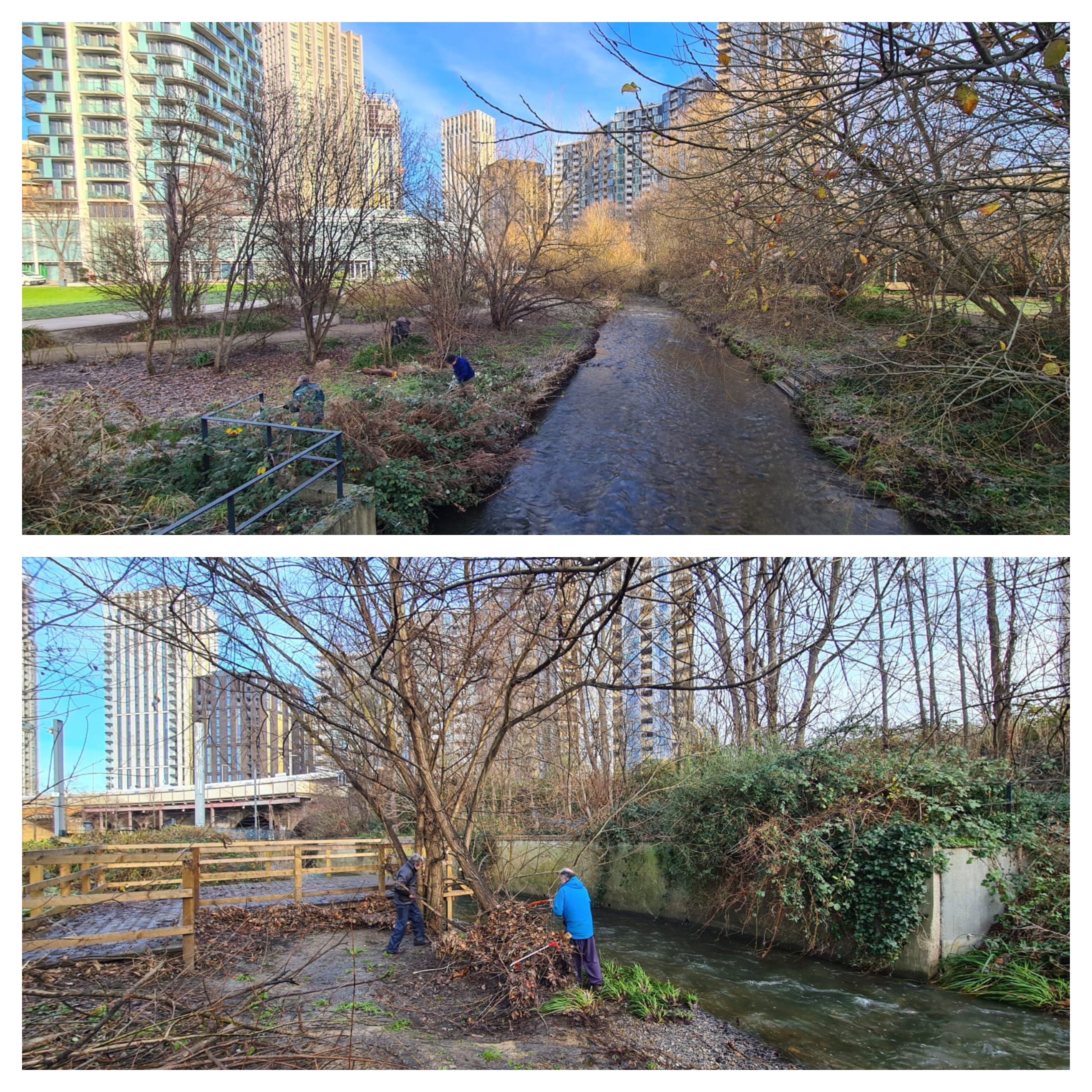
We started 2023 with a sunny session at Cornmill Gardens, where we cut back any branches overhanging the river and clearing all the twigs that had collected on the bank from the recent rains. We don’t remove any of the deadwood from the site, but rather move it further up the bank to create habitat piles that won’t get washed downstream.

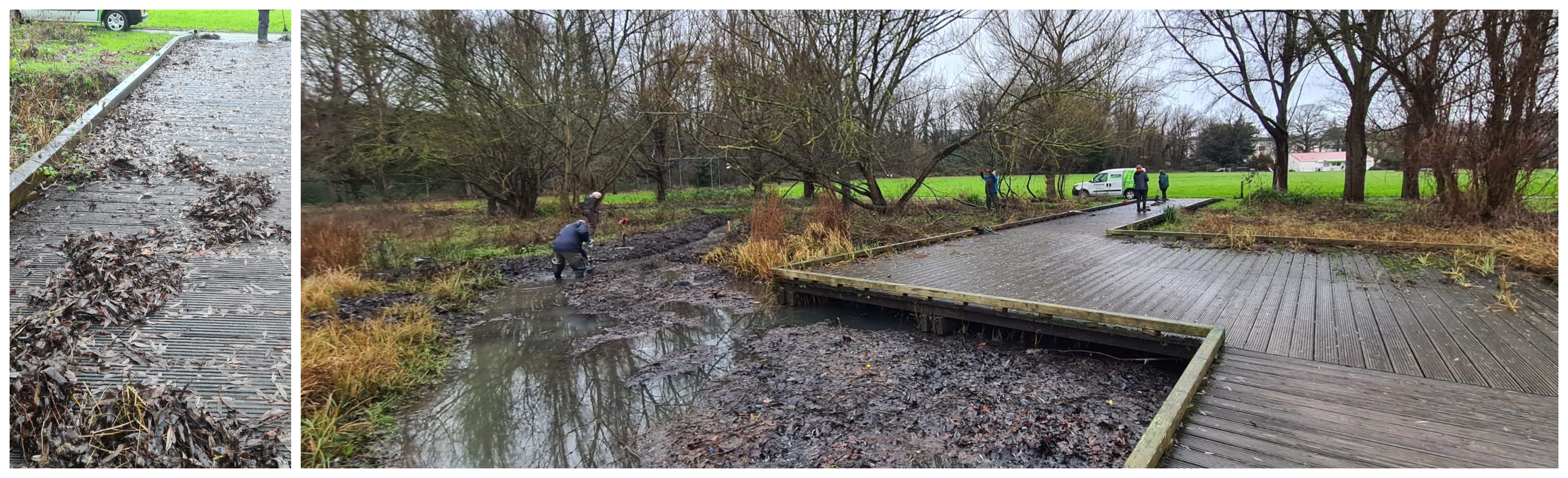
Next up we visited the River Quaggy, at Chinbrook Meadows, where we de-silted the secondary channel that feeds into the pond and wetland area. Also that afternoon, our diligent volunteers scraped the leaf litter from the boardwalks to make them easier and safer to walk on.

After a wet December where we couldn’t get easy access to the Ladywell Field backwater channel, we returned to finish the de-silting here. The heavy digging work certainly lent itself to an extra biscuit with our tea afterwards!

Our last session of the month was in the north of the borough at Brookmill Park, where we completed our bank work to allow any pedestrians a sight line down onto the river. As an added bonus we came across a common frog, Rana temporaria, and two common toads, Bufo bufo, which is one of Lewisham’s priority action species.

An excerpt from Lewisham Council’s Biodiversity Action Plan ‘A Natural Renaissance for Lewisham (2021-2026)’

Amphibian species populations are declining at an alarming rate globally and despite its
name and that it is found throughout Britain the Common Toad is not so common anymore. A study in 2016 found a significant decline (68%) of the species in the UK since 1980s with an even steeper decline in South East England (www.froglife.org)

Common Toads breed in ponds but spend most of their lives on land away from water, walking (and not hopping) around at night looking for slugs, snails, spiders and other invertebrates. They spend winter buried under log piles, stones, leaf litter or compost heaps. Adult toads usually migrate back to their birth pond to breed which is becoming
more and more difficult with fences and busy roads blocking their way in urban areas. The disappearance of ponds in gardens and open spaces and two amphibian diseases (Ranavirus and Chytridiomycosis) pose further threats to toads. The Common Toad is protected from trade and sale under the Wildlife and Countryside Act 1981 (as amended) and was identified as a priority species in the UK Biodiversity Action Plan in 2007.

References
Volunteer Conservation Action Data Reveals Large-Scale and Long-Term Negative Population
Trends of a Widespread Amphibian, the Common Toad (Bufo bufo); Petrovan SO, Schmidt BR
(2016) Volunteer Conservation Action Data Reveals Large-Scale and Long-Term Negative
Population Trends of a Widespread Amphibian, the Common Toad (Bufo bufo). PLOS ONE

https://www.legislation.gov.uk/ukpga/1981/69/schedule/5
https://www.froglife.org/what-we-do/education/london-t-o-a-d/
https://www.gardenwildlifehealth.org/
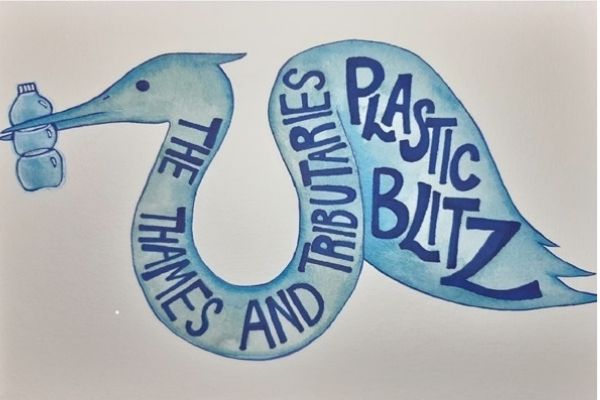
#PlasticBlitz

Last month, the Rivers & People volunteers took part in The Thames and Tributaries ‘Plasticblitz’ week. This week of events was organised by Thames21, the Environment Agency and Rotary in the Valley (through their international End Plastic Soup campaign) to collate details on the amount and differing types of plastic pollution groups find across The Thames and it’s tributaries.

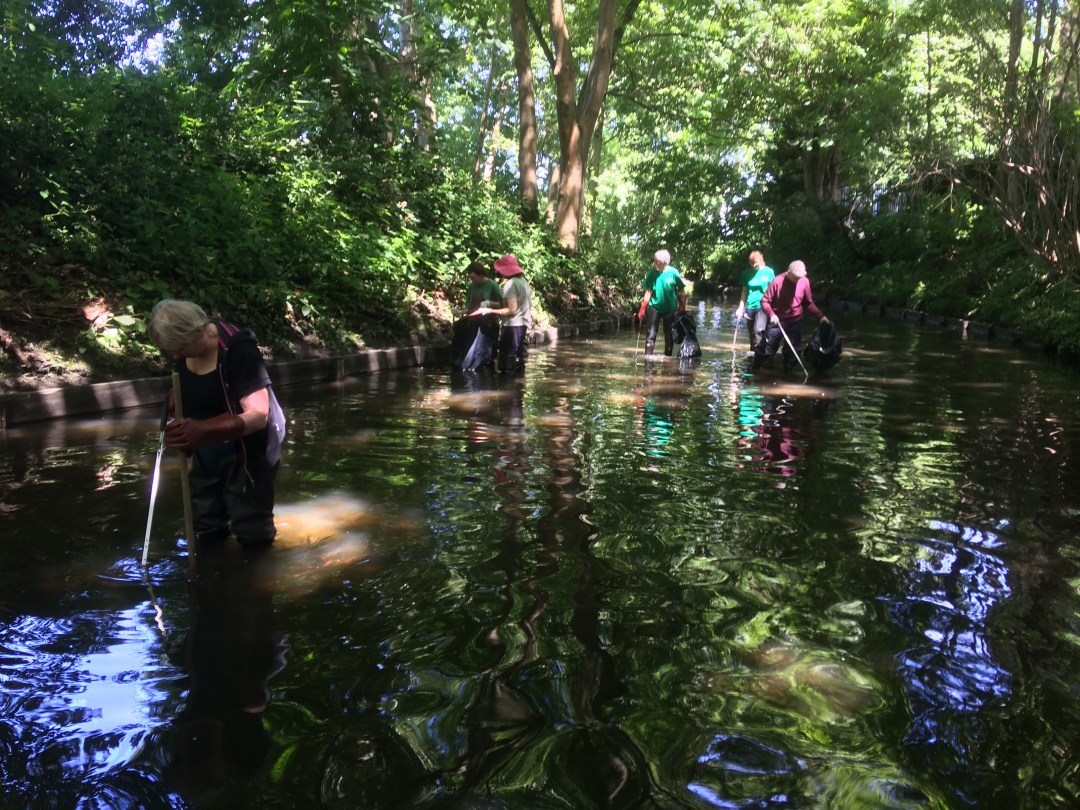
The Rivers & People group held a session at Brookmill Park where we cleared 6 bags of rubbish from the Ravensbourne River and it’s banks. A wide variety of litter was collected from plastic bottles to curtains. Our team collected 6 full bags of rubbish over a few hours and covered a stretch of river over 250 metres.

All of the data collected will feed into the EU-wide ‘Preventing Plastic Pollution’ Project.

Find out the overall results of the #PlasticBlitz HERE.

London Rivers Week – Saturday June 23 to Sunday July 1

Thames 21 writes….

London Rivers Week

Do you cherish rivers and enjoy exploring them? Do you love the wildlife that roams our countryside? Do you want to learn about what’s being done to protect London’s life-giving rivers and how you can help? 

Then join us for the third annual London Rivers Week, running from Saturday June 23 to Sunday July 1. This year’s theme is Valuing Water, and our partners are putting on a fascinating list of free activities, with something for all the family – from walks and talks and a kayak event to demonstrations and even a film premiere.

You won’t want to miss our launch event on Sunday 24th June, at Ladywell Fields from 12pm to 3pm.

You’ll be able to become a dragonfly detective, explore what’s in the water through river dipping and make discoveries through riverfly monitoring.

The event will be a showcase of citizen science programmes by a range of partners.

Find out, for example, how Thames21 volunteers collect data about the types of plastic found in the Thames, or how water quality is tested by robot boats. There are 600km of waterways in the capital. That’s the same as the distance between Brighton and Edinburgh.

And during the week, you’ll have the chance to learn about the issues that affect many of them.

Do you fancy getting to know your local stretch of river better by clearing litter? Or taking over the invasive species which also choke our rivers? We’ve also got events like that, which will help you make a difference to these lifebloods for wildlife.

Otters, trout, bats, kingfishers and eels all use London rivers – but increasingly they need the public’s help to survive and thrive, in the face of plastic pollution, sewage and the impacts of climate change.

London’s rivers are often peaceful, natural places, where we can escape city life. They are havens where we can relax by the water, watch swans nesting or if we’re lucky, spot a flash of blue as one of Britain’s most beautiful birds, a kingfisher, speeds across the water.

So what are you waiting for? Take a look at our fantastic range of activities and book your place at one today!

If you can’t wait, whet your appetite by reading case studies about 23 restoration projects which include Ladywell Fields, giving you a world of nature to explore at places that have been rewilded in recent years.

London Rivers Week is sponsored  by Thames Water. Read more about the groups behind the organisation of London Rivers Week.


Leading a Waterway Clean up – Thames 21

Thames 21 Essential Train Course

Thames 21 foundational course, called Leading a Waterway Clean Up, is for people interested in learning more about waterways and why they are important.  The course contains everything you need to know to plan and run safe, effective and enjoyable waterway improvement events.

There is no obligation to actually run events once you have taken the course. Some take it simply for the learning experience.  But many do go on to assist our officers with Thames21-led events, and others lead events on their own with our support.  Their trainees have engaged in some exciting work over the years!

How is the training structured?

Leading a Waterway Cleanup is a 2-day

© Thames 21

course open to all, including those who may not have any prior experience with environmental issues or with working around water.  We combine classroom sessions with volunteering so that you get the best possible learning experience. We also ask you to complete a small amount of written work.  Our course is certified by ncfe*, the national accrediting organisation and you will receive your ncfe certificate upon completion.  Having ncfe accreditation assures us that the content of our training is of a high standard and thoroughly prepares trainees to support and lead events on their own with confidence.


When do sessions take place?

We schedule sessions throughout the year in east, west and central London.  Typically sessions are on weekends but there are some weekday sessions as well. Trainees must take Day 1 before Day 2 but do not need to take them in the same series.  For example, you can take the Day 1 session offered in April and then, because of other commitments, not take Day 2 until July.  Or September.  Sessions are meant to be flexible.

See the bottom of this page for details on how to register for sessions.

We also deliver our Leading a Waterway Cleanup course to local groups who wish to be trained together.   To schedule something for your group, please arrange for bespoke sessions by the Training Officer .

How can I use the benefits of the course?

Become an event support team member:

© Thames 21

The event support team is a team of volunteers who assist our project officers to run safe, effective, and fun events.
Become a badged group leader: With a Thames21 badge, Thames21 will support you running your own events.


How much does it cost?

The training is currently free for volunteers, with a Pricing Structure in place for volunteer managers and corporate groups. Please contact the Training Officer for more information

To Register:

You must complete an online Registration Form before you can take any trainings with Thames21.

1)  Click here to complete the Registration Form, selecting your preferred sessions and dates at the bottom of the form.

2)  If you have already registered with us and are interested in signing up for another session, please fill out a Bookings Form by clicking here

3)  Await confirmation from Training Officer.