The volunteer session programme has now been released for October to December 2024. Check out the programme HERE. If you would like to get involved in volunteering on Lewisham’s rivers please read through the the River Volunteering web page, and if you have any questions or queries please get in touch with Emily.
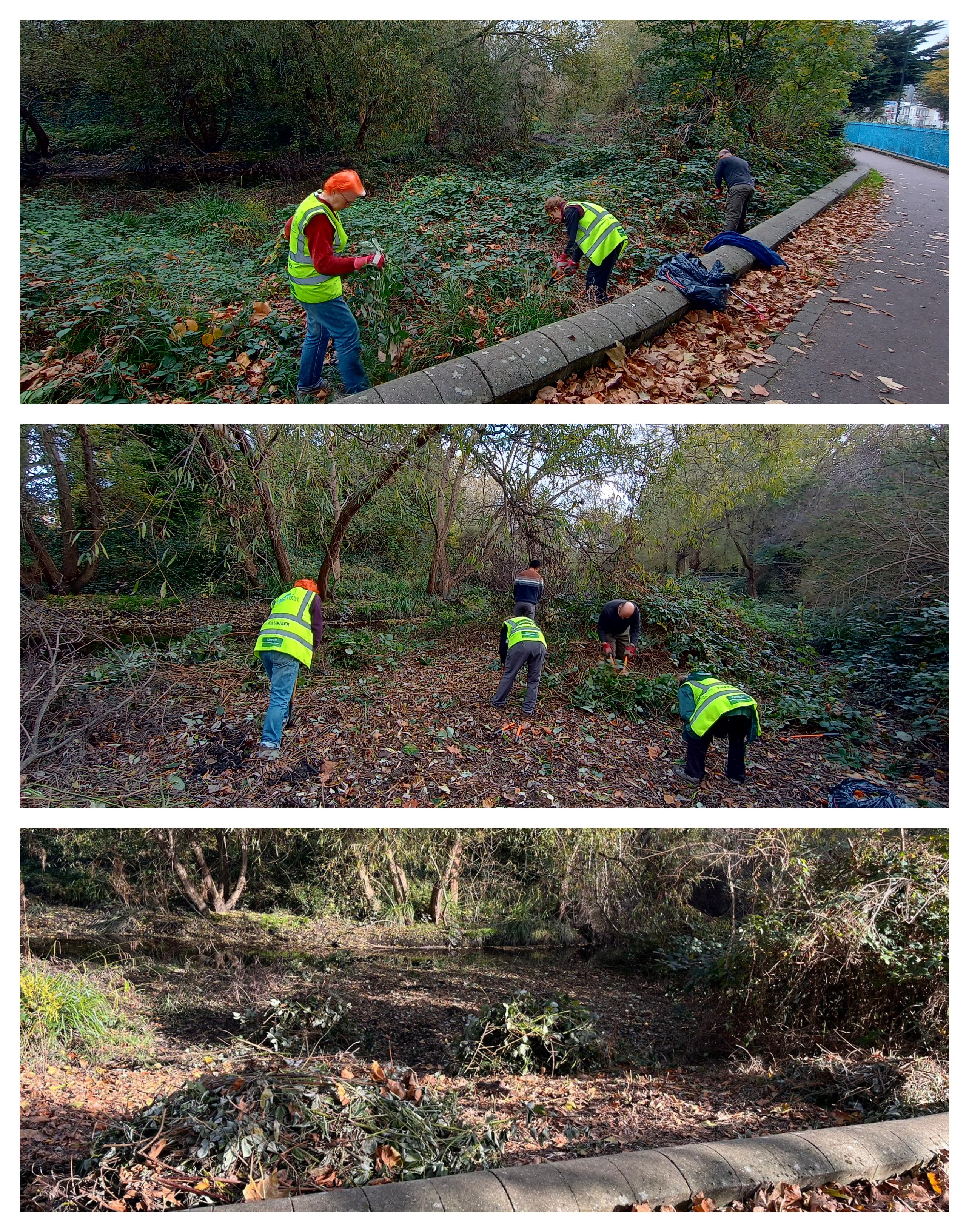
Bramble Bashing! We started our month off in Brookmill Park, where we rotationally remove bramble from two of the path bends. This is a once a year task and we only clear one area at a time to allow for winter foraging and shelter for wildlife that remain local in the winter months.
One of those animals that use the vegetation as cover is the wonderful common frog, like the one pictured below. Also pictured is the river with a lovely shadow of the bare trees.
November also marked leaving Lewisham’s rivers to dip our waders in one of the boroughs many wildlife ponds. This year we got into Hare & Billet pond to remove some of the reed growth, we try to maintain an area of the pond as a reedbed, but have to keep on top of the reeds before they expand into the deeper areas of the pond where we cannot reach. We’ll be back in the pond in January to finish up the last bits!
We started off in October continuing with our hub project in Ladywell Fields (South Field), where we continued with teh ground preparation for our future planting on the banks. The list of plants has been confirmed, and come spring we’ll be back to get planting!
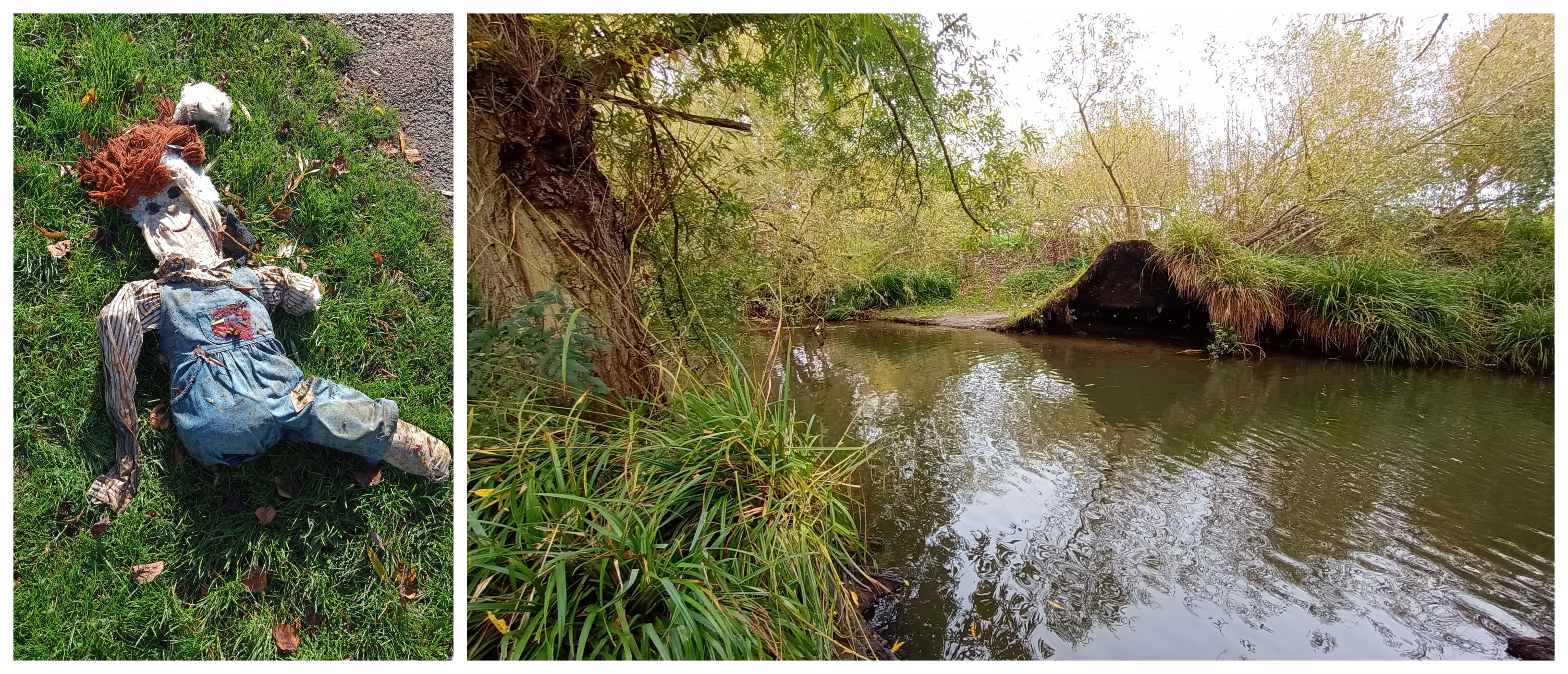
Our group then spent the rest of October in Chinbrook Meadows, swapping bramble bashing for willow coppicing. Each year we coppice another selection of willows alongside the river and wildlife ponds- we do quite drastic work at the far wildlife pond to enable enough light to hit that pond. Fun fact with that pond is that it is the only pond in the meadows that isn’t regularly fed by river water, it’s actually mainly filled with run-off from the football pitches on the other side of the footpath. The exception to this is when the Quaggy is in flood state, where it bursts it’s banks and then runs into the pond.
To add to spooky season, look at this creepy doll found face down in some nettles next to the river!
September saw us heading back into bankside management. Starting off with the backwater in Ladywell Fields (middle field), we removed the last strands of Himalayan Balsam and reduced the nettles and brambles.
The following week we were back to start the work on clearing the channel, which involved moving some large logs from the entrance to the pond area.
Lots of pictures this month! Towards mid-September we did our quarterly clean up of the secondary channel and weir in Ladywell Fields (North). You can often see the weir being cleared here as whenever the river is in flood mode it brings all kinds of debris down through the park that gets caught here.
Lastly, we started our project at the hub, but we’ll share more about this project next month as we have more sessions coming up there!
The volunteer session programme has now been released for October to December 2024. Check out the programme HERE. If you would like to get involved in volunteering on Lewisham’s rivers please read through the the River Volunteering web page, and if you have any questions or queries please get in touch with Emily.
August saw us enter the River Quaggy and the River Ravensbourne from a variety of parks and places. We started the month off by finishing our plastic clearance project in Lewisham town centre, you might actually be able to spot the fallen willow that we attended to from the bridge on Smead Way.
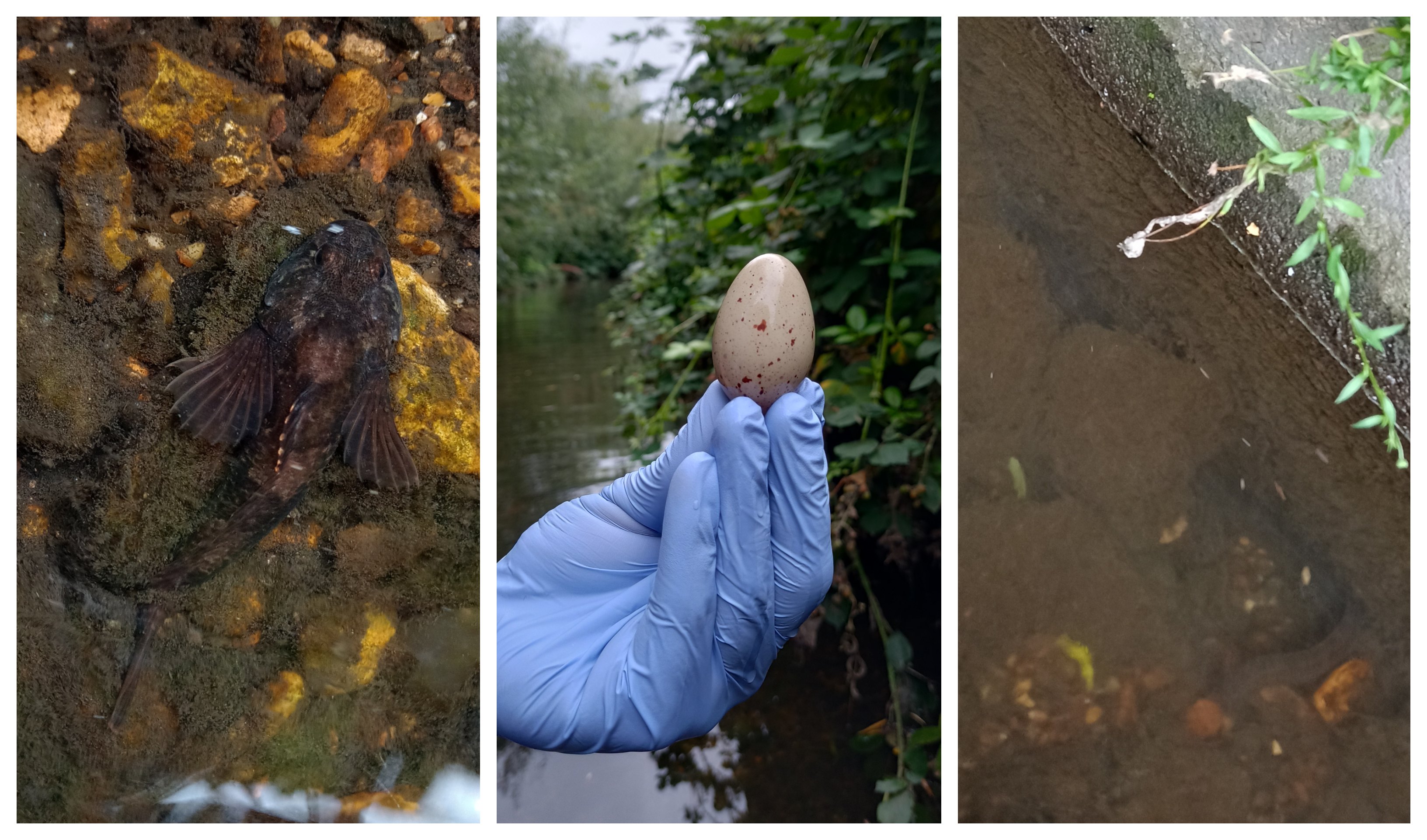
August has been a great month for spotting wildlife for our team! Not only have we seen a few grey wagtails and grey herons, including the very confident young heron pictured above, but we’ve seen three European Eels, at varying ages, during our sessions, Can you spot the eel in the last photo below? Another notable spot from one of our volunteers was the wonderful bullhead fish pictured below.
Do you know the owner of the red speckled egg below? It’s a Moorhen egg! This one was no longer viable as it was found on the riverbed, but from the number of moorhens we see on the rivers normally they seem to have enough hatch to allow for some to not make it. Do keep an eye out for nests on the rivers whilst you’re walking around– many of the poorly placed nests are from our Moorhen friends!
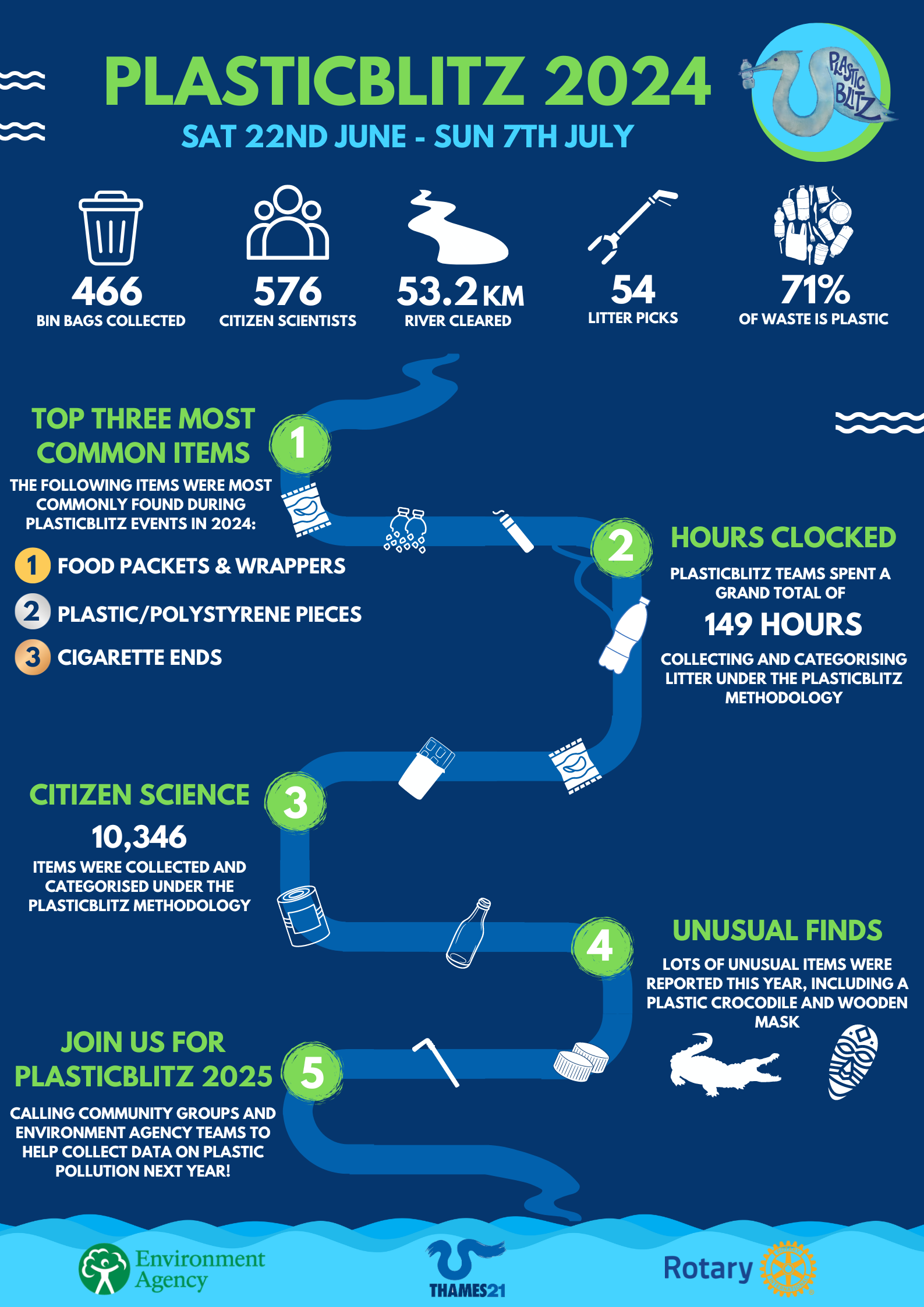
Every year our Rivers & People volunteers take part in the PlasticBlitz scheme run by Thames21. This is a 2 week period where we itemise exactly what types of litter and any prevalent brands that we are finding in our rivers and their banks in Lewisham.
In the beginning of July we were still in the midst of the #3RiversCleanUp, so our wonderful volunteers were busy removing Himalayan balsam from our waterways. There was less balsam on the catchment than in previous years, testament to our volunteers fantastic efforts each year. We do have a few sites lower down the catchment, like Brookmill Park, which are hit harder by the invasive plant, but it’s still no match for our volunteer effort!
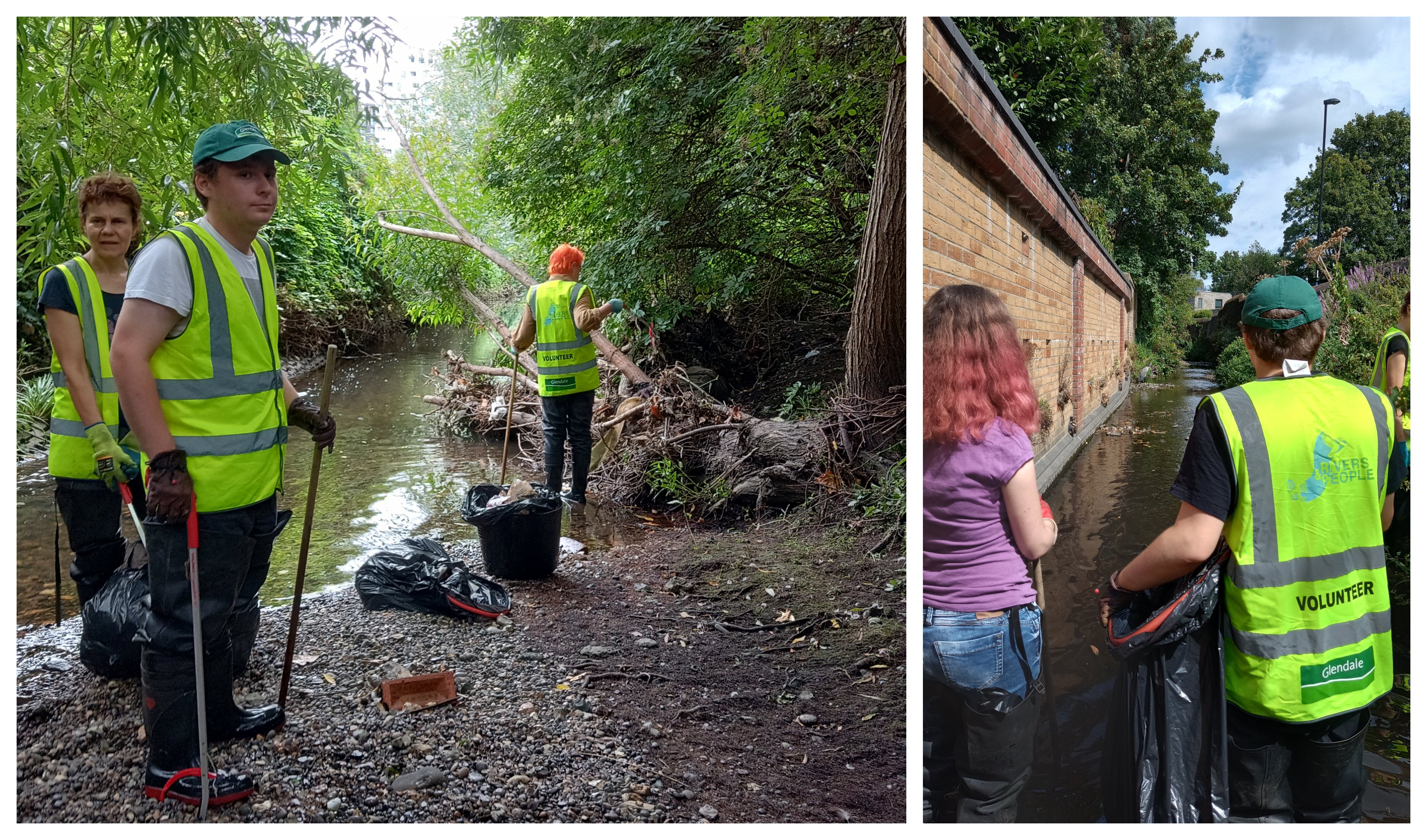
Later in the month, we started on a plastic clearance project in the middle of Lewisham town centre. Wading upstream from Cornmill Gardens we’d identified a fallen willow earlier in the year which needed a bit of maintenance so it didn’t block the whole width of the channel and to remove all the plastic detritus that had been caught by it. As a rule we don’t remove all deadwood/ fallen branches from the river as they create brilliant ecological niches for some animals to use. In this case a whole shoal of chub were sheltering behind it in the still water, perfect spawning and sheltered space for young fish.
Amongst the litter we do occasionally come across offerings to the river, in most circumstances we do leave these within the water as most are made of materials that eventually break down, and it’s wonderful to see people have that connection with our rivers. Unfortunately we do sometimes find plastic offerings, or items within plastic bags that need to be removed for the health of the river.
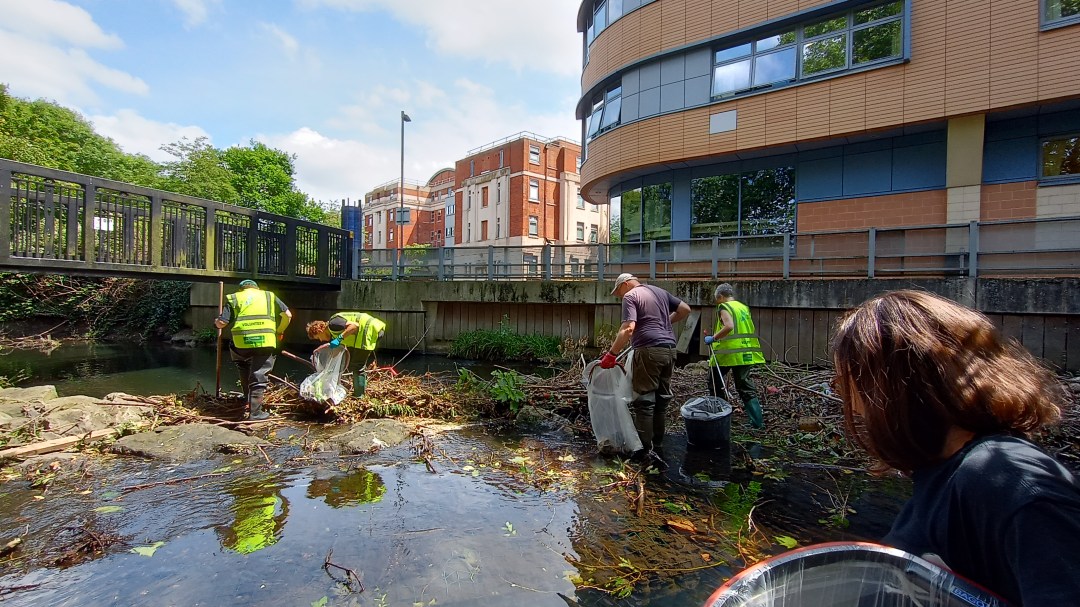
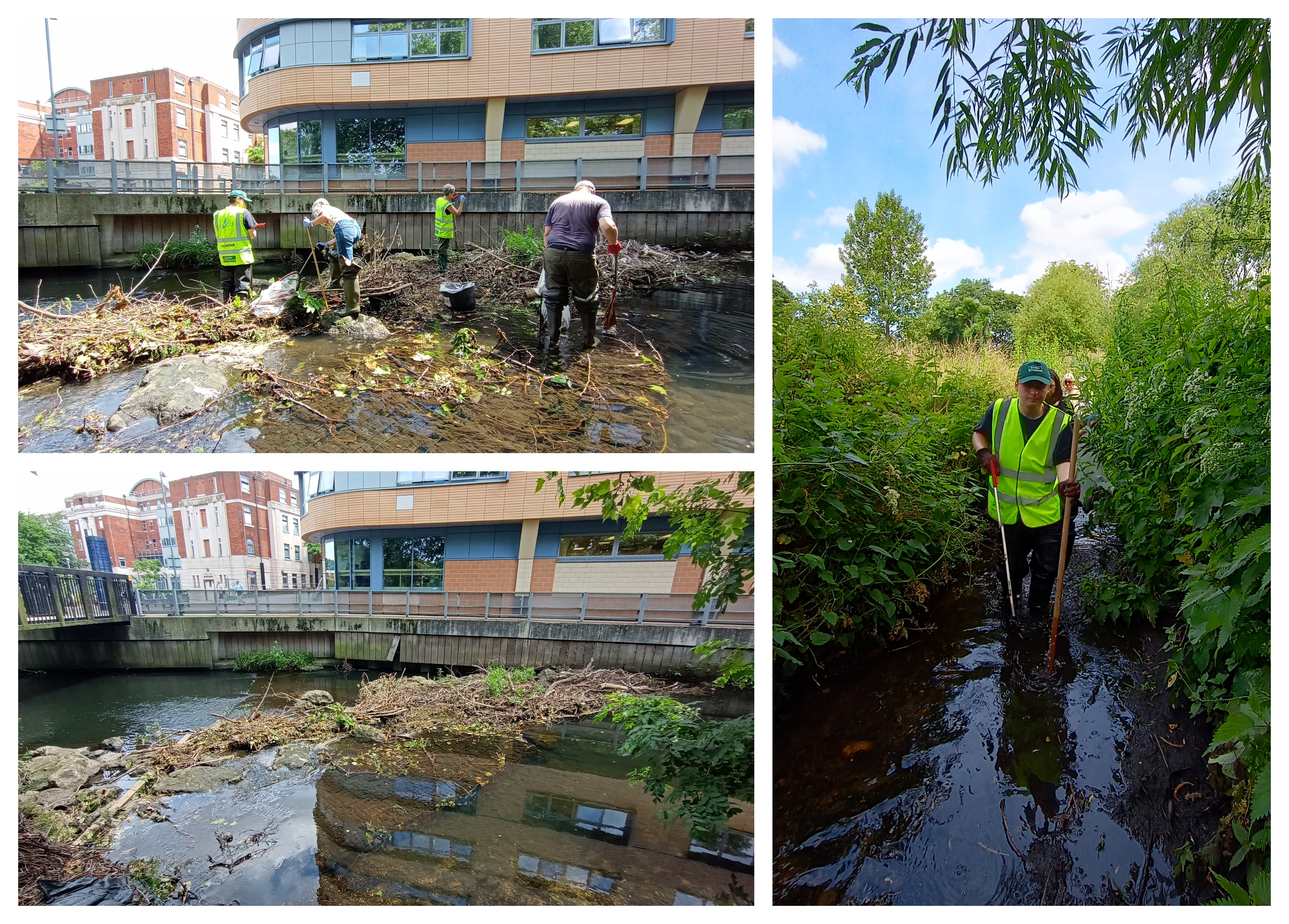
First up in June, our team of volunteers tackled the weir in Ladywell Fields, next to the Kenneth White Bridge and hospital. At this time of year the water level is low enough to allow us safe access onto the gabions to clear any obstructions caught on the weir itself. The larger area of branches and brash on the side gets removed by the Environment Agency periodically.
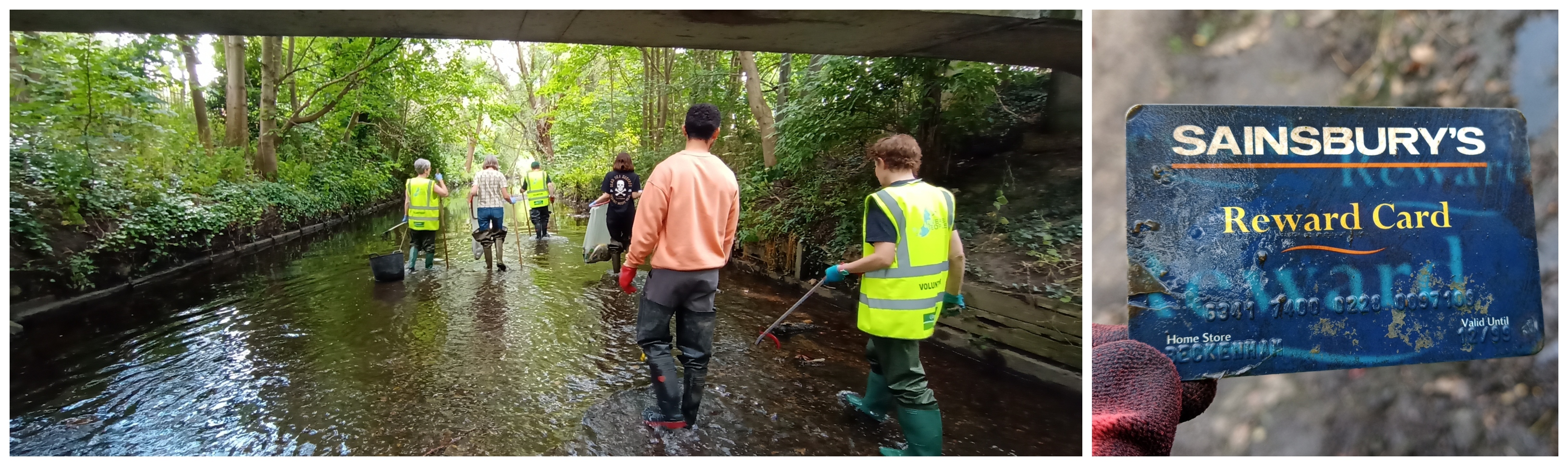
Heading downstream and through the secondary channel we found this old Sainsbury’s reward card which expired in Dec 1999! Shows how long plastics will remain in our environment and waterways.
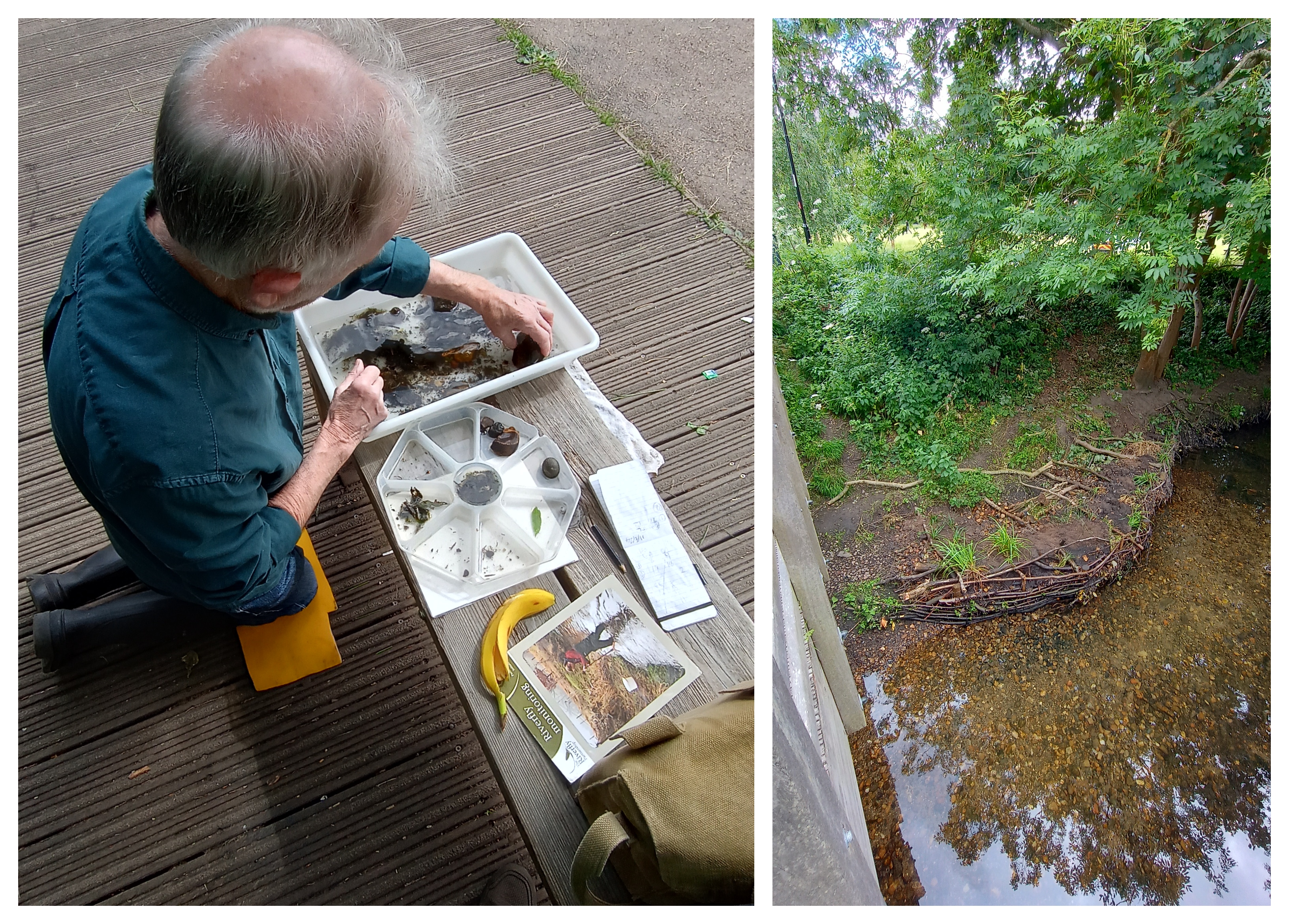
Elsewhere in the catchment, the lovely riverfly monitoring volunteers Tom and Julia were in the middle field in Ladywell fields performing a kick sample.









 Rivers and People